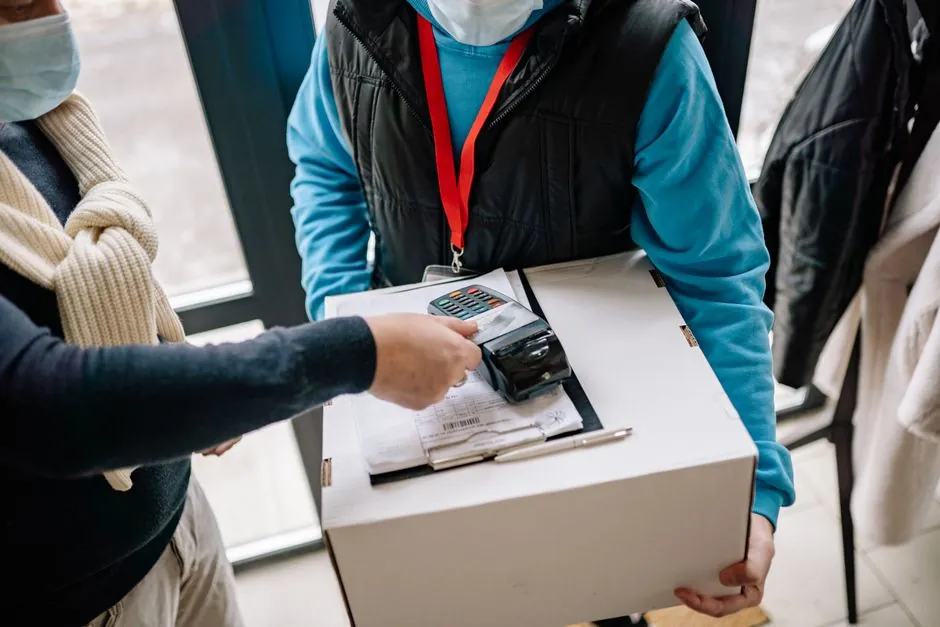
E-commerce packaging automation now rests on four machine families that, selected against SKU mix and order volume, typically lift line throughput 30–50% over manual taping and wrapping [S1].
The selection question is no longer "should we automate" but which combination of case erectors, sealers, shrink wrappers, banding/strapping units, and pallet wrappers fits a given order profile, and how those machines integrate with conveyors, WMS, and right-size carton systems [S1][S5].
Four Machine Families, Four Distinct Jobs
Wrapping in e-commerce is not one decision but four: primary pack (the shipper itself), inner containment, unitization, and load containment, and each level maps to a specific machine category [S1]. A typical automated line uses case erectors and sealers for the shipper, shrink wrappers or poly baggers for the inner or tamper-evident pack, banding/strapping machines for bundle security, and pallet stretch wrappers for outbound loads [S1][S5].
Smurfit Westrock's ecommerce machinery line explicitly centers on right-size packaging automation, where the box is formed, opened, and sealed around the actual product footprint rather than around a fixed SKU library, a capability that directly reduces void fill, DIM weight surcharges, and carton stock [S4].
Selection Criteria: Throughput, SKU Variance, Film, Footprint
Four specs drive almost every wrapping-machine purchase for fulfillment: throughput in cases or loads per hour, SKU variance (narrow vs. high-mix), film or board compatibility, and line footprint including infeed/outfeed conveyor length [S2][S5]. Lantech publishes a concrete benchmark: semi-automatic stretch wrappers handle up to 40 loads per hour for lower-volume or multi-wrapper warehouse layouts, while automatic PLC-based conveyorized wrappers scale to higher throughput in integrated lines [S5].
For inner-pack selection, Select Pack Tech's May 2026 guidance breaks bagging machines into fully automatic (bag opening, filling, sealing, optional print/label) versus semi-automatic (operator loads product or initiates cycle), with sealing precision, ERP/WMS integration, and dust/moisture requirements acting as the gating specs for dust-proof or contamination-sensitive SKUs [S2]. For shrink wrappers specifically, Kallfass publishes concrete performance numbers for ecommerce builds: 98.5%+ uptime, 10–15% lower film consumption versus traditional systems, no compressed-air requirement, and energy regeneration, all of which directly affect total cost of ownership for high-volume shippers [S3].
Comparison: Which Wrapper Fits Which Order Profile

Wrapping machine choice in ecommerce maps to order profile more than to industry. A high-mix, single-unit apparel shipper typically needs a right-size case erector + sealer + poly bagger combination, with banding reserved for multi-item bundles; a low-mix, high-SKU-velocity fulfillment center running subscription boxes leans on automatic shrink wrapping with quick-change film rails; and any operation shipping multiple palletized outbound loads per day can benefit from a conveyorized automatic pallet stretch wrapper to help control film cost [S1][S3][S5].
On a 2-4 criterion comparison, the four families line up as follows: case erectors/sealers win on throughput per square foot for shipper formation but do nothing for tamper evidence; shrink wrappers win on presentation, tamper evidence, and multi-SKU bundle packs but require heat tunnels and floor space; banding/strapping machines are the lowest-cost option for bundle security but offer no product protection; pallet stretch wrappers are mandatory for load containment and freight safety but irrelevant to the individual customer unboxing [S1][S3][S5].
Who Each Wrapper Is For, and Who Should Skip It
Case erectors and sealers are for operations shipping 200+ parcels per day where manual taping is the bottleneck; below that volume, a semi-automatic sealer or even a good bench tape dispenser is the more honest spec [S1][S5]. Shrink wrappers pay back fastest where tamper evidence, multi-pack presentation, or print/registration on the wrap matters, food, cosmetics, pharma, subscription boxes, and printed goods, and pay back slowly or not at all for single-SKU commodity parcels where a plain RSC carton is enough [S3].
Banding and strapping machines suit operations that ship multi-item bundles, kit packs, or long products that need cross-stabilization without a full wrap, but they should be skipped by anyone whose product damage profile is driven by drops or impacts rather than by bundle shift [S1]. Pallet wrappers are non-negotiable for any operation shipping palletized outbound freight; the choice is between semi-automatic (up to 40 loads/hour, lower capex) and automatic conveyorized units, with the latter paying back once labor cost, film pre-stretch savings, and load consistency are stacked together [S5][S6].
Integration and Adjacent Equipment: Conveyors, Lift Tables, Cutters
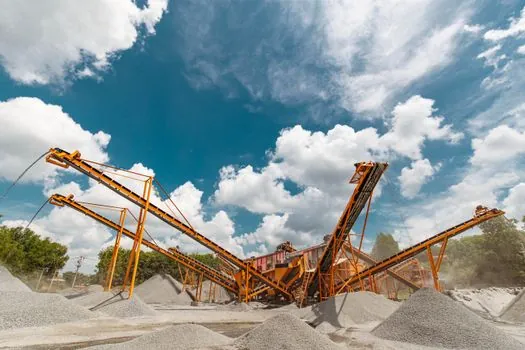
Wrapping machines do not stand alone. The John Maye Company explicitly groups conveyors and lift tables alongside case erectors, shrink wrappers, and palletizers as one of the five core equipment sets for ecommerce fulfillment, because the wrapper's effective throughput is capped by the slowest adjacent node, usually infeed metering or operator ergonomics at the pack station [S1]. For protective packaging upstream of the wrapper, HAOXINHE-style servo-driven bubble wrap cutters with programmable cut lengths and automatic feeding are being specified into fulfillment centers to keep void-fill and cushioning material consumption in check [S7].
At the wrapping-machine taxonomy level, Packaging World notes that flow wrappers, which form a continuous film tube around individual products, are among the most widely used wrapping equipment types, sitting alongside stretch wrappers, shrink wrappers, and overwrappers as the four core architectures a specifier should distinguish between [S8]. For deeper background on the primary pack itself, the wrapping machine reference covers the architecture distinctions, while the shrink wrapping machine page details the heat-tunnel and film-orientation trade-offs that matter for ecommerce presentation. Adjacent operations, case forming, label application, palletizing, are covered in the coding machine and cutting machine reference pages.
Limitations and Failure Modes Specifiers Underestimate
Three failure modes dominate post-installation complaints on ecommerce wrapping lines: film choice/spec mismatch with the heat tunnel, which causes "angel hair" or burn-through; mismatch between case erector stroke range and actual carton dimensional range, which forces operators back to manual forming for tail SKUs; and pallet wrapper pre-stretch settings that are never recalibrated, silently burning 20–40% more film than the spec sheet implies [S1][S3].
Another underweighted constraint is compressed-air supply. Shrink wrappers that require plant air add a hidden utility cost and a single point of failure during pressure drops; Kallfass's ecommerce line is engineered specifically to eliminate compressed air, which is a real spec differentiator for distributed fulfillment nodes with limited shop air [S3]. Banding machines, conversely, fail most often on strap tension consistency under variable bundle heights, which is why servo-tensioned units, rather than mechanical-tension units, are the default for high-mix ecommerce kit packing [S1].
Standards, Sourcing, and a Trackable Next Signal

No single ISO or ASTM standard governs "the ecommerce wrapping machine." Instead, specifiers stack multiple reference documents: ISO 11607 for packaging validation on terminally sterilized or medical SKUs, ASTM D4169 for transport testing, and ISTA 3A/3B for parcel performance, and they verify the wrapper's CE/UL machinery directive conformance on the electrical and guarding side [S1][S4]. For load containment, the American Pallet Association's pallet wrapping guidance and OEM-published pre-stretch efficiency curves are the practical references; film-recycled-content claims should be tied to a specific resin grade (PCR percentages, not marketing copy) [S3].
The next trackable signal is the convergence of right-size packaging automation with stretch wrapping at the outbound dock, which Smurfit Westrock and Lantech are both expanding on their public 2026 product pages [S4][S5], and the rising appearance of servo-driven, no-compressed-air shrink wrappers in mid-volume ecommerce builds, where Kallfass publishes 98.5%+ uptime and 10–15% film savings against legacy units [S3]. For adjacent conveyor and material-handling decisions inside the same fulfillment build, the spec map for AGV robot selection for e-commerce fulfillment covers the upstream transport nodes that feed these wrappers, and the stacker crane selection for apparel distribution reference covers the storage-side interface for high-SKU apparel operations.