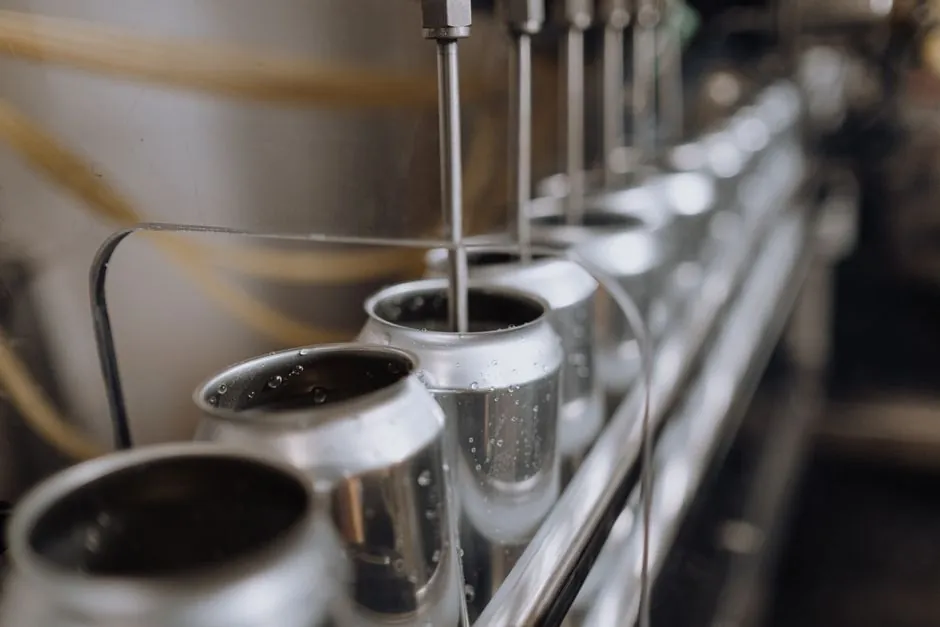
A capping machine should be specified by the closure, the container, and the line’s required bottles per minute, in that order; throughput alone is the wrong first filter, because a spindle capper running 120 bpm on a 28 mm PET bottle is not interchangeable with a chuck capper running 60 bpm on a 38 mm trigger sprayer [S4].
For lines that also need foil-seal integrity after capping, an induction sealer pairs with a cap-tightening station rather than replacing it, and the two stations are governed by separate selection logic even when mounted on one frame [S4]. Buyers building a fresh line in 2026 should treat the capper as part of a filling machine spec map, not as a standalone purchase.
What a Capping Machine Actually Does, Step by Step
A complete automatic capping process runs through five defined functions: cap sorting, cap delivery, cap placement, cap securing, and verification, with a sensor pass that flags missing, tilted, loose, or cross-threaded closures before the bottle leaves the station [S4]. The five functions are not always present together: a benchtop semi-automatic cap tightener may stop at the securing step and rely on an operator for placement [S4].
The closing action itself is the second decision point. Cappers secure closures by spinning friction wheels on the cap skirt (spindle), lowering a vertical chuck with controlled torque (chuck), pressing a snap lid into a matching bead (snap/press-on), rolling an aluminum ROPP shell to form threads and a pilfer band (ROPP), metal-crimping a crown or vial crimp cap, compressing a cork, inserting a plug or dropper, or pulling a vacuum under a metal lug cap [S4]. The same article draws an explicit line between capping and induction sealing: the capper secures the closure mechanically, while an induction sealer heats a foil liner to hermetically seal the opening, and a typical line uses both, not one or the other [S4].
Closure-to-Machine Mapping: Match the Cap, Not the Brochure
Most production cappers are built around a single closure family, and a buyer who runs two fundamentally different cap types should plan for a changeover station or a second machine rather than a one-size compromise [S5]. Continuous-thread screw caps, the workhorse of the industry, fall into spindle or chuck heads; ROPP aluminum caps need a dedicated ROPP head with matched rollers; snap lids need a press-on head; crowns and metal vial crimps need a crimp head; corks need a corking head; droppers and inner plugs need a plugging head; and hot-fill glass jars with metal lug caps need a vacuum-assisted head [S4].
The criteria-based comparison below is the shortlist logic buyers in 2026 are using:
Option 1, Spindle cappers: best for high-speed, multi-SKU screw-cap lines running 80–200+ bpm. Limitation: depends on cap placement accuracy and bottle stability, poorly seated caps tilt or cross-thread [S4]. Option 2, Chuck cappers: best when accurate alignment and repeatable torque matter more than raw speed, including large or hard-to-engage caps. Limitation: usually cap-specific change parts are required [S4]. Option 3, ROPP cappers: best for wine, spirits, edible oil, and pharma where tamper evidence is mandatory. Limitation: bottle and cap profiles must be matched as a set [S4]. Option 4, Snap or press-on cappers: best for non-threaded lids on rigid containers, typically faster than threaded heads. Limitation: container must resist vertical compression without buckling [S4].
Throughput, Automation, and Where the Field Narrows
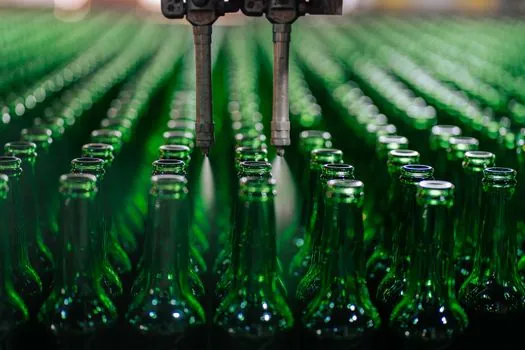
Manual and semi-automatic cappers make sense below roughly 20–30 bottles per minute or in R&D and pilot batches where changeover frequency beats raw speed [S6]. A semi-automatic capper still needs an operator to place caps or bottles, the machine only powers the torque action, and the per-minute rate is bounded by the operator’s pace, not by the drive [S2][S6].
Once a line commits to 24/7 production or output above roughly 40 bpm, the field collapses to fully automatic machines built around a PLC controller, a variable-frequency main motor for stepless speed adjustment, a stainless-steel 304 frame meeting GMP hygiene rules, and a torque-adjustable rotary head for repeatable seal torque [S3]. A 2026 vendor spec sheet for a typical automatic capper describes a stepped lifting-belt cap feed with low noise and a no-reverse-cap drop structure, plus an automatic rejection device that ejects bottles with missing caps, missing aluminum foil seals, or poorly seated threads [S3]. For lines that lose power mid-cycle, a power-loss rejection option routes the in-process bottle to the reject bin instead of leaving a partially capped container on the conveyor [S3].
Decision Criteria Buyers Should Lock In Before Quoting
For container and closure samples, send physical samples of every SKU to the capper manufacturer before purchase, because the only reliable way to confirm the head will run a given cap-bottle pair is to run it, not to read a brochure [S5]. The same guidance applies to capping and sealing stations, where induction sealer power, foil-liner composition, and cap material jointly determine the seal window.
Who a Capping Machine Is For, and Who Should Walk Away
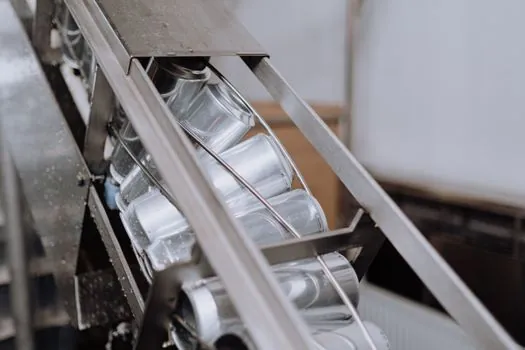
A capper is the right capital purchase for any line that is hand-torquing more than a few hundred bottles per shift, for any product where closure torque is part of the spec (carbonated beverages, pharmaceuticals, chemicals), and for any line being audited to GMP or HACCP [S2][S3]. A capper is the wrong purchase for a contract packager running a new SKU every week, where the change-part cost on a dedicated head will never amortize, and a better answer is a short-term semi-automatic rental or a mobile line [S5].
A buyer who needs a true hermetic seal in addition to mechanical closure must also budget for an induction sealer and a foil-liner-qualified cap; a capper alone does not provide moisture or oxygen barrier, and a vendor who implies otherwise is selling the wrong machine. Likewise, buyers who only need to retain a product inside a jar without sealing the headspace should look at capping with a snap or press-on head rather than over-spec to a chuck or ROPP system.
Standards, Sourcing, and Trackable 2026 Signals
Current OEM and integrator guidance for 2026 emphasizes selecting a system around the closure, the container, torque or force requirements, stable production speed, changeovers, feeding reliability, and line integration, in that order, not around a headline bottles-per-minute number [S4]. Chinese packaging-machinery guidance published in 2026 reiterates that fully automatic cappers with PLC control, variable-frequency drive, stainless 304 frames to GMP, automatic cap-feed, torque feedback, and a rejection device are now the default specification that new lines are being quoted against, while semi-automatic machines remain the correct pick only for R&D and small-batch operation [S3][S6]. A 2026 buyer-facing guide also makes the practical point that the operator’s pace, not the drive, sets the throughput of any semi-automatic capper, and that choosing a machine frame that allows an upgrade path from semi-automatic to fully automatic later is the cheapest way to keep options open as volumes grow [S5][S6].
Trackable signals for the next planning cycle: induction sealing on child-resistant closures in pharma, ROPP penetration in cannabis and nutraceutical liquids, and snap-cap growth in personal-care pumps all show up in 2026 industry write-ups and are the most likely sources of new spec changes through the rest of 2026 and into 2027 [S2][S4]. Buyers pairing a new capper with upstream coding and marking and downstream core cutting and handling stations should spec the line in one pass, since conveyor height, PLC handshake, and rejection hand-off decisions propagate across every station.