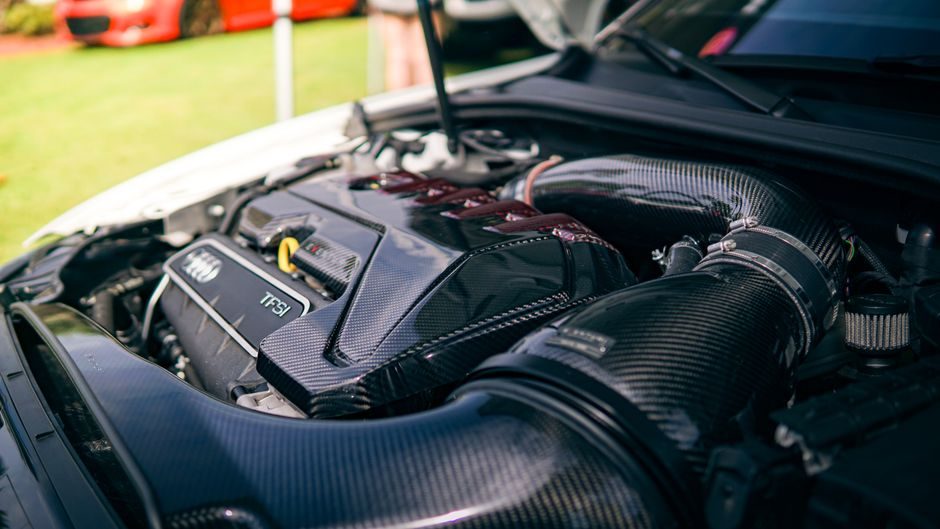
Specifying carbon fiber in 2026 is a four-axis decision: precursor type (PAN vs pitch), tow count (1K–50K), tensile modulus (Standard ~230 GPa, Intermediate ~290–350 GPa, High ~500+ GPa), and consolidation process (autoclave vs out-of-autoclave / OOA) — each lever shifts price by multiples, not percentages [S4][S6].
Hexcel positions its carbon fiber materials as the backbone for aerospace, defense, space, and industrial applications, and runs a public portfolio covering unidirectional tape, woven fabric, and prepreg formats [S4]. The CompositesWorld Carbon Fiber 2026 conference is scheduled for Huntsville, Alabama, framing the year's commercial and technical discussion around cost reduction and market forecasting.
Tow Count and Modulus: The Two Specs That Drive Pricetags
Small-tow carbon fiber (1K, 3K, 6K) is the default for woven aesthetic and aerospace-grade parts where surface finish and drapability dominate, while large-tow (12K, 24K, 50K) targets industrial volume where cost-per-kg is the binding constraint [S4]. Standard-modulus PAN-based fiber sits in the ~230 GPa tensile modulus / ~3,500 MPa tensile strength range and covers the majority of sporting goods, automotive, and industrial buyers; intermediate-modulus (~290–350 GPa) and high-modulus (~500+ GPa) grades push into primary aerostructure and space-qualified parts where stiffness-to-weight drives the trade [S4].
Made-in-China wholesale listings for hybrid carbon fiber cloth in mid-2026 show FOB pricing from US$ 8.00 to US$ 15.00 per 100 m² at 100 m² MOQ — a useful reference band for non-aerospace industrial buyers benchmarking Chinese-mill output against Toray/Hexcel-quoted aerospace material [S3]. For buyers comparing 1K vs 12K of the same nominal modulus, expect roughly a 2–4× price-per-kg premium on the small tow, driven by precursor throughput and spooling yield, not by raw chemistry.
Weave Format and Prepreg: Cloth, UD Tape, and Resin Loading
Woven carbon fiber fabric (plain, twill 2×2, satin 4/6/8) is the most common buy for hand layup, vacuum bagging, and autoclave work, and is the format on which most hybrid carbon fiber products are quoted [S3]. Unidirectional (UD) tape maximizes fiber alignment along a single axis and is preferred for primary structural laminates where the load path is known; prepreg versions of either form come with the resin matrix pre-impregnated at controlled areal weight (typically 100–300 g/m² fiber, 30–45 % resin content) and require cold-chain logistics [S4].
For parts that must clear aerospace or motorsport qualification, autoclave-cured prepreg remains the default — Supreem Carbon's motorcycle swingarm cover listing explicitly tags process as Autoclave Mould with ISO 9001:2015 certification, illustrating how the same spec language carries through industrial-tier composite parts [S6]. Buyers targeting the same look at lower cost can specify OOA (out-of-autoclave) prepreg systems qualified for oven cure at 60–80 °C with vacuum-bag-only pressure, accepting ~5–10 % void content instead of the <1 % typical of autoclave parts.
Process Path Comparison: Autoclave vs OOA vs Wet Layup

Autoclave processing consolidates laminates at 0.6–1.0 MPa internal pressure and 120–180 °C cure, driving void content below 1 % and producing the highest mechanical reproducibility — at the cost of capital equipment (autoclave vessels typically start at 1 m diameter / 2 m length for low-volume R&D and scale to 6+ m for aerospace tier-1 lines) [S6]. Out-of-autoclave (OOA) prepreg plus oven cure drops capital intensity sharply and is now common in wind-blade root shells, marine hulls, and satellite secondary structures, with mechanical performance landing roughly 5–10 % below autoclave on open-hole compression and interlaminar shear.
Wet layup and vacuum-bag-only (VBO) infusion with dry carbon cloth remain the cheapest path and dominate the consumer sporting-goods tier; cycle times are longer, void content climbs, and fiber-volume fraction (Vf) typically lands at 45–55 % versus 55–60 % for prepreg autoclave parts. For a carbon fiber plate buy where the load case is bending stiffness, the calculation is simple: maximize Vf and minimize voids, which means prepreg + autoclave; where the load case is impact or cosmetics, VBO or wet layup is defensible.
Application Fit: Aerospace, Automotive, Industrial, Sporting Goods
Aerospace buyers (commercial airframe, defense, space) anchor on traceability — every spool carries a certificate of analysis, fiber lot number, and direct tie to Hexcel-, Toray-, or Mitsubishi-grade designations such as IM7 (intermediate modulus), AS4 (standard modulus), or the high-modulus HM63 class [S4]. The Carbon Fiber 2026 conference agenda explicitly clusters the year's market outlook and manufacturing-cost content around this tier, where a 1 % weight saving justifies 10–100× cost premiums versus industrial-grade cloth.
Industrial buyers — UAV frames, robotic arms, linear-guide carriages, and crossed-roller-guide housings where stiffness and low thermal expansion matter more than absolute strength — typically land on standard-modulus 3K twill with epoxy or vinylester systems, accepting the published Hexcel/Excel Carbon and Chinese-mill aesthetic-grade product range [S2][S4]. Sporting-goods and instrument-tier buyers (carbon fiber violin/viola bows at ~US$ 11–17 FOB, 4/4–1/4 sizes) are the lowest-cost entry point and are essentially decorative-plus-stiffness parts, not structural.
Standardized Properties vs Marketed Claims
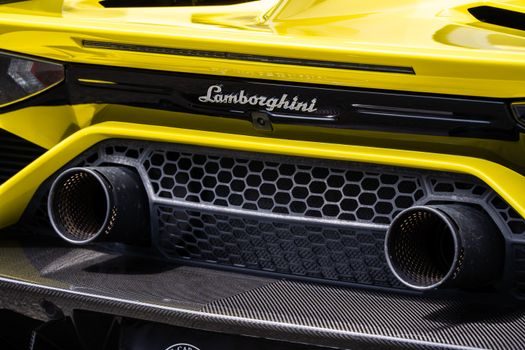
Manufacturers market tensile strength and modulus numbers at the fiber level, but the part-level values are dominated by resin content, void content, and fiber alignment — the difference between a 2,500 MPa fiber and a 1,500 MPa laminate is the resin/void tax, not the chemistry [S4]. Buyers who need a defensible part number should ask for cured-ply mechanical data (0° tension, 0° compression, open-hole compression, short-beam shear) at the specified Vf and cure cycle, not just the dry-fiber datasheet.
For a baseline reference of how carbon fiber compares with traditional carbon-steel on stiffness-to-weight, the rule of thumb is that a unidirectional carbon/epoxy laminate at 60 % Vf reaches ~120–150 GPa modulus at ~1.55 g/cm³ density — roughly 5× the specific stiffness of structural carbon steel, which is why the material keeps displacing metal in concrete-fiber reinforced structures and in UAV primary structure. The hybrid carbon fiber products tracked on Made-in-China in mid-2026 (US$ 8.00–15.00 / 100 m², 100 m² MOQ) blend carbon with aramid or glass to hit impact and cost targets a pure-carbon laminate cannot meet [S3].
Sourcing, Lead Time, and Sourcing Signals to Watch
Directindustry lists 2026 industrial manufacturers of carbon-fiber UAV airframes as a discrete buyer-side category, confirming that the drone/UAV tier has become a standalone sourcing lane distinct from aerospace-tier and from consumer sporting goods [S1]. Excel Carbon's stated specialization — "solely on carbon fiber aero parts and accessories" — is a typical example of a tier-2/3 aero aftermarket supplier that sits between the OEM aerospace mills and the consumer tier, and is the natural call point for buyers who do not need AS9100 paperwork but do need autoclave-grade cosmetic finish [S2]. The Business Research Company's Carbon Fiber Market Report 2026 (150 pages, PDF, 2–3 business day delivery) is the publicly visible market-size reference for the year and is the document most procurement teams use to anchor the budget conversation [S5].
Two trackable signals through the rest of 2026: the Carbon Fiber 2026 conference proceedings out of Huntsville will set the public benchmark for capacity announcements and price direction for Q3/Q4 2026; and the spread between Chinese-mill hybrid cloth FOB (US$ 8–15 / 100 m²) and Hexcel/Toray aerospace prepreg will be the single best indicator of whether the industrial-vs-aerospace price gap is widening or compressing [S3][S4].