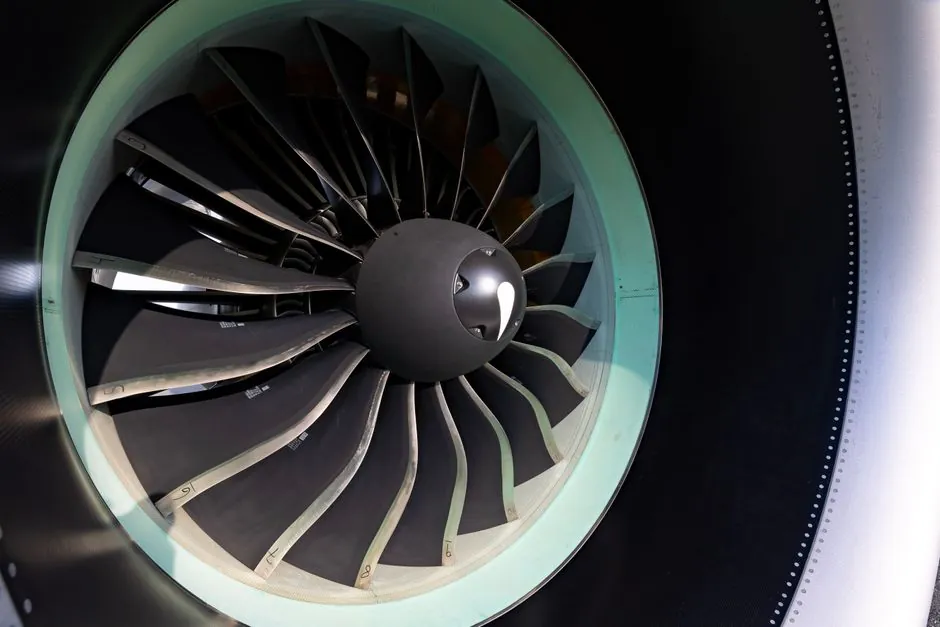
In 2026 commercial and defence programs, PAN-based standard-modulus carbon fiber (T700-class tow, 12K filament count) paired with 180 °C-cure epoxy prepreg is the baseline spec for fuselage skins, wing skins, spars, and control surfaces [S3][S4].
Where the design driver is minimum mass at equal stiffness rather than cost, intermediate-modulus fibers (T800, IM7-class) and high-modulus / high-strength grades (T1100, T1200) are substituted, with fiber volume fractions typically held in the 55–62% range for autoclave-cured primary structure [S2][S7].
Material Family: PAN-Based Carbon vs. Glass vs. Aramid
Three fiber families dominate aerospace composite layups: PAN-based carbon fiber, E/S-glass, and aramid (Kevlar). Carbon offers the highest specific modulus and lowest density, and is the only one of the three routinely specified for primary load-bearing aerostructure in fixed-wing aircraft [S2][S3].
Glass fiber composites remain in service for interior panels, fairings, radomes, and secondary fairings where the cost-to-stiffness ratio outweighs the need for minimum weight; the typical density of E-glass at 2.55–2.62 g/cm³ is roughly 1.8× that of standard-modulus carbon at 1.75–1.80 g/cm³ [S3]. Aramid composites are restricted to impact-resistant zones, engine cowlings, and ballistic panels because their compressive strength is markedly lower than their tensile strength, and they absorb moisture, which complicates cure schedules [S3].
Fiber Grade, Tow Size, and Modulus Tier
Spec sheets for 2026 aerospace programs still grade fibers by tensile modulus: standard-modulus (T300, T700; ~230–240 GPa), intermediate-modulus (T800, IM7; ~290 GPa), and high-modulus / high-strength (T1100, T1200, M55J-class; 350–540 GPa) [S7]. Tow size (3K, 6K, 12K, 24K) is selected by part geometry: 3K and 6K woven fabrics suit thin, complex-curve layups and small brackets, while 12K and 24K unidirectional tapes feed automated fiber placement (AFP) for large wing skins [S4][S7].
Woven architecture (plain, twill, satin) trades drapability for in-plane shear: plain weave is the most stable but crimp-heavy, 2×2 twill is a common compromise for cosmetic and structural panels, and satin weaves (4-harness, 8-harness) are reserved for compound contours [S7].
Matrix System: Epoxy vs. Thermoplastic (PEEK/PAEK)
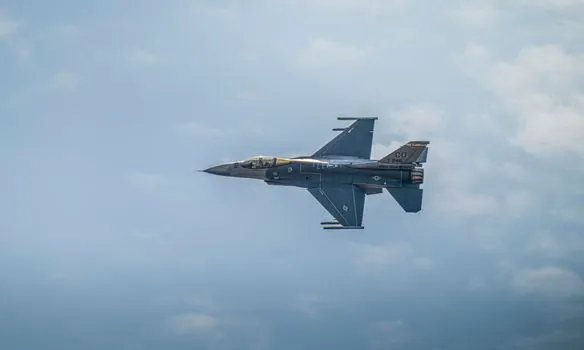
Epoxy remains the workhorse matrix, with 120–180 °C-cure systems qualified to aerospace OEM material specifications; toughened epoxies are used where compression-after-impact (CAI) targets exceed ~200 MPa, and they are typically paired with 350–350°F-cure cycles in autoclave at 85–100 psi [S3][S4].
High-performance thermoplastics (PEEK, PEKK, full PAEK family) re-enter the selection matrix in 2026 because they offer up to 70% weight reduction versus metals, indefinite shelf life of prepreg, in-situ consolidation, and far better damage tolerance, with continuous-use temperatures of 250–260 °C and inherent fire-smoke-toxicity performance that meets typical interior cabin requirements [S3]. PEEK-matrix CFRP is the most common pick for clips, brackets, and engine nacelle substructure where thermoplastic welding, recycling, or rework are driving requirements, while epoxy still wins for monolithic primary skins on cost and a much larger allowable database [S3].
Process Route: AFP/ATL, RTM, OOA, Filament Winding
Prepreg layup with automated fiber placement (AFP) or automated tape laying (ATL) is the default for large flat and gently contoured primary structure because it controls fiber angle within ±1° and keeps ply drop-offs repeatable across spars and skins [S4].
Resin transfer molding (RTM) and compression RTM deliver near-net-shape brackets, fittings, and complex ribs at higher throughput; out-of-autoclave (OOA) prepreg is chosen when part size exceeds practical autoclave capacity or when rate/risk economics favor vacuum-bag-only cure, at the cost of higher porosity (typically targeted below 2%) [S4]. Filament winding stays in the toolbox for pressure vessels (COPV, hydraulic reservoirs) and for cylindrical motor cases where hoop and helical patterns dominate. Sandwich construction with Nomex or aluminum honeycomb cores is the standard approach for control surfaces, floor panels, and galleys, where the carbon fiber face skins are co-cured or secondary-bonded to the core to combine low weight with high bending stiffness [S4].
Design Drivers and Spec Targets

Other drivers that move the selection are fatigue performance (CFRP retains strength well past 10⁷ cycles in properly designed laminates), corrosion immunity versus aluminum, low coefficient of thermal expansion for tight tolerance retention across −55 °C to +85 °C operational envelopes, integrated lightning-strike protection via expanded copper foil or mesh, and superior vibration damping in nacelles and cabin structures [S4]. For defense and rotorcraft, the open-hole tensile strength, compression-after-impact (CAI) value, and damage tolerance are equally weighted, and those targets usually push the spec toward intermediate-modulus fibers with toughened epoxy or thermoplastic matrices rather than economy-grade standard-modulus material [S4].
Selection Criteria and When Carbon Is the Wrong Pick
Carbon fiber is the wrong pick when impact dominates over stiffness, when unit cost is the binding constraint, or when a part is large, gently loaded, and has no weight penalty worth chasing. In those cases, E-glass or S-glass composites (using glass fiber reinforcements) deliver a useful fraction of CFRP performance at 30–50% of the part cost [S3]. Aramid composites remain preferred for ballistic and impact panels where tensile energy absorption matters more than compressive stiffness, and aluminum-lithium still wins for thick monolithic frames where machinability, reparability, and cost-per-kg are the constraints.
For most modern airframes, the practical material map in 2026 looks like: standard-modulus 12K T700/epoxy prepreg for primary skins and spars via AFP; intermediate-modulus T800/IM7 with toughened epoxy where CAI > 250 MPa is mandated; T1100-class high-strength fiber for highly loaded, weight-critical fittings; PEEK-matrix CFRP for clips, brackets, and engine nacelle substructure; and aramid or hybrid carbon-aramid laminates only for impact zones and ballistic protection [S2][S3][S4][S7].
The trackable signals to watch next: (1) wider qualification of T1100/T1200-class high-strength PAN fiber into commercial primary structure, and (2) the rate at which PAEK-matrix CFRP replaces epoxy on secondary structure as thermoplastic welding and in-situ consolidation mature at airframe rate [S3][S4].
Spec-level background on the components involved: carbon steel.
Background reading: Worm Gear Reducer Selection for Pulp and Paper: Ratios, Efficiency, and Service Factor.