
A standard-modulus (33 Msi) carbon fiber laminate runs roughly 600 MPa (87 ksi) tensile strength at about 70 GPa (10 Msi) laminate modulus, while individual PAN-derived filaments measure 5–10 micrometers in diameter with fiber tensile strength of 3,500–7,000 MPa and elastic modulus of 230–640 GPa depending on grade [S1][S3][S4].
For construction, the practical decision is not "which carbon fiber" but which combination of fiber grade, fabric architecture (unidirectional, biaxial 0°/90°, or ±45°), and delivery format (wet layup fabric, pre-cured plate, or pultruded strip) matches the structural problem, the substrate, and the install window [S2][S3][S7].
Fiber Grade and the Modulus vs. Strength Trade
Carbon fiber filaments are classified into four modulus classes: low modulus under 227 GPa, standard modulus 227 GPa (33 Msi), intermediate modulus 289 GPa (42 Msi), and high modulus 393 GPa (57 Msi), with ultra-high-modulus grades reaching 758 GPa (110 Msi) for specialty layups [S1]. Ultra-high-modulus fiber is roughly three times stiffer than standard-modulus fiber, but it trades away some tensile strength to get there, so the choice is application-driven: stiffness-critical deflection control picks high modulus, while strength-critical tensile reinforcement usually stays at standard modulus [S1].
For structural concrete strengthening, the design basis is ACI 440.2R, and the practical fiber range is 230–640 GPa elastic modulus with 3,500–7,000 MPa filament tensile strength at 1.75–1.95 g/cm³ density, about one-quarter the density of steel at 7.85 g/cm³ [S3]. A near-zero coefficient of thermal expansion along the fiber axis minimizes thermal stress at the bond line, and the material does not corrode in chloride, sulfate, or carbonation exposure, which is the primary deterioration mechanism that attacks steel reinforcement in concrete [S3].
Engineers new to composite specification should treat carbon fiber as a property family, not a single material: same chemistry, four modulus tiers, and laminate-level properties that drop well below fiber-level numbers because resin and off-axis plies are mixed in.
Fabric Architecture: 0°/90° vs. ±45° vs. Unidirectional
Biaxial 0°/90° carbon fiber fabrics place one fiber layer along the part length and the other across it, a non-crimp construction that keeps fibers straighter than a traditional woven cloth and improves axial and transverse load transfer [S2]. This architecture is the right call when the main loads act along the length and width of the component, which is the common case for flat or slightly curved structures, panels, covers, decks, structural skins, and shells [S2].
±45° reinforcement serves a different purpose: it resists shear, torsion, and twisting loads in tubes, hull sections, blades, frames, curved shells, and dynamically loaded structures where diagonal load paths develop inside the laminate [S2]. Using the wrong orientation adds weight without adding useful performance, the laminate becomes stronger in directions that do not matter while remaining weaker in the real load paths [S2].
Unidirectional (0°) layups concentrate all fibers along a single axis, maximizing tensile stiffness and strength in that direction, which is the default for CFRP strengthening strips and rods bonded to concrete in flexural upgrade work [S1][S3]. A balanced, symmetrical 0/90° laminate is the most common general-purpose construction and serves as the baseline against which unidirectional and multiaxial alternatives are compared [S1].
System Format: Wet Layup vs. Pre-Cured Plate vs. Pultruded Strip
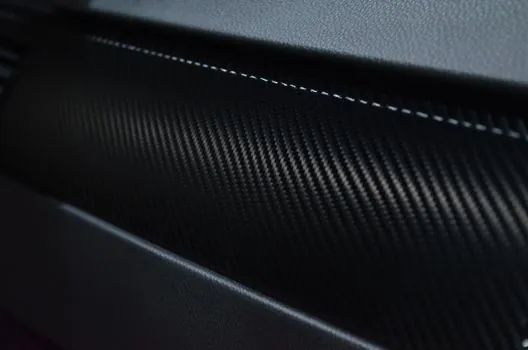
CFRP strengthening systems ship in two primary configurations: wet layup systems, where dry carbon fiber fabric (unidirectional or bidirectional weave) is saturated with epoxy resin on-site and applied directly to the prepared concrete surface, and pre-cured plate systems, where factory-cured laminates are bonded with structural adhesive [S3][S4][S7]. Wet layup offers maximum flexibility because the fabric conforms to curved surfaces, corners, and complex geometries, and is the most common system specified in field applications [S3].
Carbon plate versus carbon fiber sheet is a real engineering choice, not branding: plates deliver higher per-ply stiffness and predictable factory-controlled properties, while sheets allow variable fiber count and conform to irregular substrates [S7]. For typical applications such as bridge and building upgrades, the system adds less than 2 kg/m² of applied surface area and does not change the member's dimensions meaningfully [S3].
Adhesive bonding is the joining method of choice for CFRP-to-concrete and CFRP-to-steel interfaces; structural epoxies carry shear across the bond line while the resin matrix of the laminate transfers load between fibers and protects them from environmental damage [S3][S4]. Surface preparation of the concrete (typically grinding, repair of spalls, and primer) is the single biggest determinant of bond strength, more than the choice of fabric or plate format.
Selection Criteria Comparison for the Three Main Options
The three dominant carbon fiber options for construction line up against four decision criteria as follows. Wet layup fabric scores high on conformability to curved or complex geometry, moderate on per-ply stiffness, low on factory quality control (site-driven), and lowest on installed cost per m² for large surface areas [S3]. Pre-cured plate scores high on per-ply stiffness and factory quality control, moderate on conformability (limited to flat or gently curved surfaces), and highest on material cost per m², but installs fastest because no cure window is needed on the structure [S3][S7]. Pultruded strip or rod scores high on unidirectional tensile performance and is the default for near-surface-mounted (NSM) reinforcement in slots cut into concrete cover.
For load-capacity upgrades on beams, slabs, and columns, wet layup unidirectional fabric is the workhorse because it scales to large areas and orients fibers along the principal tensile stress path. For column confinement where the load is multiaxial, biaxial 0°/90° fabric wraps deliver balanced transverse reinforcement [S2][S3]. For shear strengthening, ±45° oriented fabric or strips at 45° to the member axis handle diagonal tension that a purely axial layout misses [S2].
Performance Numbers That Drive the Spec

CFRP systems can increase a concrete member's load capacity by 25–60% in days, with no building closure, no heavy equipment, and a service life exceeding 50 years, which is the headline value proposition for retrofit work over demolition-and-replace [S3]. For comparison, structural steel at 420 MPa tensile strength and 200 GPa modulus is roughly 43% weaker per area than a standard-modulus 0/90° carbon laminate at 600 MPa, and three times denser [S1].
Manufacturing route matters: PAN precursor is spun, stabilized at 200–300 °C in air, carbonized at 1,000–1,500 °C in inert atmosphere, optionally graphitized up to ~3,000 °C for higher stiffness, then surface-treated and sized for resin adhesion [S4]. Lower-cost and high-throughput routes are an active research target; a DOE-funded Carbon Fiber Design project is developing fibers with noncircular cross-section geometry optimized to meet compression performance targets, with scale-up planned through commercial partners [S5].
Coatings for CFRP composites are an emerging technical layer: polymeric, ceramic, carbonous, and metallic coatings each use a different application method and address different failure modes, from UV resistance to galvanic isolation when CFRP contacts metallic substrates [S6].
Where Carbon Fiber Is the Right Call and Where It Is Not
Carbon fiber is the right call for: flexural upgrade of beams and slabs where added dead load must be minimized, shear strengthening with ±45° fabrics, column confinement with biaxial wraps, bridge soffit and pier strengthening where access rules out heavy equipment, and chloride- or carbonation-exposed structures where corrosion-proof reinforcement is required [S3][S4]. It is a poor fit for: applications requiring high compressive strength (CFRP is anisotropic and weaker in compression than in tension, with the DOE program specifically targeting this gap [S5]), fire-rated assemblies without additional thermal protection, and members where the failure mode is fatigue-driven at the concrete substrate rather than at the CFRP itself.
Specification discipline that prevents rework: confirm fiber modulus class on the mill cert (not just "carbon fiber"), confirm fabric architecture and aerial weight in g/m², confirm adhesive compatibility with the substrate (especially for cold or damp concrete), and confirm that the design follows ACI 440.2R for concrete strengthening [S3]. For procurement, the Embodied Carbon in Construction Calculator is a free database of environmental product declarations (EPDs) used for product selection and procurement, and is worth checking because PAN-based carbon fiber carries a high embodied-carbon footprint relative to conventional carbon steel reinforcement [S8].
Standards, Sourcing, and Trackable Signals
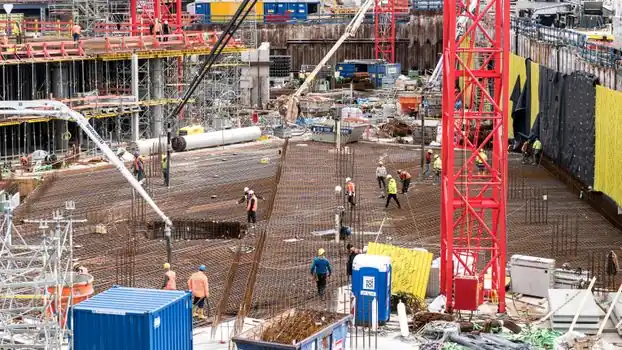
The governing design method for CFRP strengthening of concrete in North America is ACI 440.2R, which covers material qualification, substrate preparation, installation, and quality control for both wet layup and pre-cured systems [S3]. Manufacturer-published data sheets should report fiber tensile strength and modulus per ASTM D3039 or equivalent, laminate properties per ASTM D7264, and bond strength per ASTM D7522, though the specifier verifies which test methods actually appear on the cert rather than assuming them.
Sustainability-driven selection is moving fast: EPD-based procurement through the Embodied Carbon in Construction Calculator is now part of green-building materials criteria, and low-cost, high-throughput PAN alternatives plus recycled fiber streams are the two supply-side shifts to watch [S5][S8]. For related construction tools and construction machinery and equipment used during CFRP installation, surface-prep grinders, dust-extraction vacuums, and resin-impregnation rollers are the items that show up on the method statement and that drive on-site productivity more than the carbon fiber itself.
Trackable signals over the next 12 months: ACI 440 committee activity on compression-design provisions for noncircular-section fibers, EPD coverage of major CFRP product lines in the Embodied Carbon in Construction Calculator database, and any ASTM or ICC-ES acceptance criteria updates for NSM (near-surface-mounted) CFRP strip systems. For a parallel automotive view of the same fiber-grade decision tree, the Carbon Fiber Selection for Automotive Manufacturing: 2026 Spec Map walks the same modulus and fabric choices from a different load-case angle.