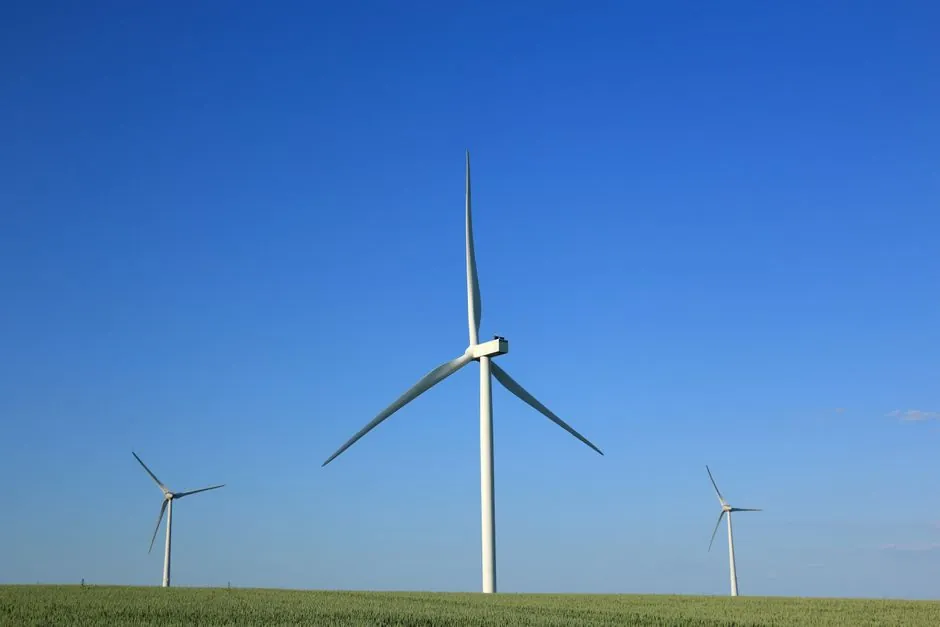
Carbon fiber delivered USD 3.97 billion in global market value in 2026, up from USD 3.54 billion in 2025, with a projected 12.04% CAGR through 2034 on the strength of wind, aerospace, and hydrogen demand [S4].
For energy equipment specifically, the selection question is narrower than for aerospace: stiffness, fatigue life, conductivity, and cost-per-kg rule the matrix, and the precursor route (PAN versus lignin-based) is becoming a procurement variable rather than a chemistry footnote [S3][S4].
Why Carbon Fiber Is the Default Reinforcement for Modern Energy Hardware
Carbon fiber's tensile strength and modulus per unit mass are the highest among the three common reinforcements (carbon, fiberglass, aramid), which is the direct reason wind blade, hydrogen tank, and high-speed rotor designers keep reaching for it over E-glass [S1]. A carbon laminate's crystalline, covalently-bonded axial structure resists bending under continuous cyclic load, which matters in wind turbine blade spars where drivetrain fatigue dominates operating cost [S4]. Fiberglass absorbs more impact energy per unit cost but cannot match the specific modulus required for blades above roughly 80 m, which is why large-tow PAN-based carbon is the workhorse in the segment [S1][S4].
Electrical conductivity is the second-order property that pulls carbon fiber into energy storage hardware. CO2-derived carbon nanotubes and electrospun lignin-based carbon nanofibers are being researched as electrode materials for high-power supercapacitors and energy conversion devices, leveraging the same graphitic surface chemistry that gives structural carbon its conductivity [S2][S3]. That dual structural-plus-electrochemical role is why engineering teams now specify carbon fiber and energy storage materials from the same supplier shortlist.
Decision Criteria: Precursor, Tow Size, Modulus, and Surface Finish
PAN-based precursor dominated 2025 supply and is projected to remain the majority route through 2034, because PAN's spinnability and consistency deliver predictable mechanical properties at industrial scale [S4]. Lignin-based carbon fiber (LCF) is the credible challenger: PAN accounts for 50–77% of conventional carbon fiber cost, and any lignin route that closes the mechanical gap at scale resets the cost curve for the energy sector [S3]. Documented LCF advances through 2026 include thermoplastic polyurethane loadings of ≥10 wt% enabling drop-in compatibility on existing PAN lines, and 20°C earlier stabilization onset using cross-linked poplar lignin/PAN blends [S3].
Tow size is the second selection axis. Large-tow grades (commonly 24K–50K filaments) captured significant 2025 market share in industrial applications, where cost-per-kg and laydown rate dominate over the surface perfection that aerospace requires [S4]. For carbon steel or aluminum hardware that is being retrofitted with composite overlays (bridge tendons, pipeline repair, tower internals), large-tow PAN is the typical default. For high-cycle rotating equipment where surface waviness initiates fatigue cracks, small-tow (1K–12K) PAN or intermediate-modulus grades are still specified despite the 2–3× cost premium [S4].
Modulus grade and surface treatment are the third and fourth axes. Standard-modulus PAN (~230 GPa) suits most wind and hydrogen tank duties; intermediate-modulus (~290 GPa) and high-modulus (>350 GPa) grades are reserved for spacecraft structures and large blade spars where tip deflection governs annual energy production [S4]. Surface sizing, typically epoxy- or polyurethane-based, must be matched to the resin system and the operating temperature window, which is a frequent cause of delamination in cryogenic liquid hydrogen tanks if mismatched [S7].
Comparison of Reinforcement Options for Energy Duty Cycles
Engineers choosing between carbon fiber, fiberglass, and aramid (Kevlar) for energy hardware run the decision against four criteria: specific modulus, fatigue performance, impact tolerance, and cost-per-kg-of-saved-mass. The matrix below captures the trade space as documented in 2026 technical literature. [S1]
Carbon fiber leads on specific modulus and fatigue life, but its impact tolerance is the lowest of the three; fiberglass sits in the middle on modulus but absorbs more impact energy per dollar; aramid (Kevlar) is the toughest and is commonly hybridized with carbon in leading-edge blade skins and cryogenic tank overwraps where impact and permeation both matter [S1]. For cryogenic hydrogen storage in particular, carbon-fiber-reinforced epoxy is attractive for its strength-to-weight ratio, while aramid hybrid layers address the through-thickness permeability that pure carbon laminates cannot [S7].
Cost discipline is what flips the choice in non-aerospace energy applications. Carbon fiber can cost 5–10× more per kg than E-glass, so the design must justify the premium on either mass savings (rotating machinery, vehicle range) or stiffness (blade tip deflection, tower sway) [S5][S6]. Where neither driver is binding, fiberglass remains the economic default; the corollary is that any carbon fiber specification in energy equipment should be traceable to a specific mass or stiffness budget, not to a general "lightweighting" intent [S1][S5].
End-Use Applications Driving 2026 Demand
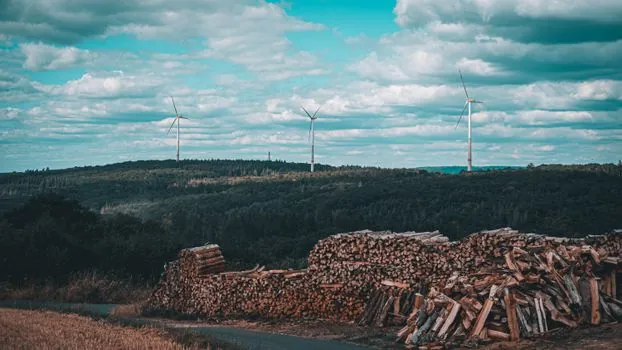
Wind energy is the single largest industrial pull. Longer blades need stiffer, lighter spars, and carbon fiber enables an increase in annual energy production per turbine through improved aerodynamic efficiency and reduced drivetrain loads, which is the explicit mechanism cited in 2026 market analysis [S4]. Asia-Pacific captured 38.4% of 2025 global carbon fiber demand, supported by wind energy, automotive, and aerospace sectors, while North American growth is anchored in defense spending and EV battery enclosures [S4].
Cryogenic hydrogen storage is the second high-growth application. Type IV composite tanks use a polymer liner overwrapped with carbon-fiber-reinforced epoxy, where the carbon's strength-to-weight ratio determines the gravimetric storage efficiency, a binding constraint for heavy-duty fuel cell vehicles [S7]. The published 2026 work confirms that carbon/epoxy remains the primary structural candidate, with aramid hybrids under investigation for permeation and impact performance at 20–80 K operating temperatures [S7].
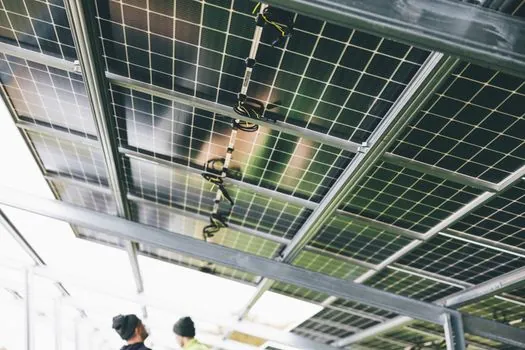
Energy storage and conversion is a smaller but rapidly diversifying segment. CO2-derived carbon nanotubes are being evaluated as electrode materials for high-power energy storage devices, exploiting the same graphitic chemistry that gives structural carbon its conductivity [S2]. Electrospun lignin-based carbon nanofibers are being explored as sustainable supercapacitor and energy conversion electrodes, positioning LCF as a candidate for both structural and electrochemical duty within the same supply chain [S3].
Cost Structure and Procurement Realities
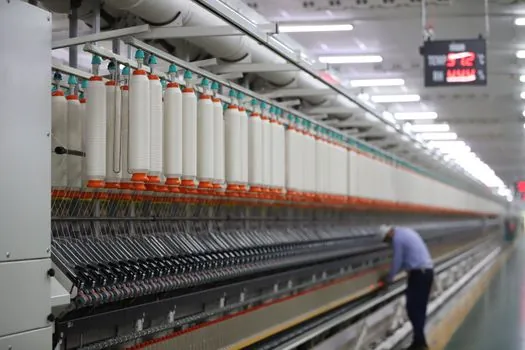
The dominant cost driver remains the precursor. PAN accounts for 50–77% of conventional carbon fiber cost, which is the structural reason lignin-based routes attract sustained R&D investment from 2012 through 2026 [S3]. Beyond precursor, 2026 supplier guidance breaks the cost stack into raw material (PAN or pitch fiber), conversion energy (oxidation, carbonization, graphitization), tooling, labor, and quality control; conversion energy alone can exceed 30% of finished cost for high-modulus grades run at 2,000–3,000°C [S6].
Procurement strategy in 2026 increasingly separates two material flows: aerospace-grade PAN-based carbon (small tow, tight tolerance, certified pedigree) for rotor blades and tank overwraps, and industrial-grade large-tow PAN or emerging LCF for tower internals, battery enclosures, and structural reinforcement [S4][S5]. Tier-one suppliers named in 2026 market tracking include Toray Industries, Syensqo, Teijin Limited, Hexcel Corporation, ZOLTEK Corporation, Hyosung Advanced Materials, Advanced Composites Inc., Mitsubishi Chemical Carbon Fiber and Composites, Formosa M Co. Ltd., Nippon Graphite Fiber, and SGL Carbon [S4].
Customization has become a procurement reality rather than a marketing line. Buyers in 2026 routinely specify tow size, modulus grade, surface sizing, and even fiber areal weight by part zone, which drives demand for tailored layups and preforms rather than off-the-shelf fabric [S5]. For energy equipment in particular, hybrid layups (carbon-aramid for impact, carbon-glass for cost, carbon-lignin for sustainability) are now a standard discussion item in RFQ packages [S3][S5][S7].
Limitations, Failure Modes, and Selection Pitfalls
Carbon fiber's main structural weakness is impact tolerance, which is lower than both fiberglass and aramid because the same covalent axial bonding that delivers stiffness leaves little energy-absorption mechanism for out-of-plane impact [S1]. In wind blade leading edges and hydrogen tank overwraps, this is mitigated by hybridizing with aramid or thermoplastic interleaves, but a pure carbon laminate in a high-impact service environment is a known liability [S1][S7].
Galvanic corrosion is the second failure mode engineers forget. Carbon fiber is electrically conductive; when coupled with carbon steel fasteners or aluminum fittings in a moist environment, the carbon acts as the cathode and accelerates metal loss. Insulation gaskets, fiberglass washers, or polymer bushings are mandatory at the interface, and this is enforced by NACE MR0175-style material compatibility practice in oil and gas service [S2]. Embedding sensors into composite structures also demands care: the conductive matrix can disturb energy meter and NDT probe readings if the layup is not explicitly designed for instrumentation access.
UV and thermal cycling degrade the matrix, not the fiber. Epoxy and polyester resins used with PAN-based carbon lose tensile strength and develop microcracks under prolonged UV exposure, which is a documented failure mode in above-ground tank and tower applications; polyurethane or vinylester matrices, combined with UV-stable topcoats, are the typical mitigation [S5][S6]. For cryogenic service, the inverse risk dominates: matrix microcracking from thermal contraction can permit hydrogen permeation, which is why 2026 research continues to focus on toughened matrices and hybrid fiber systems for liquid hydrogen tanks [S7].
Standards, Sourcing Signals, and What to Track Next
Procurement specs in the energy segment typically reference ASTM D3039 (tensile), ASTM D3410 (compressive), ASTM D5528 (Mode I delamination), and ISO 13003 (fatigue) for composite property data, with manufacturer certificates traceable to lot-level PAN or lignin precursor batches. For hydrogen service, additional reference to ASME BPVC Section X for fiber-reinforced plastic pressure vessels and to CSA ANSI CHMC 1 for composite hydrogen tanks is common in 2026 RFQ packages, though specific tank designs still require case-by-case certification [S7].
Trackable signals for the next 6–12 months include: (1) commercial LCF capacity announcements from Stora Enso, Fraunhofer spinouts, and Toho Tenax Europe, which would shift the cost curve that PAN has held since the 1970s [S3]; (2) revised blade design guidelines from IEC 61400-5 working groups reflecting longer blade experience with carbon-heavy spars [S4]; (3) published results from 2026 lignin/PAN blend trials in cryogenic tank duty, which would either qualify or disqualify LCF for the most demanding structural-energy use case on the near horizon [S3][S7].
For a related cross-industry selection framework, see how composite-by-application decisions are handled in shield machine selection for urban infrastructure, where stiffness-to-mass trade-offs and life-cycle cost discipline mirror the carbon-versus-fiberglass logic in energy hardware.