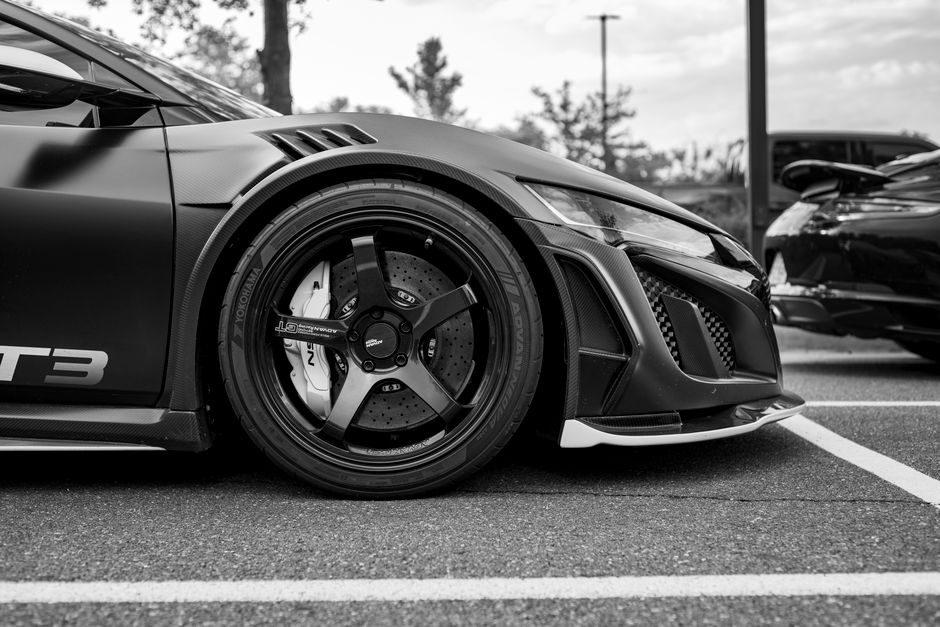
Specifying carbon fiber starts with five engineering gates: weave architecture, tow count, fiber modulus, resin/curing route, and final part geometry. As of 2026-06-27 retail benchmarks, 22 mm OD 3K roll-wrapped tubes list on AliExpress at $0.99-$10.78 per 500-750 mm length across hardness and finish variants [S1], while dry-carbon BMW 5 Series G60 (2023+) aero parts sell at $449-$599 per piece on specialist channels [S2].
Carbon fiber is not a single material — it is a family of intermediate-modulus and high-modulus polyacrylonitrile (PAN)-based reinforcements embedded in epoxy, polyester, vinylester, or toughened thermoset matrices. The same "carbon fiber tube" can range from a hobby-grade pultruded rod to an autoclave-cured, prepreg-laid-up structural component used in motorsport, UAV, and aerospace primary structures, with end-use limits set by the lamination scheme rather than the fiber alone [S3].
Modulus Class and Tensile Stiffness
Standard-modulus PAN fiber (T300-class equivalents) delivers tensile modulus around 230 GPa; intermediate-modulus grades (T800-equivalent) reach 290-300 GPa; high-modulus grades (T1000, M-series) climb to 400-590 GPa. Selection is driven by stiffness-per-kilogram targets: aerospace primary structure and Formula 1 tubs push intermediate-modulus prepreg, while sporting goods, automotive panels, and consumer drones can use standard-modulus cloth at 195-230 GPa [S7].
For OEM steering wheels, drone arms, and bicycle components, manufacturers such as Erismet (Estonia, 15+ years in composites, ~3,000 components/year, exported to 40+ countries) work primarily with standard-to-intermediate modulus woven fabric and UD tape to balance cost and stiffness [S7]. High-modulus grades carry a 5-10x fiber cost premium and are reserved for applications where compressive buckling or deflection (rather than ultimate strength) governs the laminate.
Weave Pattern, Tow Count, and Surface Finish
3K twill weave (2x2 diagonal pattern) is the dominant cosmetic standard for visible automotive trim, UAV shells, and consumer rings because it drapes well on compound curvature and shows a clean anisotropic pattern. Roll-wrapped tubes in 3K twill at 8-30 mm OD are stocked as commodity items on AliExpress at 500-750 mm lengths [S1]. Unidirectional (UD) layups are spec'd where load paths are known and stiffness must be aligned with stress flow, with cosmetic plies of 3K twill added on the visible face.
Finishes split into matte (low-glare, common on motorsport hardware) and semi-gloss (UV-stable clear coat for exterior car bodywork). Carbon Fiber Gear's ring catalog lists 5 twill-weave rings plus 1 UD ring, with semi-gloss as the default and matte as a premium option for buyers wanting the raw-fabric look [S8]. For automotive exterior panels, hand-laid clear-coat carbon (e.g., Excel Carbon's aero parts) is the benchmark because it survives UV exposure and minor stone-chip cycles [S5].
Resin System, Cure Route, and Fiber Volume Fraction
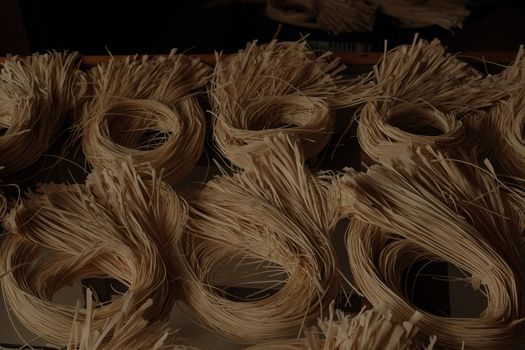
Epoxy is the default matrix for structural parts because of its 80-120 °C continuous service temperature, low shrinkage, and good adhesion to PAN fiber. Polyester and vinylester resins are used for cost-driven non-structural panels, accepting lower service temperature (~70-80 °C) and higher shrinkage. Toughened epoxies and BMI (bismaleimide) systems push continuous service to 180-230 °C for aerospace and under-hood automotive use. [S1]
Fiber volume fraction (Vf) is a hard gate: autoclave-cured prepreg routinely hits Vf = 55-62%, wet layup and vacuum-bag-only (VBO) laminates land at 35-45%, and pultruded rods reach 55-65% in the fiber-rich core. Creedx (India, 16,000 sq.ft facility) lists end-to-end capability from concept through mold fabrication, laminate scheme design, part manufacturing, and UV clear-coating — a typical tier-1 custom composites workflow covering prototype, short run, and volume production [S3].
Geometry: Tubes, Plates, and Roll-Wrap vs. Pultrusion
For tubular parts the process decision is roll-wrap (fabric wrapped around a mandrel, cured under vacuum/autoclave) versus pultrusion (fibers pulled through a resin bath and heated die). Roll-wrapped tubes are favored for 8-30 mm OD hobby and motorsport hardware because they allow 3K cosmetic outer plies; pultruded rods give higher Vf and better axial stiffness at lower cost but show fiber print-through and a smoother, less cosmetic surface. AliExpress retail listings for 22 mm tubes split into roll-wrapped 3K matte/twill (shorter lengths, cosmetic) and pultruded UD-style rods (longer runs, structural) at 4.8-4.9 seller ratings [S1].
For flat panels, plate stock and sandwich-cored laminates (carbon skins over PVC, PET, or honeycomb core) are the default in motorsport and UAV floors. The selection gate is areal stiffness (kN·m²/kg) versus cost per square meter. For tubes, the comparable gate is specific bending stiffness (EI/m) per dollar, which roll-wrapped 3K tubes win in the 8-30 mm OD hobby segment but lose above 50 mm OD where filament-wound or pultruded alternatives dominate.
Application Segments and 2026 Price Bands

Automotive interior/exterior trim (spoilers, mirror covers, steering wheels) is the highest-volume cosmetic segment. CarbonSteer prices 2018+ Ford Mustang and Dodge Charger carbon steering wheels at ¥5,172-¥6,207 (sale) versus ¥6,553-¥7,588 (regular), with Chevrolet C7 Corvette variants in the same band [S4]. BMW G60-specific dry carbon parts (spoilers and mirror covers) list at $449.99–$599.00 per piece on zisdesign.com [S2].
Industrial and structural use is split between UAV airframes (intermediate-modulus prepreg, autoclave cure, Vf > 58%), motorsport crash structures (honeycomb-cored carbon, FIA-spec), aerospace secondary structure (BMI or toughened epoxy, qualified to OEM specifications), and sporting goods (fishing rods, bicycle frames, tennis rackets — typically standard-modulus 3K twill, Vf 45-55%). The CompositesWorld Carbon Fiber 2026 conference (Huntsville, Alabama, 10-12 November 2026) is the largest North American technical forum covering PAN precursor, fiber conversion, and downstream composite applications [S6].
Verification Checklist Before You Buy or Specify
Engineers should confirm five data points before releasing a purchase order: (1) fiber type and modulus grade (T300/T800/M55J-class equivalents), (2) weave or layup sequence (3K twill, UD, or hybrid), (3) resin system and cure route (epoxy prepreg autoclave vs. wet layup vs. pultrusion), (4) fiber volume fraction or cured ply thickness, and (5) declared mechanical properties (tensile strength, modulus, ILSS) tested to ASTM D3039 or ISO 527 protocols. AliExpress retail 22 mm tubes list only OD, length, weave, and "3K hardness" — buyers needing aerospace-grade data should source from manufacturers publishing allowables, not marketplace listings [S1].
Trackable signals for the next 90 days: the Carbon Fiber 2026 conference program (Huntsville, AL, 10-12 November 2026) for new precursor and conversion capacity announcements [S6]; continued expansion of Indian and Eastern-European tier-1 custom composite shops like Creedx and Erismet that handle prototype-to-volume ramps under one roof [S3][S7]; and steady downward pressure on retail 3K tube pricing as pultrusion capacity scales, with 22 mm OD tubes still available under $3 per 600 mm length at the consumer end [S1]. For a parallel look at how spec gates drive selection on adjacent industrial lines, see single-girder crane sizing and selection.
For component-level specifications, see carbon steel, and concrete fiber.