Stainless steel and copper both sit at the high end of the custom-fabrication metals list, but they answer different design questions [S4]. The decision rarely comes down to one property — it comes down to which property failure you cannot tolerate: a thermal hotspot, a galvanic couple, a chloride pitting event, or a finished-surface colour shift over a 20-year service life.
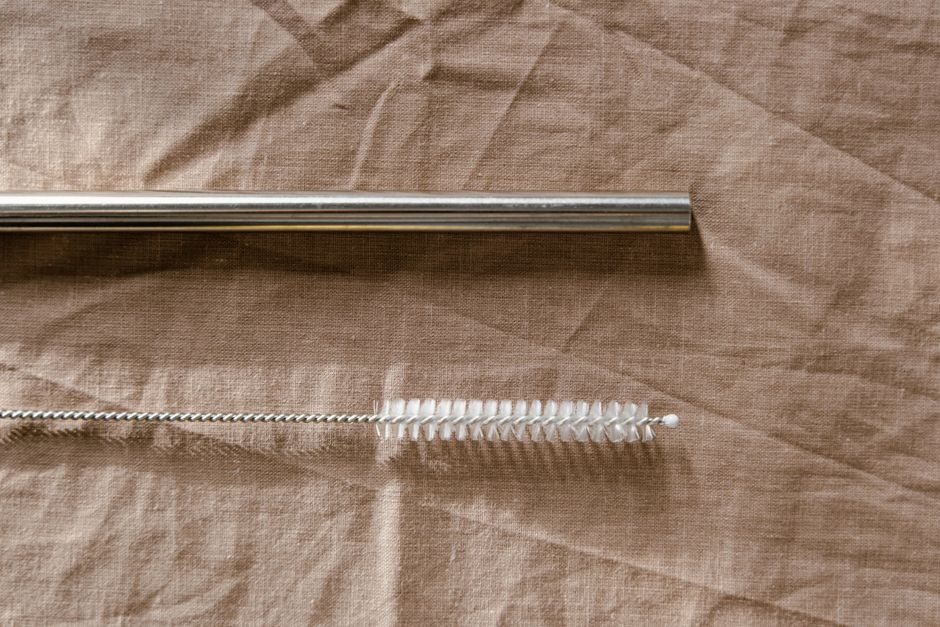
Both metals are routinely machined, knitted into mesh, drawn into wire, and plated onto one another — a Yiwugo-listed 2026-05-07 SKU ships stainless steel copper-plated drinkware in 60 mL to 5.0 L sizes at CN¥ 13.0–82.0 ex-works per piece, MOQ 5 000 [S5]. That single catalog line shows how the two materials already meet on the production floor: a stainless structural substrate with a copper functional surface, joined by electroplating. For a spec writer the question is when to specify each, and when to specify the hybrid.
Material identity and the property gap that drives the decision
304/316 austenitic stainless steel is an iron-chromium-nickel alloy (typically 18% Cr, 8–10% Ni for 304; 16–18% Cr, 10–14% Ni, 2–3% Mo for 316) that relies on a passive chromium-oxide film for corrosion resistance [S3]. Copper is a single-element face-centred-cubic metal (UNS C11000 electrolytic tough pitch is 99.9% Cu minimum) whose corrosion resistance in clean water comes from a slow-forming cuprous-oxide patina, not a self-healing passive film in the stainless sense.
Three numbers dominate the engineering choice. Thermal conductivity at 20 °C: copper ≈ 401 W/(m·K), 304 stainless ≈ 16 W/(m·K) — roughly a 25× gap. Electrical conductivity: copper ≈ 5.96×10⁷ S/m (100% IACS), 304 stainless ≈ 1.4×10⁶ S/m (≈ 2.4% IACS). Density: copper 8.96 g/cm³ versus 304 stainless 8.00 g/cm³. Where a heat exchanger, busbar, or induction coil is being specified, copper wins on raw physics; where a structural bracket, hygienic process pipe, or architectural façade panel is being specified, stainless wins on strength-to-weight and oxidation tolerance.
A 2020 Nature Scientific Reports study that compared the two under ultrashort-pulsed direct laser interference patterning gave the laser-machining community a hard reference: at 800 nm and 300 K the absorptivity of copper is 33×10⁷ 1/m versus 5.74×10⁷ 1/m for stainless steel, and reflectivity is 0.9645 for copper versus 0.601 for stainless [S6]. Translation for the shop floor: copper reflects most of the incoming NIR laser energy and needs markedly different pulse parameters to mark, texture, or weld.
Corrosion behaviour: passivation vs patina vs galvanic couples
Stainless steel’s corrosion defence is a 1–3 nm chromium-oxide layer that reforms spontaneously when scratched, provided oxygen is present. That passive film breaks down in chloride-rich service (seawater, bleach, road de-icing salt) once the chloride concentration and temperature push past the pitting resistance equivalent number (PREN = %Cr + 3.3×%Mo + 16×%N); 316 with 2–3% Mo typically lands in the PREN 24–28 range, which is why 316 is the default for marine and pharmaceutical piping, while 304 (PREN ≈ 18) is restricted to milder wash-down service. [S1]
Copper corrodes by forming a layered oxide/carbonate/sulphide patina — green in urban/industrial atmospheres (brochantite/antlerite mix), brown in clean indoor air. In potable-water service copper piping develops a thin, stable cuprous-oxide (Cu₂O) layer that actually reduces copper release over time, which is why copper is one of the few metals approved by major plumbing codes for domestic hot- and cold-water distribution. In ammonia- or amine-bearing service, however, copper fails by stress-corrosion cracking and is banned in many chemical-plant specs.
The galvanic-couple risk is the silent failure mode that traps unwary designers. When copper and stainless are coupled in a wet electrolyte, copper becomes the cathode and stainless the anode — current flows the wrong way for the usual worry. In practice, stainless will pit and copper will be untouched at the joint, and the small anode-to-cathode area ratio in threaded stainless-to-copper transitions accelerates pitting on the stainless side. The mitigation is dielectric unions, isolation gaskets, or simply not putting the two in continuous metallic contact in chloride-bearing water.
Mechanical, thermal, and fabrication comparison
On tensile and yield strength, stainless outperforms copper by a wide margin. Typical annealed 304 is 515 MPa tensile / 205 MPa yield, with elongation around 40%; annealed C110 copper is 220 MPa tensile / 69 MPa yield, with elongation around 35%. Work-hardening closes the gap in the H tempers — C110 H04 (hard) reaches 345 MPa tensile — but it never crosses stainless, and at that point copper has lost most of its conductivity (H04 ≈ 85% IACS versus O60 ≈ 101% IACS). [S2]
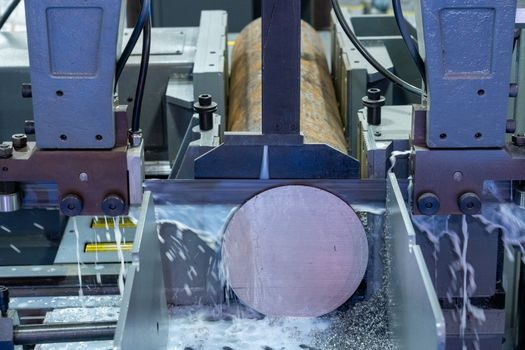
On fabrication, both metals machine cleanly. DEREMAUX (France) lists stainless, steel, titanium, copper, cast-iron, plastic, and composite in a single machine-park description covering prototyping through medium series, signalling that the same CNC fleet handles both with only feed/speed and tool-coating changes [S1].
On joining, stainless is the default for TIG, MIG, spot, and laser welding in austenitic grades; copper TIG-welds but is far more thermally conductive, so heat input has to be ramped and an inert backing gas is needed on the root face to prevent oxide inclusions. Soldering and brazing favour copper — its higher thermal conductivity pulls heat into the joint quickly and the tin-silver or copper-phosphorus fillers wet copper reliably. For EMI/RFI shielding gaskets that need both conductivity and spring recovery, knitted wire mesh gaskets are routinely built from steel, stainless steel, copper, and combined stainless/copper mesh — the Temas SPRING series catalogues all four constructions in one product line [S2].
Application split: who each metal is for, and who it is not for
Copper is the right call for busbars, transformer windings, heat-exchanger tubes (where water chemistry is controlled), brewery and distillery hot liquor lines, antimicrobial touch surfaces in healthcare, and architectural roofing where the green patina is the design intent. Copper is the wrong call for any service carrying ammonia, amines, or strong sulphides; for any structural load path where 200+ MPa yield is the design driver; and for chloride-bearing water where galvanic acceleration of an attached stainless component is unacceptable. [S3]
Stainless steel is the right call for process piping in pharma, food, dairy, and beverage; for architectural cladding and handrails where a stable finish is required for 30+ years; for medical instruments and implants (316L/316LVM); for kitchen equipment and hygienic process skids; and for any chloride-bearing service where the grade has been selected to a documented PREN. Stainless is the wrong call for any application that depends on copper’s thermal or electrical conductivity, for a design that budgets for the green patina, or for any service above ≈ 425 °C in continuous operation where 304 starts to sensitise and grain-boundary corrosion becomes a risk.
For shoppers comparing the two on price-per-piece rather than per-property, a May 2026 Yiwugo listing for copper-plated stainless drinkware — 60 mL at CN¥ 13.0, 350 mL at CN¥ 17.8, 1.3 L at CN¥ 28.8, 3.0 L at CN¥ 66.5, 5.0 L at CN¥ 82.0 — shows how cheap a copper-finished stainless article is at volume (MOQ 5 000 pieces) [S5]. The plating carries the copper brand, the stainless carries the structural load, and the spec writer gets the best of both metals without paying for a solid-copper body.
Selection criteria: a four-axis decision frame
When the spec is being written, four axes decide the metal in 90% of cases. Axis 1 is conductivity requirement: if the application is defined by W/(m·K) or %IACS, copper wins by an order of magnitude. Axis 2 is corrosion environment: chloride + temperature pushes to 316/904L/super-austenitic; ammonia/amine pushes away from copper entirely. Axis 3 is mechanical load: a yield-strength requirement above 200 MPa in the annealed condition rules out copper for the structural member, though a copper heat-spreader bonded to a stainless structural shell is a legitimate hybrid. Axis 4 is finish life: a 30-year architectural finish in coastal air points to stainless (or copper, if patina is the intent); a 5-year consumer product finish is wide open. [S4]
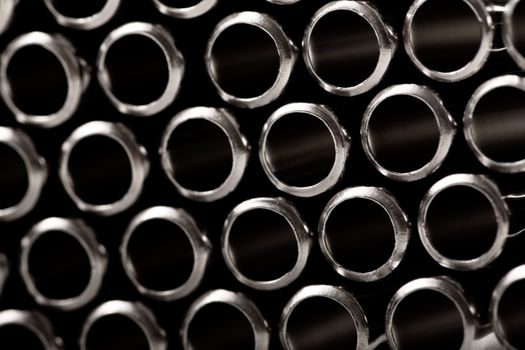
For a more engineering-granular cross-reference, stainless steel carries the iron-family alloy system, mechanical properties, and grade map (304, 316, 321, 347, duplex, super-austenitic), while copper material covers C101/C110/C122, brass and bronze families, tempers, and conductivity grades. The full fabrication chain for stainless tube and pipe is documented separately under stainless pipe for process-piping readers.
Manufacturing and supply chain signals, 2026-06
On the supply side, the Stainless Steel Club (stainless.club) — a daily stainless and special-steel market-data service covering supply, demand, imports/exports for 75 countries, raw-material prices, and bottom-up end-use forecasts — was logged active on 2026-06-21, two days before this article’s date [S3]. That kind of granular price publication is itself a signal: the stainless market is volatile enough in mid-2026 to justify a daily news product, and any copper-vs-stainless tonnage decision should be checked against current nickel surcharges (the dominant 304/316 cost driver) and against LME copper before a PO is cut.
On the fabrication side, the European CNC machining market continues to handle both metals on the same equipment park, as DEREMAUX’s product page confirms [S1]. On the consumables side, China-wiremesh (Anping, Hebei) lists stainless steel woven-wire mesh as a stock item with 30+ years of production history, with the product family typically extending to copper, brass, and galvanised-steel mesh on the same looms [S7]. That shared production infrastructure means woven mesh in either metal is a near-commodity procurement; the spec question is grade (304 vs 316) and wire diameter, not whether the loom can run it.
Standards, sourcing, and the documentation that locks the spec
For pressure-bearing and process service, ASTM A312 (seamless and welded austenitic stainless pipe), ASTM B88 (seamless copper water tube), ASME B16.20 (ring-joint gaskets — referenced here because the SPRING gasket line is a compression/EMI product, not a pressure-boundary one [S2]), and the relevant EN/ISO equivalents govern the supply. For corrosion qualification, ASTM G48 (pitting/crevice) and ASTM G36 (SCC) are the lab tests that justify a 316 spec in chloride service. None of these standards are being revised at a date-relevant cut-off in the research, and any future revision date should be confirmed against the issuing body before it is repeated.
Two trackable signals for the next buying cycle: (1) the LME copper and nickel pricing pages on the Stainless Steel Club portal [S3] — when the nickel surcharge on 304/316 rises faster than the LME copper price, the cost gap between copper-plated stainless and solid copper narrows and the hybrid SKU economics improve; (2) the Anping wire-mesh producers’ published stock lists [S7] — a 304-to-316 grade swap in catalogue is a leading indicator of chloride-service demand shifting. For readers also choosing between adjacent shop-floor equipment, the selection logic in die casting machine selection and steel strand buying guide follows the same hard-gates-first discipline: fix the conductivity, corrosion, and load axes, then choose the metal.