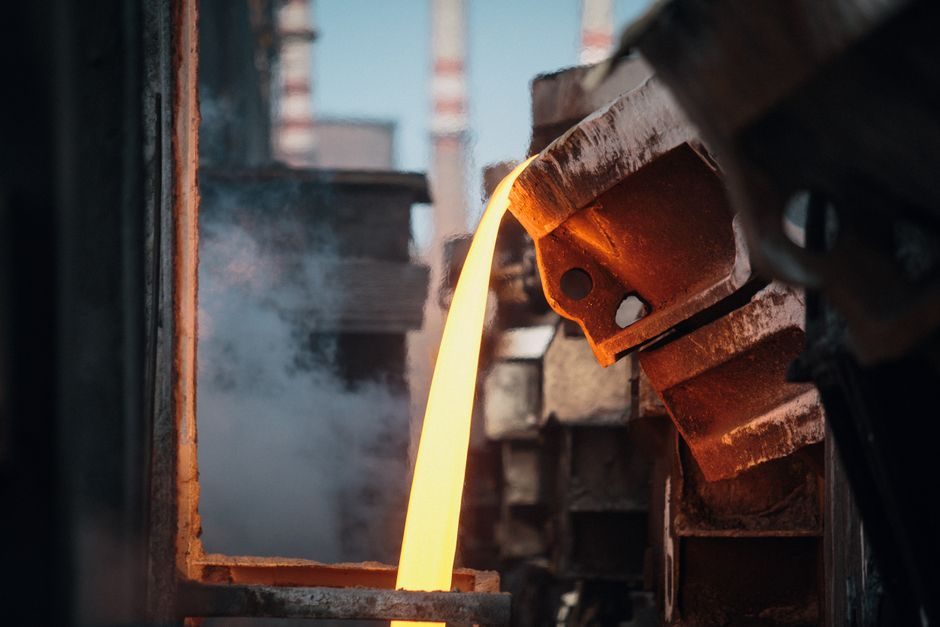
Selection between cast iron and carbon steel is decided by three numbers: carbon content (typically 0.04–2.0 wt% for the cast-iron family, 0.05–0.95 wt% for carbon steel), graphite morphology in the iron, and whether the duty is cast or wrought [S1].
Cast iron in this comparison covers gray iron and ductile iron, not the white/alloyed variants used for abrasion service; the price spread between gray and ductile is the dominant cost lever inside the iron family [S1].
Carbon Content, Microstructure and the Resulting Property Gap
Gray iron's flake graphite acts as a stress concentrator and a chip-breaker, giving high compressive strength, very good damping, and limited ductility; the matrix is usually ferrite + pearlite with 2.5–4.0 wt% C and 1.0–3.0 wt% Si [S1].
Ductile (nodular) iron replaces those flakes with spheroidal graphite via Mg/Ce treatment, lifting elongation from roughly 0.5–1% (gray) to 2–18% depending on matrix and temper, and pushing tensile strength from 150–400 MPa (gray) into the 350–700+ MPa band (ductile) [S1].
Carbon steel at the low end (A36, 1015) sits around 0.05–0.25 wt% C with a ferrite-dominated matrix, weldable and formable; the high end (1095, W1) is in the 0.90–1.05 wt% C range, water-hardenable, used for springs, blades and punches [S1].
Tensile, Ductility, Hardness and Machinability Compared
On tensile strength, the rough ranking is gray iron (150–400 MPa) below carbon steel (A36 ≈ 400 MPa, 1045 ≈ 565–860 MPa depending on condition), with ductile iron (350–700+ MPa) overlapping the mid-steel range and beating it on damping per unit mass [S1].
Elongation is the cleanest separator: gray iron 0.5–1%, ductile iron 2–18%, low-carbon steel 25–35%, medium-carbon steel 10–25%, high-carbon steel 1–10% [S1]. A ductility-gated service (crash frames, suspension, pressure-vessel shells) defaults to steel.
Machinability is rated at 100% for free-cutting steel, ~80% for ductile iron, and ~50% for gray iron, but the chips from gray iron break cleanly (graphite flakes act as chip-breakers), which is why brake rotors, machine-tool beds and pump housings are still specified as gray iron [S1].
Castability, Weldability and Repair Behavior
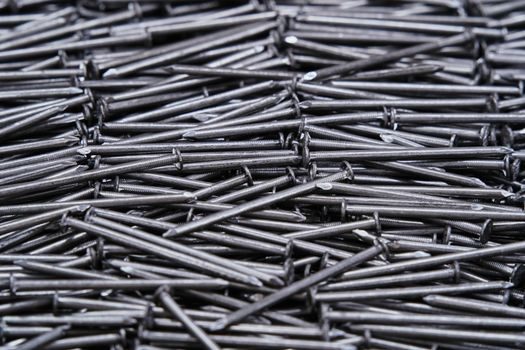
Cast iron pours cleanly into complex shapes with lower shrinkage than steel and minimal cracking risk during cooling, which is why manhole covers, engine blocks, gear blanks and pipe fittings remain cast rather than fabricated [S1].
Weldability is the inverse problem: gray iron is generally considered unweldable for production (high carbon + flake graphite → brittle HAZ, hard martensite, cracking); ductile iron can be welded with nickel-iron rods and preheat, but most repairs go to brazing or mechanical methods; carbon steel, especially the low- and medium-carbon grades, is fully weldable by SMAW, GMAW, GTAW with routine procedure [S1].
For forged or rolled parts (shafts, axles, rails, springs, pressure-vessel heads) there is no equivalent cast-iron grade — those duties go to carbon steel A36, 1045, 4140, 5160 by default [S1].
Cost, Corrosion and Wear Trade-Offs
Gray iron is cheaper than ductile iron but has lower tensile strength and ductility, so it is not a replaceable material for carbon steel where mechanical requirements apply, whereas ductile iron can replace carbon steel in some low-grade applications due to its comparable tensile strength and elongation [S1].
Corrosion behavior is poor for both — both are ferrous, both rely on coatings, inhibitors or alloy upgrade. Gray iron's graphite network can act as a galvanic cathode accelerating matrix attack in some chemistries, while rusting is roughly comparable between the two once the surface is uniform [S1].
Wear behavior splits by mode: gray iron's flake graphite provides excellent dry sliding and emergency-run-in lubrication, which is why brake drums and machine-tool slideways are gray iron; ductile iron and carbon steel need lubrication or surface treatment (induction, nitriding) to match that sliding-wear envelope [S1].
Application Domains by Service Class
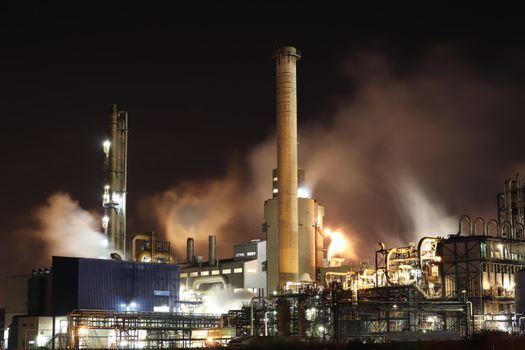
Specifying gray iron is appropriate for static or mildly loaded, vibration-damped, complex-geometry, low-cost castings: pump housings, valve bodies, manhole covers, counterweights, brake drums/discs, machine-tool beds, gear-blank cores [S1].
Specifying ductile iron is appropriate where the casting must carry dynamic or impact load: automotive crankshafts, steering knuckles, wind-turbine hubs, ductile iron pipe (DI pipe) for water mains — DI classes 350–450 (≈350–450 MPa tensile) are the workhorses in municipal water networks [S1].
Specifying carbon steel is appropriate for any wrought or welded duty: structural plate (A36), pressure vessels (SA-516), linepipe (API 5L X42–X80), shafts (1045, 4140), springs (5160, 1095), rails, rebar, fasteners. For cookware, the May 2026 head-to-head concluded carbon steel skillets are the daily-driver pick (lighter, more responsive heat, induction- and oven-friendly) and cast iron is the retention specialist (heavy, slow, unmatched heat capacity, ideal for searing and oven-to-table) [S2].
Standards, Inspection and Procurement Anchor
Standard designations most often seen on a casting drawing: ASTM A48 for gray iron (tensile classes 20–60, ksi × 1000), ASTM A536 for ductile iron (60-40-18, 65-45-12, 80-55-06, 100-70-03 etc., yield-elongation-% triplets), ASTM A216 for cast carbon-steel valves, ASTM A27 for cast mild-steel general engineering [S1].
Standard designations on the steel side: ASTM A36 for structural, ASTM A516 for pressure-vessel plate, ASTM A106/A53 for pipe, AISI/SAE 10xx (plain-carbon) and 41xx/51xx (alloyed) for bars, with EN equivalents (S235, S355, C45, 42CrMo4) for the European market [S1].
For high-temperature in-service verification, GOST 22536.14-1988 covers spectral determination of zirconium in carbon steel and unalloyed cast iron — useful context when reviewing a Russian/CIS mill cert [S6].
Limits, Failure Modes and Common Mistakes
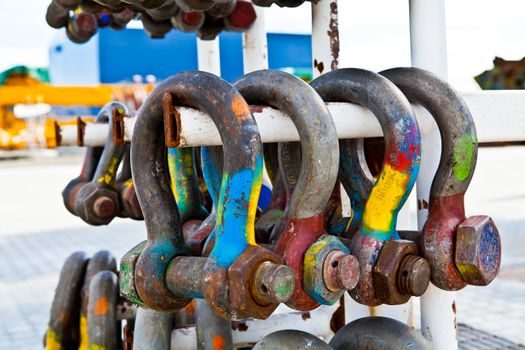
Cast iron's hard limit is its near-zero ductility in the gray grade; a dropped, overloaded or impact-loaded gray iron casting shatters rather than bends, and the failure is not a ductile warning. Ductile iron adds ductility but remains notch-sensitive relative to steel and still loses the game on cold-temperature Charpy transition (typical −20 °C impact values around 12–27 J for ferritic ductile, depending on section and Si) [S1].
Common spec errors: trying to weld a gray iron part to fix a crack (use brazing, stitch with nickel-iron, or replace); picking cast iron for a service that needs tight dimensional control after heat-treat (castings move less than forgings but steel is the better choice when post-temper stability matters); picking carbon steel for a complex thin-wall housing when the geometry screams for casting and the loads are static — the unit cost and machining burden will kill the steel option [S1].
Trackable signals for the next procurement cycle: the May 2026 market listing for cast-iron carbon raiser (calcined petroleum coke, fixed carbon 98.5%, 10 t MOQ at US$310–600/t ex-Tianjin) [S5] and the closed-form buyer discussion threads on carbon-steel woks and skillets (14-gauge flat-base with wood handles, daily-driver cookware category) [S3] both confirm the two materials are sourcing-active rather than heritage categories.
Cross-reference for spec-driven grade, form and mill selection is the Carbon Steel Buying Guide 2026; for the structural/mesh comparison that frequently arises in reinforcement work, see Steel Strand vs Welded Steel Mesh; and for the cast-route side of the same ferrous family tree, Hot Chamber vs Aluminum Die Casting Machine frames the equipment choice that produces the cast-iron parts discussed above.
For component-level specifications, see carbon fiber.