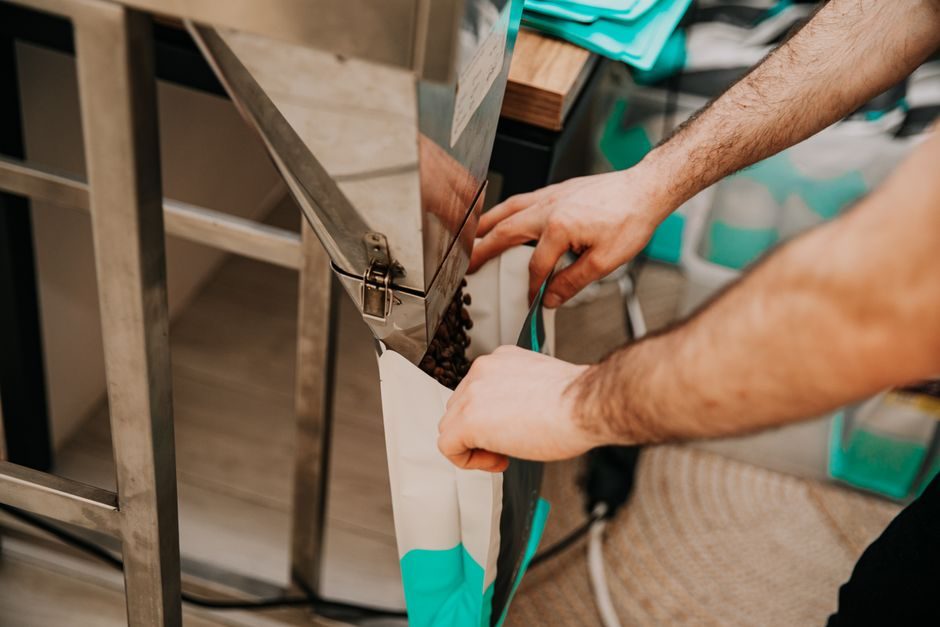
Carton sealers and vacuum packaging machines occupy two distinct stages of an end-of-line packaging system: the first closes a corrugated shipper with pressure-sensitive or hot-melt adhesive tape, the second evacuates air from a flexible pouch and heat-seals it for shelf-life or tamper evidence.
Buyer specifications differ accordingly — carton sealers are typically selected on throughput (15-30 cases/min), drive type (manual vs semi-auto vs automatic), and tape width (48 mm, 60 mm, 75 mm), whereas vacuum sealers are selected on chamber size, pump capacity (m³/h), and final vacuum level [S2][S3].
Functional Scope and Sealing Mechanism
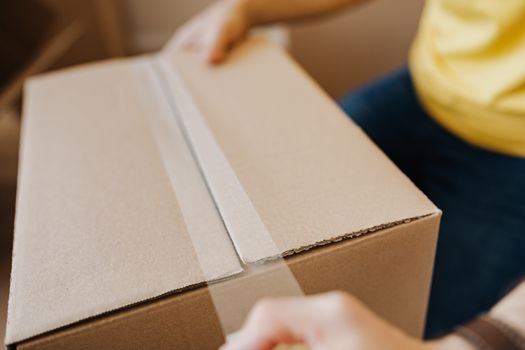
A carton sealer applies adhesive tape (commonly BOPP acrylic at 48-75 mm width) to the top and bottom seams of an erected corrugated carton box, with belt-driven side drives pulling the case through a fixed taping head [S1].
A vacuum packaging machine, by contrast, places a filled pouch inside a chamber, evacuates air to typically ≤1% residual O₂ for food-grade cycles, and heat-seals the open edge using nichrome or impulse heater bars [S2][S4].
Single-chamber, double-chamber, and belt-continuous (roll-stock) chamber geometries cover throughput bands from roughly 1 cycle/min for tabletop lab units to 6 cycles/min on industrial double-chamber frames [S3][S4].
Throughput and Drive-Train Comparison
Carton sealers in the 2026 vendor catalog split into three bands: manual lever units for low-volume pack stations (~5 cases/min), semi-automatic uniform-side sealers with electric drive (15-25 cases/min), and fully automatic random-size sealers with PLC adjustment (25-40 cases/min) [S1][S5].
Vacuum chamber machines are gated by pump displacement: a 20 m³/h oil-lubricated rotary vane pump supports ~2-3 cycles/min on a single-chamber 400×350×150 mm plate, while a 100 m³/h dry pump configuration on a 600×550×200 mm chamber reaches 5-6 cycles/min for meat or cheese processors [S2][S3].
Carton throughput is therefore typically 5-10× higher per machine than vacuum throughput, but vacuum adds 2-5 days of refrigerated shelf-life versus a sealed carton in a comparable food SKU [S4].
Selection Criteria: Which Machine Fits the SKU
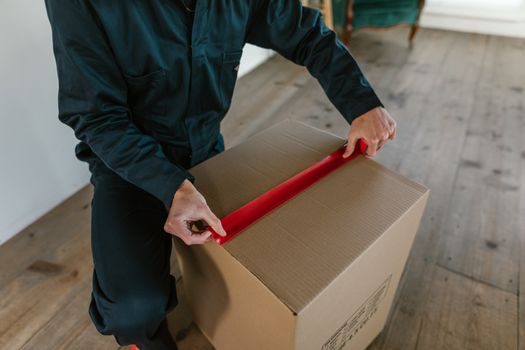
Carton sealers are the correct choice when the primary pack is already a rigid shipper (cereal, hardware, cosmetics, e-commerce fulfilment), the SKU does not require oxygen or moisture barrier, and throughput is the binding constraint [S1].
Vacuum packaging machines are the correct choice when the primary pack is a flexible film pouch (fresh meat, cheese, cooked rice, electronic components needing ESD-barrier), and the binding constraint is residual O₂, microbial shelf-life, or volume reduction for shipping density [S3][S4].
Hybrid lines exist — a primary vacuum-sealed retail pouch is then loaded into a corrugated shipper and run through a carton sealer for distribution, so most processors specify both categories rather than choosing one [S3].
Material, Standard, and Compliance Anchors
Tape adhesion on carton sealers is governed by the BOPP/acrylic adhesive spec from the tape supplier; common widths (48 mm, 60 mm, 75 mm) align with the FEFCO 0200-series case dimensions used in EU/US distribution [S1][S3].
Vacuum packaging for food contact must satisfy regional food-contact migration rules (EU 1935/2004, US FDA 21 CFR) on the inner pouch film; chamber machines sold into EU export lines typically carry CE marking and follow ISO 9001 production under the OEM's quality system [S3].
Electrical control chambers on household/light-commercial vacuum sealers are common in the 2026 catalog, with suppliers explicitly marketing "electrical control chamber vacuum sealer for household and commercial packaging" [S2].
Supplier Landscape and Sourcing Bands (2026-07)
Wenzhou Xingye (operating as Duoqi Packing) and KUNBA both publish a nine-category product tree covering bag sealers, vacuum packers, and carton sealers from the same Zhejiang/Guangdong cluster, with chamber vacuum sealers in stock and CE-marked [S2][S4].
RUI YOUNA (cnyouna.com) reports 15+ years of operation, 5 production lines on a 5,000 m² site, ~100 staff, and CE-certified machines sold to 100+ export countries — typical mid-tier Chinese packaging OEM scale [S3].
Gujarat-based Packmaker Rajkot focuses on sealing, shrink, and wrapping equipment for the Indian domestic and export market, with both tape sealers and vacuum units in the catalog [S1].
Integration and Failure-Mode Trade-offs
Carton sealer failure modes are mechanical: belt wear, taping-head clog from adhesive build-up, and case-size mis-adjustment on random-size frames; spare-parts exposure is high because parts are off-the-shelf bearings, belts, and limit switches [S1][S5].
Vacuum sealer failure modes centre on pump degradation (oil-lubricated vane pumps require 1,000-2,000 h oil change intervals), seal-bar heater burnout, and chamber gasket compression set; OEM service contracts typically cover 12-month machine warranty with 6-month coverage on motor and circuit board [S3].
For lines running both, a PLC/HMI upgrade on the vacuum packaging machine plus a simple conveyor/divider upstream of the capping-sealing-machine or carton sealer is the most common retrofit; full line integration typically adds 15-25% to total capex over standalone units [S2][S3].
Decision Matrix and Use-Case Recommendation
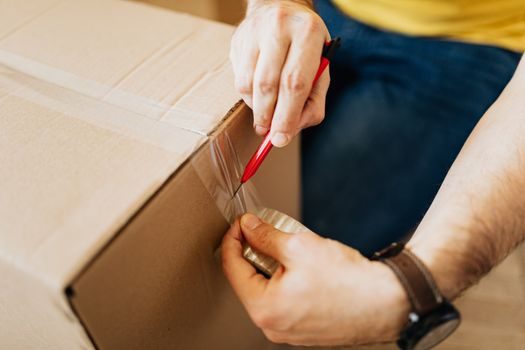
Use carton sealer when: SKU is rigid, throughput is ≥15 cases/min, barrier is unnecessary, capex ceiling is below USD 3,000 for semi-auto; consider vacuum packaging when: SKU is flexible and oxygen-sensitive, residual O₂ must be ≤1%, and capex ceiling sits in the USD 2,000-8,000 band for single-chamber or USD 8,000-25,000 band for double-chamber industrial units [S1][S2][S4].
Both are specified — not chosen between — on most food processors' end-of-line: a vacuum-sealed retail pouch (shelf-life lever) loaded into a corrugated shipper closed by a carton sealer (throughput lever), as catalogued by Duoqi and KUNBA [S2][S4].
Reference: see the related vendor map at Carton Sealing Machine Suppliers: Spec Map, Drive Types, and Sourcing Bands for drive-type pricing tiers, and the How to Choose a Stretch Wrapping Machine brief for the downstream pallet-wrapping stage that typically follows both machines on a complete end-of-line.