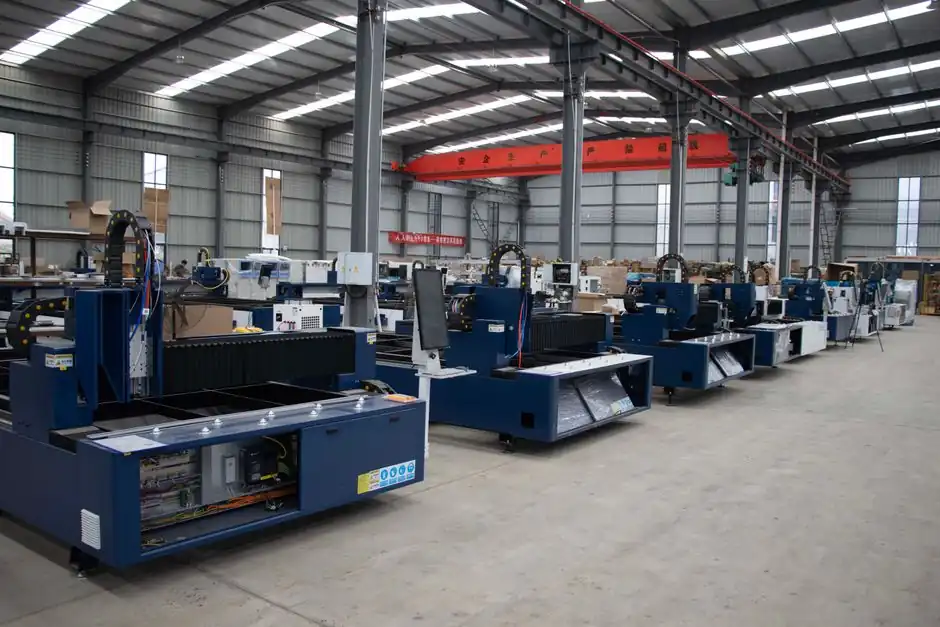
For corrugated case coding, large-character inkjet (LCI) systems and laser markers split the workload along three axes: substrate compatibility, character height range, and total cost of ownership over a 5-year window [S1][S4].
LCI printers using drop-on-demand piezo or valve-jet heads deposit 7-128 mm characters on porous substrates like kraft and corrugated at line speeds commonly above 30 m/min, while CO2 (10.6 µm) and fiber (1.06 µm) laser markers etch, ablate, or color-shift coated board, PET, glass, and bare metal without ink or solvent [S2][S5].
Substrate, Ink, and Mark Mechanism
LCI heads fire solvent- or water-based ink droplets through nozzles sized 50-200 µm onto the case, making the process non-contact and tolerant of corrugated flute distortion, dust, and minor surface irregularity [S2][S3]. A typical LCI throw distance is 5-15 mm, and dual-head print bars cover two opposing case faces in one pass, which is the working principle behind dual-printhead case coders for two-side carton printing deployed on retail-ready packaging lines [S3][S6].
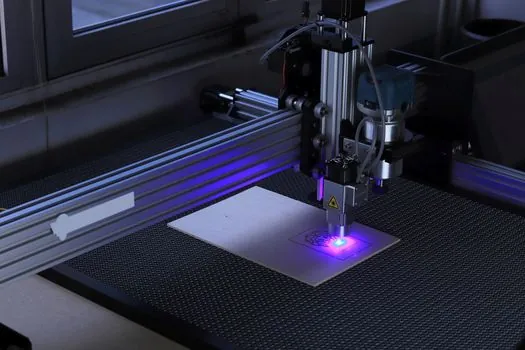
Laser markers remove that ink dependency by focusing a CW or pulsed beam onto a 0.1-0.5 mm spot, producing three physically distinct mark types: coloration (low-power molecular rearrangement, smoothest surface), ablation (vaporizing 5-50 µm of coating or paint), and engraving (deeper cut, raised contrast) [S2]. Marking field size on industrial case lasers typically scales from 100×100 mm up to 300×300 mm, with line speeds for vector codes in the 2,000 characters-per-second range [S2].
Resolution, Permanence, and Contrast
LCI print resolution is fundamentally bound by droplet size and substrate absorbency: 180-300 dpi is common, character edges feather on uncoated kraft, and codes can smear under condensation unless the ink chemistry is matched (MEK, ethanol, or UV-cure) [S1][S4]. Codes remain readable for 6-24 months in normal warehouse conditions but degrade under abrasion, solvents, or outdoor UV exposure [S4].
Laser-coded marks are physical changes to the substrate, so they resist solvents, abrasion, and most chemical washes; contrast on kraft is acceptable only when the paper has a contrasting top ply or the laser ablates the top layer to expose a lighter core [S4]. On coated paperboard, PE-laminated board, and painted metal, contrast ratios above 0.8 (print contrast signal / background) are typical, which is why laser has become the default for serialized pharmaceutical and automotive case marks [S1][S2].
Operating Cost: Capex vs Consumables
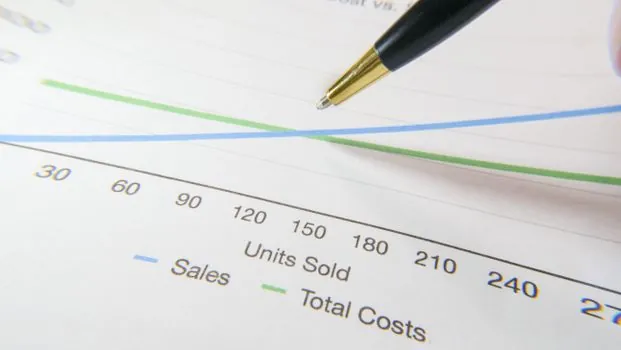
Industrial laser case markers carry a 2-4x higher upfront capital cost than a comparable LCI station, but they consume no ink, no make-up solvent, and no printhead flush cycles, which is why the 5-year operating cost of a laser station can fall 30-50% below a high-throughput CIJ/LCI line once ink and maintenance hours are counted [S4][S7][S8].
Maintenance intervals diverge sharply: LCI heads need weekly nozzle flushing and quarterly pump/filter service, while laser sources are rated 20,000-100,000 hours MTBF with only annual optics cleaning, and the absence of solvent reduces ventilation and VOC abatement capex [S4][S7].
Speed, Changeover, and Line Integration
For high-speed case lines above 60 cases/min, LCI supports very short throw distances and integrates with encoder-triggered firing so the same head can change from 1-line batch codes to 4-line GS1-128 pallet IDs in under 60 seconds via a recipe select [S1][S3]. Piezo LCI heads (e.g., RNJet E1-72+, RNJet 72/140 XL series) are explicitly marketed for case printing, cardboard box marking, and large-character stand-alone operation [S3].
Laser case markers run continuous-wave at speeds up to ~600 m/min on film and 120-200 m/min on coated board, but each new layout needs a new vector path and lens focal calibration, so changeover is 5-20 minutes versus seconds on an LCI [S1][S4][S5]. The laser marker working envelope, scan head field size, and substrate reflectivity therefore dictate whether a line can swap SKUs without stopping. If you need a side-by-side decision matrix before writing a spec, the criteria table below lines the two technologies up against the metrics that matter at the case erector and taper.
Decision Matrix: LCI vs Laser for Case Coding

Use the four-criterion comparison below as the spec table for a new case line. Numbers reflect typical industrial equipment, not a single vendor benchmark. [S3]
Criterion 1, character height range: LCI covers 7-128 mm in a single head, laser covers 1-100 mm but requires a larger marking field for tall characters and loses edge sharpness above 60 mm at 300 m/min [S2][S3].
Criterion 2, substrate fit: LCI scores high on porous kraft, corrugated, raw wood, and textured board; laser scores high on coated board, PE/PP-laminated board, metal, glass, and films, and fails on reflective or transparent substrates unless a specific wavelength is chosen [S1][S4].
Criterion 3, permanence: LCI ink passes 6-24 month warehouse exposure, laser codes pass solvent rub, abrasion (Taber CS-10, 100 cycles), and outdoor UV per typical industrial spec [S4].
Criterion 4, 5-year TCO: LCI wins on capital and changeover time, laser wins on consumables, maintenance hours, and ventilation, so total cost crosses over around 18-30 months for 2-shift operation [S7][S8].
Safety, Compliance, and Facility Fit
Laser case markers emit Class 4 invisible IR (fiber) or Class 4 CO2 beams, so the station must carry a guarded enclosure, interlocked access, key switch, and shutter, and operators need laser-safety eyewear rated for the operating wavelength, with beam path enclosed to mitigate diffuse reflection on shiny cases [S1][S4]. Compliance with IEC 60825-1 governs the laser classification and labeling, and the coding machine enclosure layout must be reviewed against the line's existing guarding under ISO 13849-1.
LCI stations emit VOC at rates that depend on ink chemistry: MEK-based fluids are common but require LEV capture, while ethanol and water-based inks are increasingly specified for food-adjacent lines to simplify permitting [S4][S5]. Neither technology creates particulate risk above background, but LCI solvent storage and laser battery backup (UPS sizing) are the two non-obvious facility items a spec must address.
Where Each Technology Wins
Specify LCI when the case mix is dominated by uncoated corrugated, codes change every batch, and capital budgets are tight, which is the default for bakeries, beverage multipacks, e-commerce fulfillment, and short-run corrugate converters [S1][S3][S6].
Specify laser when codes must be tamper-evident, food-contact safe without solvent, permanent for the product life, and contrast must survive outdoor storage, painting, or downstream sterilization, which is the default for pharmaceutical shippers, automotive parts, electronics export cartons, and aerospace hardware cases [S2][S4][S7]. Hybrid lines, with LCI on the inbound corrugate supplier face and laser on the finished-goods export face, are now a common spec because they balance throughput, cost, and compliance [S5][S8].
Spec Pitfalls and Failure Modes
LCI failure modes center on ink chemistry: MEK inks swell certain recycled-kraft fibers and bleed, water-based inks bead on PE-laminated board, and ambient humidity above 70% RH slows dry time enough to smear at the taper [S4]. Ventilation undersized for the LCI head count is the most common facility-side spec error.
Laser failure modes center on substrate variability: a 0.1 mm shift in caliper or a change in coating supplier can move the focal point, and highly reflective aluminum or clear PET can focus the beam unpredictably [S2][S4]. Underrated electrical infrastructure (lasers draw 1-4 kVA depending on source) and ignored cooling-water chiller capacity are the spec errors that surface only at commissioning.
Track three signals over the next quarter: (1) solvent-free LCI ink platform releases from major OEMs, (2) UV-laser (355 nm) case marking field sizes above 200×200 mm, and (3) any update to the case packing machine integration spec covering encoder feedback resolution for closed-loop print registration.