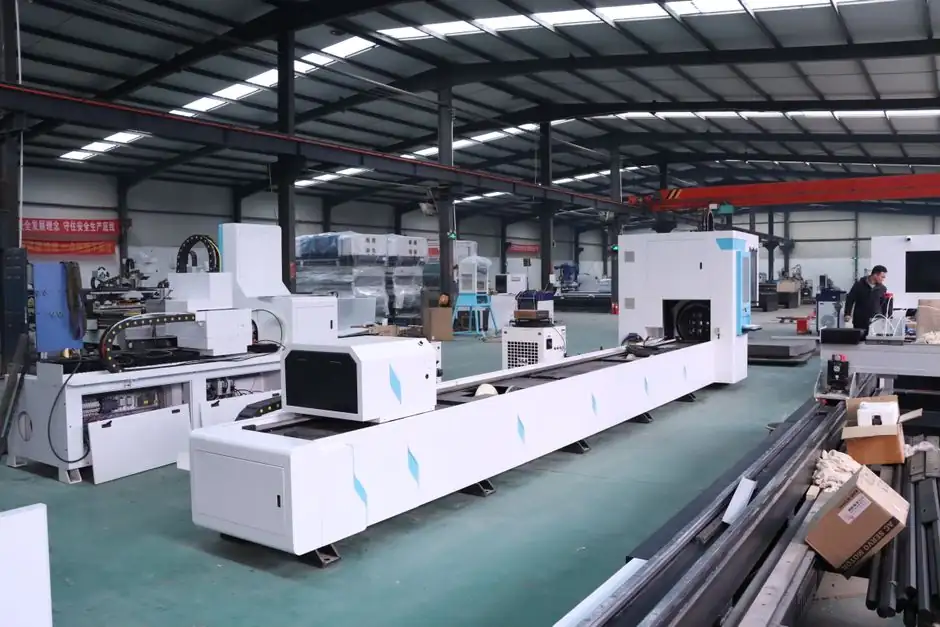
A warehouse-bound case packer is best specified by four hard numbers before any vendor talk begins: the case-format range (RSC, HSC, FOL, or wrap-around), the cases-per-minute at the slowest approved SKU, the ECT/Burst grade of the corrugated you actually ship, and the air and power envelope of the cell. WIMACH's published CP-S50 and CP-T60 datasheets show why those four gates matter: the side-load CP-S50 runs 1–16 cartons/min, while the top-load CP-T60 is rated 1–8 cartons/min, so the loading topology alone moves throughput by a factor of two for the same product matrix [S2].
End-of-line case packing is the work cell that forms, loads, and seals a corrugated shipping case around collated primary packs, and top-load, side-load, wrap-around, and pick-and-place variants are reported by the case packing machine encyclopedia entry to cover roughly 90% of installed lines in food, beverage, pharma, and personal-care plants [S6]. For warehouse-automation builds, the conversation is therefore not "which brand" but "which combination of format, speed, changeover, and board grade fits the SKU mix, the pallet pattern, and the WMS/WCS handshake that hands off to the palletizer and AGV."
Format and Loading Topology: Side-Load vs Top-Load vs Wrap-Around
Side-load case packers push collated product horizontally into an RSC or HSC case that opens toward the side, and they dominate high-speed canned and bottled lines because the loading motion is linear and the case opening is large; the CP-S50 listed in vendor data accepts carton dimensions of 240–500 × 200–400 × 180–400 mm, which covers most single-wall and double-wall RSC footprints used in retail distribution [S2]. Top-load packers lower product from above into a top-facing case, and they are the default when product orientation, count, or divider geometry is critical, which is why the CP-T60 spec sheet explicitly names tissue, food and beverage, pharmaceutical, daily chemical and cosmetic, hardware, and auto parts as its application set, with a tighter 300–600 × 200–400 × 150–400 mm window [S2]. Wrap-around packers handle FEFCO 0203 FOL and similar flat wrap blanks, in contrast to pre-formed RSC cases [S1].
The selection rule is mechanical: if your collation count and orientation are fixed, and the product can survive a horizontal push, pick side-load for speed; if your product must be placed in a defined pattern with the case opening facing up, or if you run multiple SKUs on the same cell, top-load gives you pattern control and divider handling; if you ship high volumes of a single rigid-pack SKU and want to minimize board cost, wrap-around is the leanest path. The penalty for miscalling this is rework, because a side-load cell that gets told to handle a fragile, tall, or oddly oriented pack will jam, while a top-load cell pushed beyond 8–10 cases/min on a 24-pack collation is the wrong tool for the duty cycle.
Throughput Math: Rated vs Demonstrated vs Accepted Cases per Minute
Supplier-rated speed is the number almost every brochure leads with, and it is also the least useful one for warehouse-automation sizing. The high-speed case-packer capacity guidance published in 2026-07-28 by HIJ Machinery lays out the four quantities that actually govern a cell: incoming products per minute, loading cycles per minute, cases per minute, and accepted cases per minute after rejects, and warns explicitly that a machine handling 240 cartons per minute may only need to deliver 10 cases per minute when each case holds 24 cartons [S5]. A capacity-only quote that does not separate rated speed, demonstrated speed, and guaranteed accepted output is not a quote; it is a marketing number.
The capacity calculation in your URS should derive cases/min from accepted products per minute divided by products per case, and use the slowest approved SKU and case format—not the easiest format—as the capacity gate [S5]. For an upstream cartoner at 240 accepted products/min, 24 cartons per case, 85% efficiency, and 15% margin, the design target falls at 13.5 cases/min, which means a 10 cases/min rated machine is undersized even though the brochure number "sounds close" [S5].
PMMI's 2023 U.S. packaging-machinery shipments report put the segment at $10.9 billion, up 5.8% year over year, and named cartoning, multipacking, and case packing as one of the four best-selling categories, which is a market-level signal that secondary-pack capacity is still a capital-spend priority, not a solved problem [S5]. Treat that as a tailwind for vendor availability, not a substitute for your own line-level math.
Utilities, Footprint, and the Warehouse Floor Plate
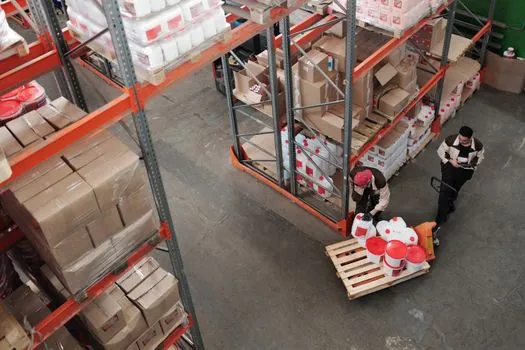
Every published case-packer datasheet in this segment lists the same utility envelope: 380V 50/60Hz three-phase power, 0.5–0.8 MPa compressed air, and a footprint between 4 and 5 meters long by 2.3–2.6 meters wide. The CP-S50 at 4200 × 2300 × 1900 mm and 1500 kg draws 4.5 kW and 350 L/min of air; the CP-T60 at 4200 × 2600 × 2200 mm and 1600 kg draws 7.5 kW and 450 L/min [S2]. Those are not optional; they define the upstream breaker, the air-compressor sizing, and the floor-plate reinforcement, and a warehouse automation RFP that has not allocated a 7.5 kW circuit and 450 L/min of clean, dry air at 0.6 MPa for a top-load cell is going to fail the FAT.
Footprint and weight also feed conveyor height, accumulator length, and the upstream/downstream rejection lane. The Jiade category page breaks the end-of-line system into three discrete stations, erecting at 2000 × 1900 × 1450 mm, filling at 1600 × 1600 × 2200 mm, and sealing at 1830 × 835 × 1640 mm, which is a useful reminder that an "integrated" case packer on a vendor slide is often three frames plus a case magazine plus a glue or tape unit, and the cell-level footprint is rarely the single-machine number on the headline spec [S4]. Plan floor space for the magazine, the collation conveyor, the reject lane, the controls cabinet, and the operator walk-aisle before the vendor visit; a 5-meter cell that needs 7 meters of clearance is a 12-meter footprint, and that number has to make it into the warehouse WMS layout.
Corrugated Spec and Distribution-Test Compliance
A case packer is only as good as the cases it forms, and the board spec is upstream of the machine, not downstream of it. The TAPPI T810 Mullen burst test measures puncture resistance from the flat side, but for palletized distribution the Edge Crush Test (ECT) per TAPPI T811 is the more relevant metric, and finished-case compression is validated per ASTM D642 with a full distribution sequence per ASTM D4169 or the ISTA series [S1]. The practical instruction to the buyer is to confirm the blank caliper, the flute (B-flute, C-flute, BC-double, etc.), and the ECT range the machine magazine and forming section accept before committing, because a magazine set up for single-wall B-flute at 3 mm caliper will crush or mis-feed a 7 mm double-wall blank, and a top-load cell designed for 32 ECT will buckle if the warehouse switched to a stronger 44 ECT board without retuning the forming shoulder and flight timing.
For warehouse automation specifically, the link from case packer to palletizer to AGV is the chain that has to survive ISTA 3E or ASTM D4169 truck/warehouse cycle testing, and that chain starts at the case packer's sealing station. Hot-melt adhesive and pressure-sensitive tape have different top-seal behaviors under the vibration and humidity swings a 3PL warehouse sees between receiving dock and outbound stage; pick the closure method, then validate it inside the ISTA test, not after. The 32 ECT vs 44 ECT choice is also a sustainability lever: 44 ECT lets you drop flute count or basis weight for the same top-load rating, which lowers inbound board cost and pallet tare.
Selection Criteria: A Side-by-Side Comparison
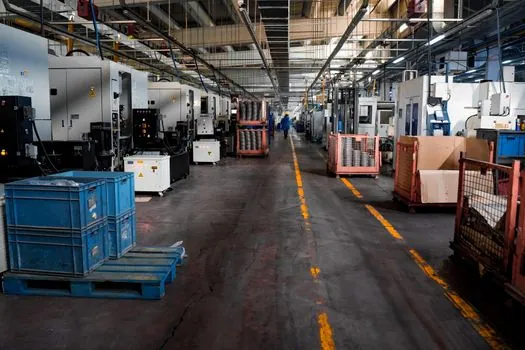
Three machine archetypes cover the bulk of warehouse-automation RFPs, and the right pick is the one that survives the four gates below. Use this table as a fast filter before any vendor demonstration. [S2]
Side-load (CP-S50 class) wins on cases-per-minute (1–16 cartons/min) for rigid SKUs, gives the largest format window at the L dimension (up to 500 mm), and draws the lowest air and power (4.5 kW, 350 L/min), but it forces the product to tolerate a horizontal push and limits pattern control [S2]. Top-load (CP-T60 class) handles the broadest product set including tissue, pharma, and daily chemical, accepts dividers and tight patterns, but caps out at 1–8 cartons/min and pulls 7.5 kW plus 450 L/min [S2]. Wrap-around uses the FEFCO 0203 FOL flat-wrap-blank case style, while robotic case packers are the variant noted for handling mixed SKUs seamlessly [S1][S7].
The decision rule is short: side-load if your SKU matrix is narrow, your product is rigid, and your bottleneck is the packer; top-load if you run mixed SKUs with dividers or delicate product orientation and your bottleneck is upstream of the packer; wrap-around if you run a single rigid SK at high volume and your bottleneck is board cost. For more on the SKU-mixing end of this problem, the e-commerce case-packer spec path breaks out the mixed-SKU and quick-changeover case in detail in this case packing machine selection brief, and the pharma variant adds validation and audit-trail constraints on top of throughput in the pharma case packer spec path.
FAT, Acceptance, and What to Demand Before Sign-Off
The Factory Acceptance Test is where the rated-vs-accepted cases-per-minute gap either closes or stays open, and the 2026 high-speed case packer procurement brief is explicit: the FAT must include upstream starvation, downstream blocking, restart, safety-interlock, and changeover tests, and the slowest approved SKU and case format, not the easiest format, must be the capacity gate [S5]. Demand three numbers from the supplier in writing, not in marketing copy: rated speed, demonstrated speed at FAT, and guaranteed accepted output at your slowest SKU, with an efficiency clause tied to the demonstrated number, not the rated number.
Ask the supplier to run the FAT with the actual corrugated you ship, not a generic RSC, because the ECT, caliper, and flute of the test blank must match the warehouse's distribution cycle or the ASTM D4169 / ISTA validation is meaningless. Insist on accumulation sizing that is computed from product pitch and orientation, not from conveyor length alone, and require the supplier to confirm the magazine capacity, the bottom-seal method, and the discharge orientation in the same document [S4][S5]. The 2026 vendor map for warehouse robotics gives the broader automation-side context for hand-off to AGV and WMS, and is worth reading in parallel to this spec path in the 2026 warehouse robotics vendor map.
Trackable next node: Grand View Research's published 2024 market sizing of $1.07 billion with a 2033 projection of $1.74 billion and a 37.9% Asia-Pacific share remains the most-cited public number for this segment [S2]; cross-check the next PMMI packaging-machinery shipments release and the next vendor FAT datasheet revision before locking the URS.
Component reference pages worth checking: electrical automation, and gland packing.