
For distribution centers shipping finished garments, the viable configurations collapse to top-load pick-and-place (servo head) and six-axis robotic top-load, while wrap-around, HSC drop, and side-push drop cells are excluded for most SKUs once a fragility audit is run on the actual pack [S2][S5].
Why Side-Push and Wrap-Around Fail on Apparel Packs
Side-push case packers rely on a horizontal pusher bar that drives products into an erected case at 30 to 80 cpm, and the same bar that slides a PET bottle cluster into a wrap blank will accordion a stack of folded t-shirts and tear polybag seals on a 200 mm case run [S5][S1]. WIMACH's side-push model posts 1 to 16 cpm at 240-500 mm L x 200-400 mm W x 180-400 mm H with 4.5 kW draw and 350 L/min air at 0.5-0.8 MPa, and that envelope fits a 12-pack shirt carton, but the loading principle still drives product into the case with a rigid surface, which is the exact mechanism that damages soft packs [S1].
Wrap-around cells form a corrugated blank around a pre-grouped product in one motion and achieve 60 to 200 cpm at the lowest per-case board cost, yet the folding rails assume the product has a defined rectangular envelope and can resist the inward glue pressure; folded denim, hosiery cartons, and lingerie packs deform during folding and produce skewed, low ECT (edge crush test) cases that fail ASTM D642 box compression and downstream pallet stacking [S2][S5]. A case style lock to FEFCO 0201 RSC, 0200 HSC, 0203 FOL, or wrap blank, with flute B, C, or BC and validated burst or ECT grade, is therefore a hard gating decision before the packer family is even shortlisted [S2].
Top-Load Pick-and-Place: Spec Envelope for a Garment DC
Top-load pick-and-place case packers use a servo-driven head to lift the collated apparel pack and lower it into an erected RSC, and WIMACH's pick-and-place model rates 1 to 8 cpm at 300-600 mm L x 200-400 mm W x 150-400 mm H with 7.5 kW power, 450 L/min air at 0.5-0.8 MPa, a 4200 x 2600 x 2200 mm frame, and 1600 kg mass [S1]. That 1 to 8 cpm window is the realistic upper bound for an apparel cell that must handle folded shirts, jeans, and undergarments without a hard-push contact event.
Throughput arithmetic for an apparel line starts from the upstream bagger or polybag sealer, not from the case packer nameplate: an upstream sealer producing 40 accepted polybags per minute at 8 units per case yields 5.0 theoretical cases per minute, and at 85% planned operating efficiency with a 15% engineering margin the design target lands at 6.76 cpm, which a top-load pick-and-place cell can deliver while keeping a 5-minute recipe-driven changeover between shirt, denim, and intimates SKUs [S4]. For a higher-mix DC running three to five case footprints, the same calculation but with a 12 units per case pattern drops the theoretical case rate to 3.33 cpm, and the packer should be specified at that slowest approved SKU rather than at the easiest case format, otherwise changeover losses of 8 to 15% of available time will silently erode the line's accepted output [S5][S4].
Robotic Top-Load Cells: When the SKU Mix Justifies the Capex
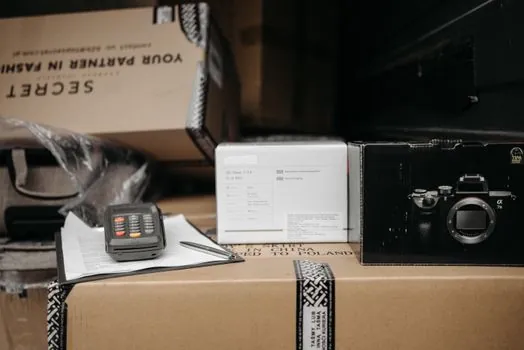
Six-axis robotic top-load cells are the second viable configuration for an apparel DC, and a hybrid cell rated up to 120 bottles per minute in rigid mode can drop to 10 to 25 cpm in a flexible garment mode with a payload ceiling of 200 kg, against a SCARA pouch cell limited to 40 pouches per minute at 6 kg payload [S8]. The case for a six-axis robot in an apparel DC is SKU breadth, not raw speed, because a SCARA cannot reorient a hanging-pack carton or a folded-stack denim bundle the way a six-axis arm can, and the changeover time on a recipe-driven six-axis drops to under 5 minutes for garment SKUs that would demand 20 to 40 minutes of mechanical retooling on a hand-fed cell [S5][S6].
Capex, however, is the gating cost: a servo top-load case packer with a 4-axis robot typically lands in the USD 150,000 to 500,000 band before integration, and a full wrap-around cell with conveyors and case erector reaches USD 350,000 to 900,000 installed, while a six-axis top-load cell with vision and end-of-arm tooling sits at the upper end of that band and the integrator's guarding to ISO 13849-1 PL d adds 12 to 25 m² of floor area per cell, which is roughly 4x the demand of a manual case-loading station [S5]. For an apparel DC with fewer than five distinct case footprints, the top-load pick-and-place cell is the more defensible spec; for an apparel DC with ten or more case footprints and frequent retailer-specific label changes, the six-axis robotic cell earns the footprint premium [S5][S7].
Apparel-Specific Selection Criteria: Compression, ESD, and Moisture
Apparel packs are not standard industrial packs, and three additional criteria sit alongside the standard case-packing selection axes of throughput, format range, and product fragility [S2][S5]. First, the case itself must be sized against the ECT or burst grade required by the distribution lane, validated against ASTM D642 box compression and an ASTM D4169 or ISTA 3A distribution sequence, because a stacked denim pack can exceed a 32 ECT single-wall RSC's working load in a 2-tier pallet and crush the bottom layer during transport [S2]. Second, ESD-sensitive SKUs (technical base layers, electronics-integrated wearables) require a verified ESD-safe end-effector and a grounded collating conveyor, which is a configuration the integrator must validate rather than a feature the catalog lists.
Third, a variable frequency drive on the infeed and discharge conveyor is the difference between running denim at 4 cpm without shifting and wrinkling silk blouses at 2.5 cpm, and modern soft-goods packing machines use tool-free adjustment mechanisms (hand knobs, digital recipe screens, quick-release guides) to let a line operator complete a full changeover in under 5 minutes, which matches the recipe-driven changeover time cited for servo top-load packers on high-mix consumer goods lines [S6][S5]. For an apparel DC tied to a case packing machine selection path for e-commerce fulfillment, the same tool-free philosophy applies, because DTC garment shipping imposes a heavier SKU count per shift than wholesale club-store palletization.
Compliance and FAT: What the Garment Buyer Should Demand

CE certification is the minimum for an automatic case packer sold into the EU, and the mark must cover the Machinery Directive 2006/42/EC conformity assessment, the Low Voltage Directive 2014/35/EU, and the EMC Directive 2014/30/EU; the technical construction file should be reviewed before the FAT is scheduled, and the FAT script should include upstream starvation, downstream blocking, restart, safety-interlock, and recipe-driven changeover tests for the slowest approved SKU rather than the easiest case format [S9][S4]. The supplier should be asked to distinguish rated speed, demonstrated speed, and guaranteed accepted output in the URS, because the 1 to 8 cpm band on a WIMACH-class pick-and-place cell is a rated ceiling, not a guaranteed production rate, and a 32 ECT single-wall RSC running a 12-pack shirt bundle at 6.76 cpm is the value that should be written into the acceptance clause [S1][S4].
A second trackable signal is the integration of the case packer with the upstream polybag sealer and the downstream case labeler and palletizer: the case-packer timing must match the labeler-accuracy window to avoid reject pile-ups, and a pharma case packer spec path covers the equivalent validation discipline (URS, FAT, SAT, IQ/OQ) that an apparel DC handling retailer-mandated GS1-128 labels and fold-flat carton dimensions should adopt by analogy rather than reinvent. For an apparel DC whose adjacent line is a slewing drive on a turntable collator, the same spec-discipline logic applies, because the torque, ratio, and sealing logic of the collator drive determines the orientation accuracy the top-load gripper depends on.
For the relevant spec sheets and selection criteria, see case packing machine, gland packing, and distribution cabinet.