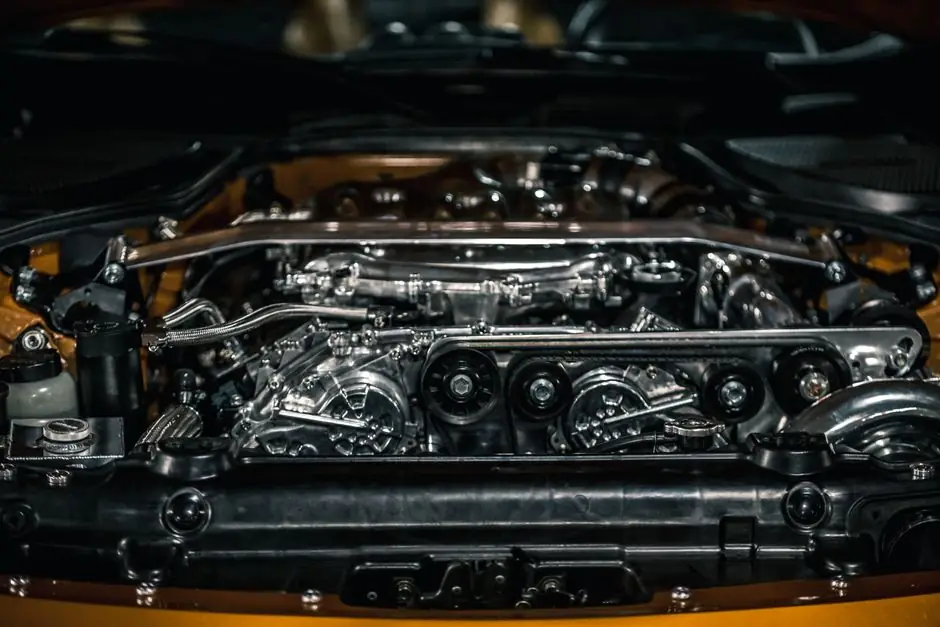
Automotive casting mold selection is driven by three coupled decisions: process family (HPDC, low-pressure, gravity, sand), tool-steel grade, and conformal cooling layout, with H13 hot-work die steel serving as the default for aluminum structural parts and magnesium housings [S2].
Budget tiers track part complexity directly: $20,000-$50,000 USD covers medium-complexity aluminum automotive tooling, while EV motor housings and large structural nodes frequently exceed $50,000 USD because of deep cooling jackets and tight internal diameters [S3][S10].
Process Selection Matrix: HPDC vs Low-Pressure vs Sand vs Gravity
HPDC (high-pressure die casting) is the default process for thin-wall aluminum structural nodes and EV battery housings because it achieves near-zero porosity when the cell is properly vacuumed, a configuration now standard for safety-relevant automotive castings [S10].
For structural aluminum castings, H13 hot-work die steel dominates because of its thermal-fatigue resistance; S7 is reserved for impact-loaded trim tooling, and tungsten carbide inserts are used only for ultra-precision small features such as sensor bodies, where hardness matters more than toughness [S2]. Low-pressure casting remains preferred for aluminum wheels and subframes where lower turbulence and denser fill outweigh cycle-time losses, while sand casting molds (casting mold family) are reserved for prototypes and sub-1,000-piece runs of complex housings [S1]. Gravity casting into sand casting mold tooling is still used for large gearbox housings and differential cases, where the sand-mold tooling cost is roughly one-tenth of an equivalent H13 steel mold. Permanent mold base systems (cast iron or pre-hardened steel) bridge sand and HPDC for 1,000-50,000 piece annual volumes of aluminum brackets and covers.
Steel Grade and Surface Treatment Specifications
H13 die-cast tooling for aluminum automotive parts is typically specified to HRC 48-52 after vacuum heat treatment, with a nitrided surface layer of 0.3-0.5 mm to resist washout; mirror EDM finishing to Ra ≤ 0.2 μm is required for visible Class-A exterior trim [S2].
For high-friction core and slide surfaces, TD (thermo-diffusion) treatment forming a vanadium-carbide layer at HRC 90+ is now standard on HPDC mold cores running above 100,000 shots/year, while DLC (diamond-like carbon) coating is used on aluminum-sticking prone surfaces for trim and wheel molds [S2]. Dimensional tolerance for high-precision aluminum alloy automotive molds is set at IT6-IT7 (within ±0.02 mm) per the JMT selection criteria published in 2025, with slow-wire-cut accuracy of ±0.005 mm applied to complex contours [S2]. Carbon-steel casting tooling remains in use for non-critical zinc and leaded-brass prototypes at a tooling cost 40-60% below H13, but the corrosion penalty limits it to dry, indoor production cells [S1].
Cooling, Venting, and Cycle-Time Engineering
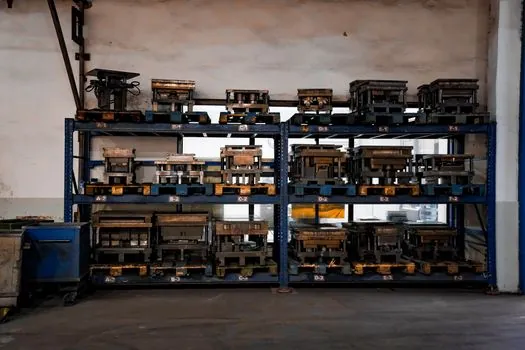
Cooling water channels in HPDC automotive molds should be at least 8 mm in diameter to resist scale clogging, and conformal 3D-printed inserts are now used to achieve uniform cooling on deep EV motor housing jackets where straight-drilled channels would create hot spots [S2][S10].
Cooling typically accounts for more than 50% of the cycle time in aluminum die-casting, so inadequate channel layout directly inflates per-piece cost; vacuum exhaust grooves and porous breathable steel inserts are the standard remedy for gas porosity in structural nodes [S2].
EV traction motor housings require the most aggressive cooling layout because of deep cooling jackets surrounding the stator bore, with internal diameter concentricity held within 0.05 mm to clearances for the electromagnetic stack, and three-coordinate measuring (CMM) plus laser scanning of the conformal channels before steel approval is now the default supplier gate [S10]. For long, slender inserts, casting ladle and shot-sleeve thermal management is paired with mold thermal balance, since ladle temperature drop of more than 30°C between pour and injection drives porosity and cold-shut defects. casting aux systems such as spray robots, extractor arms, and die-lubricant mixers are part of the same thermal-control loop, with aqueous-graphite lubricant diluted to 1:80 to 1:120 for HPDC aluminum and applied within ±0.1 mL cycle-to-cycle accuracy on robotic cells.
Cost, Volume, and Lead-Time Benchmarks
Budget ranges for automotive die-casting molds cluster in three tiers: $20,000-$50,000 USD for medium-complexity aluminum tooling, $15,000-$35,000 USD for high-complexity zinc consumer parts, and $50,000-$100,000 USD for very-high-complexity magnesium aerospace or EV structural nodes [S3].
Typical automotive H13 HPDC tooling produces 200,000-400,000 aluminum shots before overhaul, while carbon-steel tooling for non-critical zinc or brass is limited to 50,000-100,000 parts before dimensional drift, and stainless-steel inserts extend life in corrosive coolant environments by roughly 30% [S7].
Industry analysis points to the global automotive die-casting market reaching roughly $89.4 billion by 2027 at an estimated 4.4% CAGR, with the wider die-casting market valued at USD 12.33 billion in 2021 and projected to grow at 5.5% CAGR through 2030 [S4][S5]. For sourcing, a fixed lead-time envelope of 8-12 weeks for H13 HPDC automotive tooling and 6-10 weeks for casting tooling rebuilt or re-machined from existing mold base tooling is a reasonable planning anchor, with a hard deviation triggered by any single cavity depth above 200 mm or hot-spot cooling demand above 80°C in 8 s [S2][S8].
Failure Modes and Inspection Gates
Soldering (aluminum sticking to the die surface) is the dominant HPDC failure mode and is controlled by DLC coating, optimized spray timing, and die temperature held between 180-250°C on aluminum cells; thermal-fatigue cracking (heat-checking) typically initiates after 80,000-120,000 shots and is the primary driver of re-cutting rather than gross wear [S2][S8].
Ejection marks, dimensional drift, and porosity are the three release-gate criteria; Class-A exterior trim must clear CMM full-scan with no deviation above 0.03 mm from nominal, and X-ray or CT porosity inspection is now routine for safety-relevant nodes such as suspension links and battery tray cross-members [S2][S10].
Standards, Documentation, and Sourcing Checkpoints
OEM PPAP (Production Part Approval Process) submissions typically require a dimensional report, material certificate (including H13 ESR-grade designation), heat-treatment chart, and a first-article CMM scan against the CAD master; for EV battery housings, additional IP-rated leak testing and a CT porosity map are increasingly required. [S3]
For buyers benchmarking new mold sources, the three hard checkpoints are: (1) H13 ESR-grade steel with mill certificate, (2) vacuum heat treatment chart showing HRC 48-52, and (3) conformal cooling print sealed by the supplier's tool engineer; a pilot run of 200-500 shots before sign-off remains the cheapest insurance against a 200,000-shot soldering problem [S2][S10]. For further process context, the HPDC design-trend analysis published in mid-2026 confirms that vacuum-assisted cells, conformal cooling, and DLC-coated cores are the dominant specification set for new EV motor housing tooling programs [S10].
Watch list for the next sourcing cycle: EV motor housing mold programs with cavity depths above 250 mm and integrated stator-bore cooling, and 2026-2027 model-year structural battery tray molds where multi-cavity layout and 1+1+1 gating will replace single-cavity benchmark tooling.
See also our earlier report, Shot Blasting Machine Selection for Pump and Valve Castings: Spec Gates, Media and.