
Green-sand flaskless molding lines and automatic sand blasting machines form the two halves of a high-mix foundry cell: the mold defines the as-cast geometry and surface quality, while the shot blasting machine downstream defines the finished surface profile and fatigue life of the cleaned part.
For 2026 procurement, the two asset classes diverge on the spec sheet: a CASTKING automatic green-sand flaskless molding line ships in the tens-of-thousands USD range with vertical-parting box handling, while a Yancheng Jinda wire-mesh-belt shot blasting unit for aluminum wheels and brake pads lists at US$30,000-40,000 per set, and their electric hook-type abrators for casting and burnishing start at US$15,000 per set [S5].
Process Boundary: Geometry vs Surface
An automatic green-sand flaskless molding machine is defined by flaskless box handling, vertical or horizontal parting, and a squeezing/pressing stage that compacts conditioned sand around the pattern to produce a casting mold cavity with consistent hardness, venting and draft [S2].
A sand blasting machine, by contrast, is a surface-prep asset: the OrbiBlockBlast automatic unit from FerroECOBlast uses both injector and pressure blasting modes inside an enclosed cabinet to clean internal passages and external faces of automotive engine blocks without manual handling [S1]. The CB Sabbiatrici Microjet CD/10 mobile free-jet compressed-air unit extends the same abrasive-impingement principle to shipyard steel, concrete and wood, where portability and on-site access matter more than cycle time [S6].
Selection Criteria Mapped to Part Class
For high-volume iron castings, a flaskless green-sand line is the default: CASTKING describes the produced castings as having good glossiness, regular parting lines, few burrs, and high yield — properties driven by uniform mold hardness, controlled sand moisture, and repeatable sand-fill [S2].
For cleaning the same parts, the dominant 2026 lineup is electric-driven: Yancheng Jinda lists electric shot blasting machines for steel profiles, electric double hook-type abrators for castings, and QH69-series H-beam units, all with new-condition builds and 1-set MOQ [S5]. For batch finishing of smaller stampings, castings and 3D-printed parts, vibratory finishing and suction-blast cabinets from Shenzhen Kaitexin cover a different niche — small-part deburring, radius forming and cosmetic surface prep, often with ceramic, plastic, corn cob or walnut-shell media.
Sand blasting machine selection, when cleaning is the bottleneck, should track the same shot blasting machine selection gates used elsewhere: workpiece envelope, abrasive cut rate, dust collection, and the upstream conveyor interface.
Comparison: Molding Line vs Sand Blasting Unit
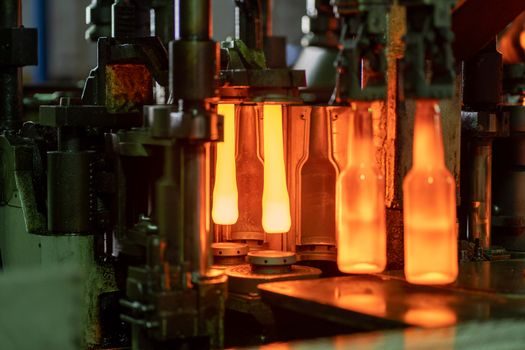
On four buying criteria the two asset classes split cleanly. (1) Output unit: a molding line emits castings per hour measured in green-sand flask count, while a blasting unit emits cleaned parts per hour measured in kg of abrasive thrown or kg of workpiece processed. (2) Tolerance impact: the casting mold sets as-cast dimensional tolerance (typically several tenths of a millimetre on iron), whereas the blasting cabinet sets surface roughness (Ra in the micrometre range) and residual stress. (3) Media: molding consumes bentonite-bonded silica or chromite sand that is reclaimed and re-conditioned; blasting consumes steel shot, steel grit, glass bead, or aluminum oxide, with cut rate and breakdown rate driving cost. (4) Energy and dust: molding lines are dominated by sand-handling and hydraulic pressing kW, while blasting units are dominated by wheel horsepower, dust collector airflow, and — for pressure-vessel compressed-air units like the Microjet CD/10 — by air-compressor capacity [S1][S5][S6].
For foundries evaluating both at once, the casting mold buying guide frames mold-side decisions, and the shot blasting machine 2026 buying guide frames blast-side decisions; the two should be read together when a new cell is being specced.
Capability Split: Pressure, Injector and Free-Jet
FerroECOBlast's OrbiBlockBlast explicitly lists both pressure and injector blasting modes, which is a useful procurement signal: pressure (direct-pressure) pots deliver higher impact velocity at the nozzle and are preferred for heavy scale, while injector (suction) cabinets pull abrasive into the airstream and are gentler on thin-wall or precision surfaces [S1]. The OrbiBlockBlast configuration targets engine-block internal passages, where injector mode reaches into core prints and oil galleries without over-erosion.
Mobile free-jet units such as the Microjet CD/10 occupy a different niche entirely: open-air blasting of ship hulls, structural steel and concrete where there is no enclosed cabinet and the operator directs the nozzle by hand, with abrasive fed from a pressurized pot [S6]. These are rarely found inside a foundry cell but show up in the same plant for maintenance, retrofit and shipyard-adjacent work.
Cost, MOQ and Sourcing Reality

Made-in-China factory listings on casting supply show aluminum sand castings in the US$0.10-20.00 per-piece range at 100-piece MOQ, and die-cast Al-Zn alloy parts in the US$5.00-50.00 range at 100-piece MOQ, with ISO 9001 and IATF 16949 framing the typical OEM/ODM factory in Zhejiang [S3]. Cast-steel structural bases list at US$2.00-500.00 per piece at 1-piece MOQ from Shandong suppliers.
On the equipment side, the Chinese sandblasting-machine supplier base in Dongguan (JiChuan) and Shenzhen (Kaitexin) is broad and price-competitive, with Kaitexin also offering shot peening equipment and abrasive media for the same surface-prep loop. For the buyers, this means blasting equipment and finished castings are both buyable from the Pearl River Delta / Yangtze Delta cluster, which compresses both capex and per-piece landed cost.
Failure Modes and Spec Gates to Watch
On the mold side, common 2026 field failures are mold-hardness drift (from depleted bentonite), sand-grain breakdown (raising fines and causing blows), and flaskless-box alignment drift causing mismatch and flash — all of which push the buyer toward automated sand-mold lines with closed-loop moisture and hardness control [S2].
On the blasting side, the failure modes are different: wheel imbalance and blade wear on high-velocity wheel units, cabinet seal failure on pressure cabinets causing dust egress, and abrasive contamination when the same media handles both steel and aluminum work. Magnetic separation and dedicated media silos are the usual spec gates for mixed-metal cells, and dust-collector airflow must be sized to the wheel horsepower, not just the cabinet volume [S5]. For non-ferrous cleaning, wire-mesh-belt conveyors in the Jinda aluminum-plate / wheel-hub configuration keep small parts from lodging in the blast stream and breaking windows [S5].
Standards, Specs and Verifiable Anchors
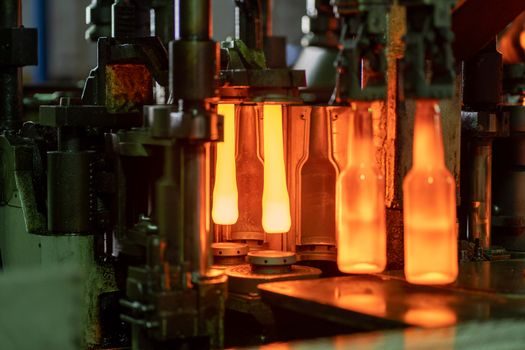
Foundry-side ISO 9001 and IATF 16949 quality-management coverage on the casting-supply side, and the equipment maker's CE/ISO listings on the machinery side, are the practical compliance anchors visible on the 2026 sourcing pages [S3]. Abrasive-media suppliers list steel shot, steel grit, ceramic media, plastic media, porcelain media, corn cob and walnut shell — the cut-rate and finish profile of each drives the spec, not the brand label on the cabinet.
For a green-sand flaskless line, the relevant buyer-side specs are flask size, sand compaction method (squeeze / shoot / press), cycle time, sand reclamation capacity, and pattern-change time; for a shot blasting machine they are wheel horsepower, abrasive throughput kg/min, cabinet size, dust collector CFM, and conveyor type [S5]. Treat any vendor that does not publish all five as a spec risk, and treat any quote that bundles both assets into one line item as a scope risk — the maintenance, controls and abrasive loops are not the same trade.
Track these two signals into 2026-Q3: (a) more Chinese mold-line builders adding inline mold-hardness and moisture sensors, reducing manual sand-lab work; (b) more electric wheel-blast platforms replacing pneumatic cabinet units in regions tightening on shop-air energy cost [S5]. Both shift the capex-per-cleaned-tonne ratio in favor of integrated cells over standalone cabinets.
For component-level specifications, see sand casting mold.