Modern server and rack-integration lines automate screwdriving and cable routing in the same cell, with servo-controlled fixtured spindles delivering torque windows as tight as 0.7 to 4.2 N·m and AI-assisted wire-sort modules feeding connectors downstream [S2][S5].
The pattern shows up across server, telecom, and automotive-electronics builds: a fixtured screwdriving head runs in parallel with a Cartesian or six-axis robot that handles flexible flat cable, discrete wire harnesses, and FAKRA-style coax subassemblies, all under a shared process controller and MES trace link [S1][S4].
Two cell archetypes: fixtured spindle vs collaborative robot on a server bench
The mainstream server build uses a fixtured screwdriver with a vacuum bit retainer (SEV-style heads), a bowl or step feeder, and a process controller such as the C30S/C50S that closes the torque-and-angle loop on every cycle [S1]. For mixed-model server SKUs, the same vendor offers an SEV-C screwdriver qualified for human-robot collaboration plus a vacuum bit retainer, letting a lightweight robot place screws while an operator stages the next chassis [S1].
On the older but still cited Erlangen-Nuremberg reference cell, a DEPRAG Minimat-E spindle (0.7 to 4.2 N·m) was paired with a Reis RL16 Cartesian robot and a hexapod-indexed pallet, giving the system six extra axes of part positioning so a single screwdriving head could reach every joint on a 3D door module [S2]. The same template, with stiffer casters and a servo gantry, drops directly onto a 1U/2U server top-cover or backplane fastening station where joint count and torque uniformity matter more than raw speed [S2].
Cable routing: from FFC hot-melt to AI wire-sort plus laser foil-strip
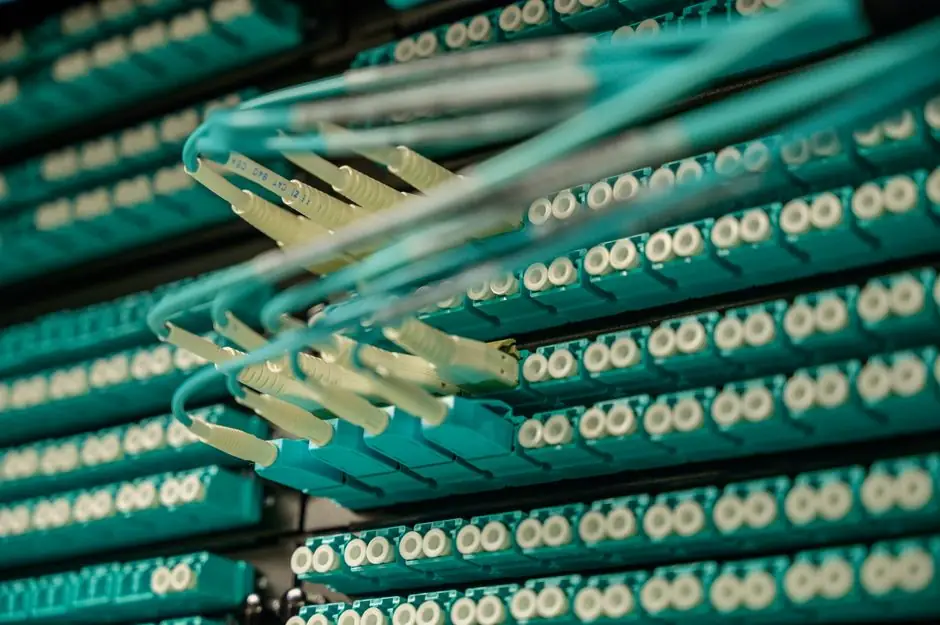
Three cable-routing patterns dominate server and adjacent electronics cells in 2026: vision-guided multicore FFC placement with hot-melt or laser welding for retention, AI wire-sort modules that pick a single conductor out of a bouquet and present it to a crimp or insertion station, and laser foil/shield stripping with a partial-cut plus mechanical peel [S2][S5].
Frisimos' three-pillar stack, miniature robots for wire recognition, focused lasers for undefined-shape shield removal, and a modular Lego-style chassis with a common conveyor/positioner interface, lets a single line absorb both high-mix prototype runs and serial production without re-tooling, and ships native ERP/MES hooks for takt-time and yield per job [S5]. For FAKRA coax subassemblies used in server I/O and telco radios, the same modular chassis pattern wraps cut, strip, crimp, tape-wrap and sleeve steps into one indexed line [S7].
Selection criteria for a server-line screwdriving and routing cell
Five criteria usually decide the build: joint count per chassis, torque tolerance, cable mix (discrete vs FFC vs coax), changeover frequency, and traceability depth. For high-joint server top covers a fixtured multi-spindle head with one process controller per spindle cluster wins on torque repeatability; for low-joint, high-mix server SKUs a collaborative SEV-C screwdriver on a lightweight robot is faster to re-deploy [S1].
The data table below lines the three main options against the criteria engineers actually weight during a server-line tender:
Partial automation: the 80% step that often beats full robot cells
On brownfield server lines, semi-automation around a Wire Processing Center workstation can lift cable-shop efficiency by up to 80% before any robot is installed, by offloading cut, strip, and ferrule steps and leaving routing and final insertion to the operator [S6]. Kato Cable reports the same pattern on the contract-manufacturing side: automated cutting, stripping, crimping and connector insertion cut cycle time and crimp-height variation, while the final layout, lacing, and tape wrap stay manual for flexibility [S3].
For sites considering a deeper retrofit, the constraint to plan around is rarely the screwdriving head itself; it is the upstream wire presentation. Frisimos explicitly flags "recognizing and manipulating a single wire out of a bouquet" as the missing link in cable automation, and solves it with vision plus AI on miniature robots rather than with a bigger feeder [S5]. Hellermanntyton, looking at it from the cabinet and field side, sells the same lesson as a routing-and-fastener discipline (ties, clips, edge protection) so that whatever automation the line adds later does not fight the human cable install on day one [S8].
Standards, traceability, and what the MES will actually see
Two traceability data sets matter to a server cell buyer: per-fastener torque-and-angle curves, and per-cable test results (continuity, hipot, crimp height). The C30S/C50S process controllers log torque, angle, and sequence number on every cycle, which is the minimum data the MES needs to do unit-level traceability rather than batch-level traceability [S1][S4]. On the cable side, an automated line that records takt time and yield per job into ERP gives the production engineer a per-SKU cost number that hand-fed bench work simply cannot [S5].
For a server builder integrating this with a wider factory programme, the PV module line automation: throughput, operators per GW, and what actually changes piece is a useful cross-industry comparator on how operator-count per station and per-GW (or per-rack) throughput scale once fixtured spindles and vision cells replace hand work, while the AMR Battery Charger and Power Module Supply: 2026 Status brief covers the adjacent power-module side of a server line where similar torque and trace requirements apply. For an outside-the-cell view of the same robotics trend, the Counter-UAS Architecture Converges on Open C2 and Layered Sensing digest shows how a server-class edge box is now bolted together with the same fixtured-spindle discipline.
Limitations and failure modes to spec in, not around
Fixtured spindle cells lose their advantage when joint count is below roughly 6 per part or when the chassis is so deep that a single spindle cannot reach without re-fixturing; at that point an SEV-C collaborative screwdriver on a lightweight robot is the lower-risk choice, at the cost of slower cycle time [S1]. Fully automated FFC routing needs a defined cable cross-section, an accessible rear face for the spring-clip or hot-melt retention step, and a stable datum on the host module, which is why most FFC cells still pair the screwdriving head with a hexapod or a 2-axis positioner on the pallet [S2].
Laser foil-strip modules degrade if the cable supplier changes shield wrap or foil laminate without notice, because the partial-cut-plus-peel recipe is tuned to a specific layer stack; the mitigation is the same one Frisimos emphasises, build the cell around widely used third-party applicators and feeders so a single consumable change does not invalidate the line [S5]. For cabinet and field routing, Hellermanntyton's installer-inspired approach is a reminder that the most common server-line failure is not a bad torque number but a cable that interferes with a fan, a heat sink, or a service loop, so the routing fasteners, edge protection, and bend-radius rules belong in the same specification as the spindle torque window [S8].
Track these signals over the next two quarters: the rollout of MES-ready controllers (per [S4], the gap between station-level data and an MES is the single biggest brake on a server line upgrade), and the spread of vision-plus-laser modular cells from niche cable shops into general server and telecom-electronics contract manufacturers, where the same Lego-block chassis pattern can be re-used for power, data, and coax subassemblies on the same rack [S3][S5].
Component reference pages worth checking: electrical automation, locking assembly, and serial server.