Server-board PCBA test programs that rely on Functional Test alone routinely miss shorts, opens, wrong-value passives, and reversed components that In-Circuit Test (ICT) catches in a single bed-of-nails pass, with ICT fault coverage on common manufacturing defects reported in the 90–98% range [S2].
Server boards, defined here as multi-rail ATX/SSI power-converter host boards with high-layer-count backplanes, PCIe lanes, and BMC sub-systems, sit in a category where neither method alone is adequate above roughly 5,000–10,000 units per year [S1][S4].
What Each Method Actually Probes
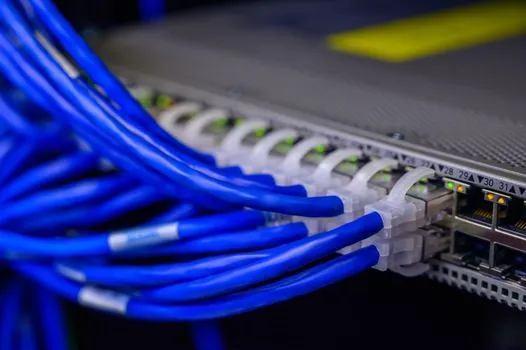
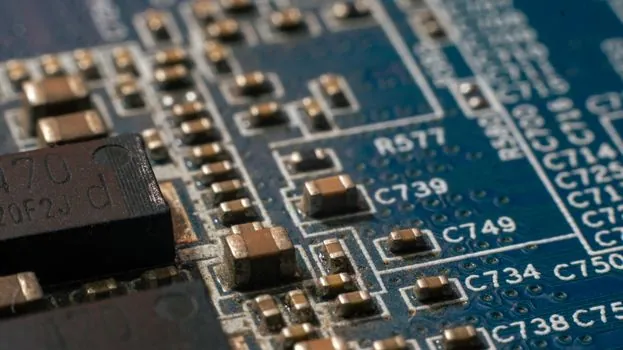
ICT accesses the board at the node level through a custom bed-of-nails fixture, with spring-loaded pogo pins engineered to align with test points on the underside of the PCB; the automated system then checks for shorts between nets, opens within nets, and measures values of individual passive components such as resistors, capacitors, and inductors, while also verifying orientation of diodes and transistors [S2]. The output is a precise, component-level fault location, e.g. "Short circuit between pin 5 of U4 and resistor R22," which lets a rework cell repair the board in seconds rather than minutes [S2].
Functional Test (FCT), by contrast, interfaces the board through its designed connectors, simulating the operating conditions the unit will see in the field; typical FCT coverage spans power-up current draw at each supply rail, voltage regulation and power sequencing, analog signal path integrity (gain, offset, frequency response, noise floor, crosstalk), digital buses (SPI, I²C, CAN, ARINC 429, MIL-STD-1553 for avionics), memory access, ADC/DAC linearity, firmware load and checksum, and connector-level signal integrity [S4]. A common framing across current industry guides is: "ICT verifies that the board is assembled correctly; FCT verifies that it works correctly. A board can pass ICT with flying colors and still fail in the field" [S5].
Coverage Numbers, Cycle Time, and Where Each Wins
ICT's published fault coverage against common manufacturing defects sits in the 90–98% band, and once the board is engaged in the fixture, the full automated sequence typically completes in under a minute, which is the reason it is the default for high-volume PCBA lines [S2]. The trade-off is fixture cost: a custom bed-of-nails for a complex server board can run into the tens of thousands of dollars and has a lead time measured in weeks, which is why it is rarely used for prototypes or runs below a few hundred units [S5].
FCT cycle times on a bed-of-nails FCT station drop manual probing from 15–30 minutes per board to 30–90 seconds of automated testing, but the much higher value is that FCT is the only one of the two methods that exercises firmware behaviour, mixed-signal performance, and interaction between blocks; ICT, by construction, isolates each component and therefore cannot observe these system-level effects [S5][S4]. For server boards specifically, this means ICT alone will not catch a VRM that is correctly assembled but oscillating, a BMC that boots but fails to enumerate PCIe lanes, or a memory channel that passes continuity but fails margin at 2933 MT/s. The "high test coverage" cited for ICT refers to the manufacturing-defect class, not to design or firmware behaviour [S6].
Decision Matrix for Server-Board Programs
For a server-board program, the choice reduces to four engineering criteria: defect class to catch, volume, fault-diagnosis speed, and fixture budget. ICT wins where the defect class is shorts, opens, wrong parts, and reversed polarity, where volume justifies the fixture, and where rework stations need a specific component callout to repair; FCT wins where the defect class is firmware, timing, power-rail behaviour, and end-customer conformance. A side-by-side reading of the two main methods against these criteria is the basis of most 2026 PCBA test-strategy guides [S1][S5][S8].
Industry guidance converges on the same recommendation: most server-board lines above roughly 10,000 units per year run ICT first (catching 90–98% of assembly defects in under a minute) and then FCT on the powered board (catching the design and firmware issues ICT cannot see), while prototype and low-volume programs start with FCT, add flying probe for prototype and low-volume work, and only commit to a bed-of-nails ICT fixture once volumes justify the spend [S1][S4][S5]. A current 2026 strategy write-up frames the relationship directly: "ICT verifies that a printed circuit board (PCB) was assembled correctly, while Functional Test confirms that the finished product performs as intended" [S7].
Where ICT Falls Short on Server Hardware
Because ICT isolates each component, it can verify that a FET is present and the right value, but it cannot verify that the FET switches cleanly at 500 kHz under a 60 A load, that the BMC enumerates PCIe Gen4 lanes without retry, or that DDR4/DDR5 channels pass margin at the JEDEC-specified speed. These are the dominant failure modes on server boards, and they are the ones FCT exists to catch. A second, less-discussed limit is that densely packed server boards with components on both sides and high-density ball-grid packages physically cannot present a usable test-node land pattern, so ICT access is incomplete and the "90–98%" coverage claim degrades sharply in practice [S4].
For very high node counts and BGA-heavy designs, boundary scan / JTAG is often added to the FCT station to reach digital interconnect and component-internal tests on boards designed to support it; flying probe is the low-volume alternative to a custom ICT fixture, with similar fault coverage but slower per-board cycle time [S4]. Practical implication: a server board with a BMC, a PCH, two CPUs in a multi-rail socket, and DDR5 channels will not be fully structurally tested by ICT even on a perfect fixture, and any test plan that skips FCT for such a board ships product that has never been powered up. For more on the broader test-instrumentation stack that sits behind an FCT station, see the electronic test and test and measurement reference pages.
When to Skip ICT, and When FCT Alone Is Enough
Skip ICT when volume is below a few hundred boards per year, when the design changes faster than the fixture can be retooled, or when the only failures that matter are functional; in these cases a flying-probe station plus a bed-of-nails FCT gives most of the structural coverage of ICT at a fraction of the upfront cost [S4][S5]. For a related comparison of structural versus functional verification choices on a different class of equipment, the electronic vs bimetallic motor protection relay 2026 spec-level decision guide walks through the same logic on relay selection.
Do not skip FCT on a server board under any circumstances: only FCT powers the board, loads firmware, and verifies the behaviour the end customer pays for, so even programs that run ICT as the primary gate still run FCT as the final pass/fail step before the unit ships [S1][S4][S7]. A reasonable signal to track through 2026 is whether board-level test-strategy guides continue to recommend the ICT-plus-FCT combination for high-volume server hardware, or whether AI-driven FCT diagnostics and expanded JTAG/boundary-scan coverage on BMC-equipped designs start displacing custom ICT fixtures on medium-volume runs.
For component-level specifications, see serial server.