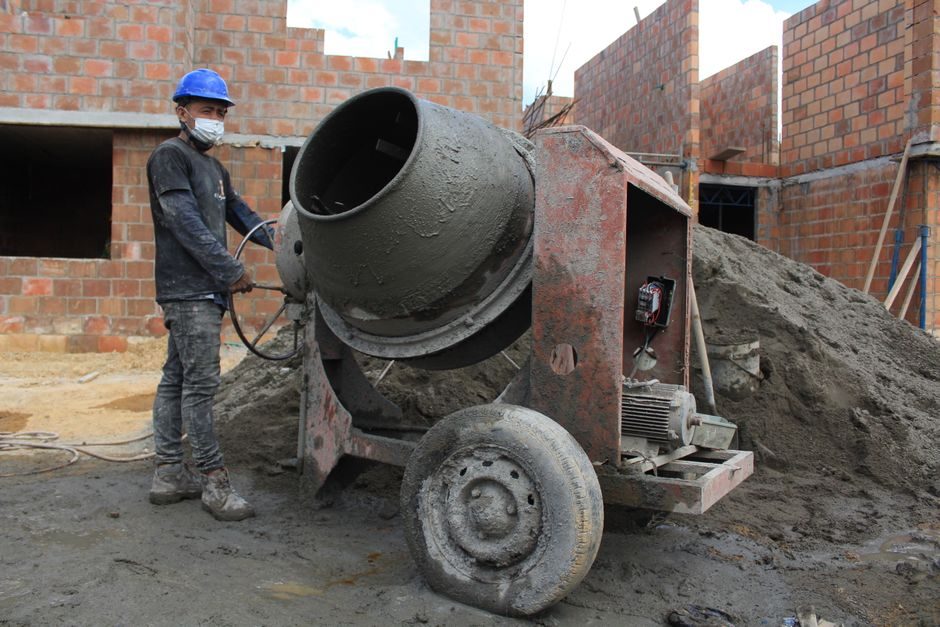
Renovation cement selection is not a single product decision but a five-axis match: existing substrate condition, exposure class, required strength-development rate, structural vs. non-structural role, and embodied-carbon target. The California Nevada Cement Association (CNCA) framework for low-carbon concrete explicitly separates Type 1L Portland-Limestone Cement (PLC) as the default sustainable binder for new structural work, while reserving specialty cements for service-condition-driven duties [S3].
General contractor portfolios on the renovation side, such as SmartBuild's residential and commercial upgrade work, confirm that finish quality in kitchens, basements, bathrooms, and commercial interiors depends as much on the substrate-prep cement choice as on the visible finish — slab patches, tile underlayment, and shower-pan fills each pull from a different binder family [S1].
Portland Family: Type I, Type II, and Type 1L PLC
ASTM C150 Type I Portland cement remains the general-purpose benchmark for above-grade, non-sulfate-exposed renovation work — interior slabs on grade, garage floors, basement floor overlays, and standard structural patches where ambient sulfate concentrations stay below 100 ppm [S3]. ASTM C150 Type II adds moderate sulfate resistance (roughly 100–250 ppm exposure) and lower C3S-content heat-of-hydration, which makes it the correct call for thicker mass pours, post-tension slab repairs, and warm-weather placements where thermal cracking is a concern.
The CNCA documents McCarthy Building Companies' deployment of Type 1L PLC across multiple large-scale University of California, Riverside projects as evidence the binder is mature enough for institutional and infrastructure-scale use, not just pilot work [S3]. For renovation specifiers, the practical translation: Type 1L can be substituted for Type I/II in most non-sulfate interior applications when the mix design is re-verified for air content and finishing time.
Sulfate-Resistant and Specialty Cements for Foundation and Wet-Service
Where renovation work cuts into foundations, retaining walls, elevator pits, sewer laterals, or coastal/marine-adjacent slabs, the binder must be matched to ACI 318 exposure classes. ASTM C150 Type V sulfate-resistant Portland cement (max C3A ~5%) is specified for severe sulfate exposure (>250 ppm) — typical of brownfield sites, agricultural regions, and any substructure below the water table. Where sulfate levels are moderate (150–250 ppm), Type II is the cost-effective minimum. [S1]
For chemical-plant, brewery, or wastewater-treatment renovations where pH swings below 3 or where chlorides/sulfates attack simultaneously, calcium-aluminate cement (CAC, often called high-alumina cement, HAC) delivers superior acid resistance and very rapid strength gain (often 24-hour compressive strengths matching 28-day Portland values), but the conversion phenomenon at 20–40°C long term means CAC is normally restricted to patch repairs, mortar beds, and chemical-resistant toppings rather than primary structural members [S3]. Calcium sulfoaluminate (CSA) cement is an alternative rapid-repair binder with lower CO2 and more stable long-term phase assemblage, increasingly used in highway and runway patch work.
Masonry, Mortar, and Non-Structural Binders
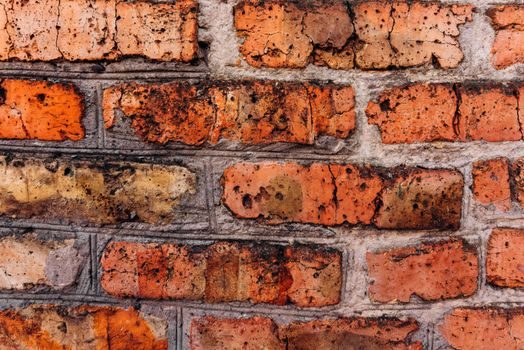
Renovation work in CMU (concrete masonry unit) walls, brick veneers, and stone pointing should not be done with standard Portland. ASTM C270 mortar cements (Type N, Type S, Type M) or ASTM C91 masonry cement are formulated with finer grind, air-entraining additives, and workability agents to bond masonry units without the brittleness of straight Portland-sand mortar. Type N (medium-strength, ~750 psi at 28 days) suits most above-grade interior and exterior wall work; Type S (~1800 psi) is the minimum for below-grade or load-bearing masonry; Type M (~2500 psi) is reserved for heavy-load or below-grade foundation masonry. [S1]
For tile underlayment, self-leveling underlayments (SLUs) and gypsum-based patches are cement-modified rather than pure Portland — these accept flooring adhesives within 2–4 hours and are dimensionally stable over wood or concrete substrates, but they are not interchangeable with structural repair mortars. The renovation contractor's specification sheet should call out the substrate prep product by name, not just "cement patch," because a structural repair mortar used as a feather-edge patch will shrink-crack within days.
Comparison: Five Cement Families Against Four Selection Criteria
The decision matrix below lines the five binder families against the four criteria that drive renovation specification — exposure class, strength-gain rate, embodied CO2, and typical duty. It is the same comparison a structural engineer or architect reviews during submittal.
Type I/II Portland: general duty, medium strength gain (7-day ~65% of 28-day), baseline embodied CO2 (~900 kg CO2/t clinker), correct for interior slabs and standard patches. Type 1L PLC: general duty, equivalent strength gain, ~10% lower embodied CO2, correct for sustainable new build and most non-sulfate interior renovation [S3]. Type V sulfate-resistant: severe sulfate exposure, medium strength gain, baseline-to-slightly-higher CO2, mandatory for foundations in high-sulfate soils. Masonry/mortar cements (ASTM C270/C91): non-structural bond, slow strength gain, low CO2 per ton, correct for CMU/brick/stone pointing. Calcium-aluminate (CAC) and CSA: chemical/acid exposure or rapid repair, very fast strength gain (24-hour), higher CO2 per ton, correct for patches, toppings, and emergency repairs.
Substrate Prep, Bonding, and Curing Discipline

Cement selection only delivers its rated performance if the substrate is properly prepared. Mechanical profiling (shot-blast, grind, or acid-etch to ICRI CSP 3–5 surface profile) and a bonding agent or polymer-modified mortar slurry coat are the standard remediation steps. [S1]
Curing discipline closes the loop. Portland-based cements need a minimum 3-day moist cure at 20°C to achieve design 28-day strength; Type 1L PLC often needs 4–7 days because limestone filler slightly slows early hydration [S3]. Calcium-aluminate patches are the exception — they release heat and need water-spray curing within the first 4 hours, not the first 24, to control conversion risk.
Standards, Sourcing, and Verification
Every cement type cited above is governed by an ASTM specification: ASTM C150 (Portland), ASTM C595 (blended hydraulic cements including PLC), ASTM C91 (masonry), ASTM C270 (mortar), and ASTM C845 (expansive hydraulic). For structural renovation in seismic zones, ACI 318 Chapter 19 and ACI 562 (Code Requirements for Assessment, Repair, and Rehabilitation of Existing Concrete Structures) govern the assessment-and-repair design path; these documents reference back to the C150/C595 cement standards for binder acceptance. [S3]
Specifiers should request mill certificates (Type/Class, alkali content, C3A percentage, LOI, and chloride limits) with every cement delivery and verify them against project specification. CNCA provides free-of-charge technical leadership and design assistance to California and Nevada projects on cement-related specification questions, including low-carbon binder selection and pavement design options [S3]. For projects in other jurisdictions, equivalent industry associations — Portland Cement Association (PCA) nationally, MITA and provincial ready-mix associations — provide the same spec-review function.
For adjacent process-instrument spec work on a renovation site, see the flow-meter and pressure-transmitter encyclopedia entries, and review how automated guided vehicle selection intersects with phased material delivery on a live renovation site. The trackable signal for the next planning cycle is ASTM C595 Type 1L PLC adoption rate in non-sulfate renovation specifications, plus the rollout of CSA-based rapid-repair products into municipal infrastructure tenders.
For the relevant spec sheets and selection criteria, see special cement.