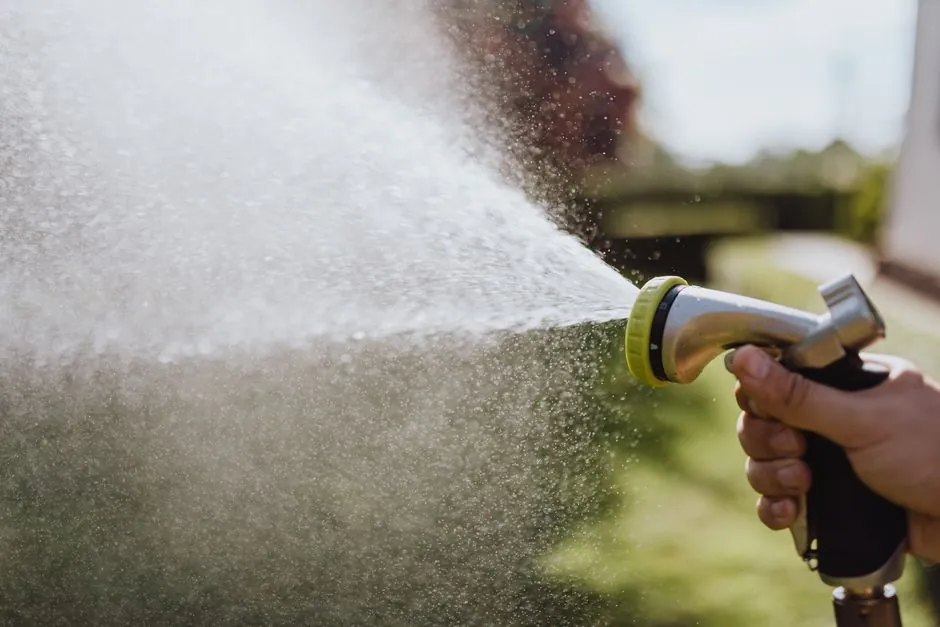
Diaphragm pumps suit irrigation water containing debris or sludge, while centrifugal pumps generally deliver better efficiency for ordinary clean-water duties [S2][S4].
Selection must reconcile required flow, total dynamic head, suction conditions, motor power and wetted-material compatibility with the irrigation fluid and irrigation equipment [S1][S3][S5].
Define the irrigation duty and head requirement
The first selection step is a documented duty inventory covering the water source, required pumping flow rate, total suction head and total dynamic head [S5]. The source may be a well, river or pond, while pipeline length, irrigation-system layout and emitter or sprinkler demand determine the required flow and head [S5].
For a diaphragm selection, convert the calculated head into the maximum discharge pressure the pump must produce, then identify the flow rate required by the connected irrigation system [S1][S5].
Compare the pump types against irrigation criteria
The comparison below is a selection framework, not a universal performance ranking.
Centrifugal pumps are generally the optimal choice for conventional agricultural irrigation because the application is efficiency-sensitive and the water is comparatively clean [S4].
Choose the configuration and power source
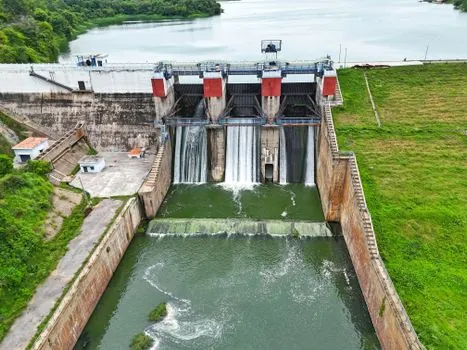
Engine-driven pump categories include diesel and gas diaphragm pumps.
A diaphragm pump should be selected only after the required flow, maximum pressure, power rating, operating temperature and suction arrangement have been established [S1].
Compare those benefits with the required flow and head, then verify the pump curve or manufacturer performance data at the operating point [S1][S5].
Match every wetted material to the irrigation fluid
Diaphragm, ball, seat and housing materials must be compared with the process fluid before final model selection [S3].
The material review should include the diaphragm, balls, seats and housing, with each component's material compared against the process fluids.
For broader chemical-service selection criteria, compare the duty-specific guidance in Select Chemical-Process Diaphragm Pumps by Duty.
Apply to practical irrigation applications
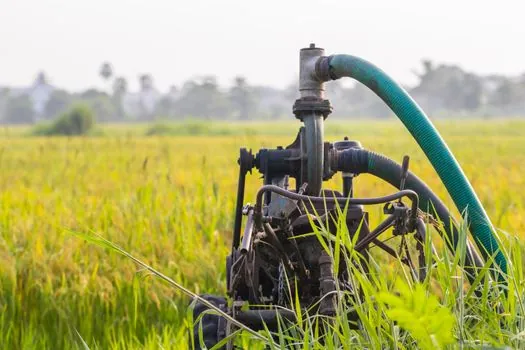
A centrifugal pump remains the stronger baseline for a clean-water system whose operating point has already been established through total dynamic head analysis [S4][S5]. A detailed treatment of that baseline is available in Centrifugal Pump Selection for Irrigation Systems.
For fertilizer injection, distinguish irrigation-water transfer from metering. A diaphragm pump may provide controlled chemical delivery, but the final configuration still has to satisfy the system flow, injection pressure, chemical compatibility and operating-temperature requirements [S1][S2][S3].
Check limitations before approving the pump
Confirm the source and suction arrangement, including whether the pump must start without prime or operate below flood level, before finalizing the model [S2][S5]. Account for the operating temperature and power rating during data-sheet review, not after purchase [S1].
For exact downstream flow-control selection, use Needle Valve Selection for Irrigation Systems to align metering hardware with the irrigation duty. Verify compatibility between that valve and the pump’s pressure and flow range rather than sizing either component in isolation.
Build a traceable purchase specification
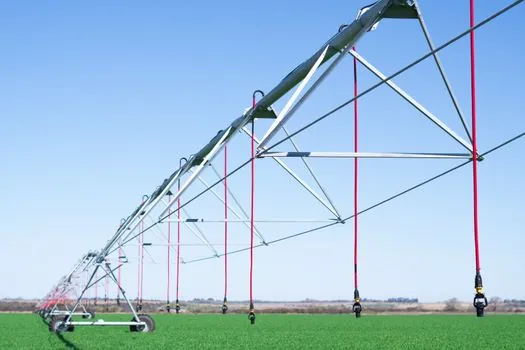
A complete irrigation diaphragm-pump specification should state required flow in the project’s flow units, maximum and operating discharge pressure in psi or metres of head, source conditions, suction lift, operating temperature, power source, and the irrigation fluid composition [S1][S5]. Include the required materials for the diaphragm, balls, seats and housing [S3].
Require the supplier to identify the pump model or size, connection size, maximum pressure, dry-running or priming behavior, permissible operating temperature and drive arrangement. Also require documented rated performance at the specified operating point rather than accepting a catalogue maximum alone [S1].
The final shortlist is straightforward: use a diaphragm pump for debris- or sludge-contaminated water and fertilizer or chemical duties with verified material compatibility; retain a centrifugal pump for clean-water irrigation where TDH and pump efficiency drive the economics [S2][S4][S5]. For a standard chemical-transfer selection, compare diaphragm valves and pump functions separately, because a metering valve does not establish pump capacity.