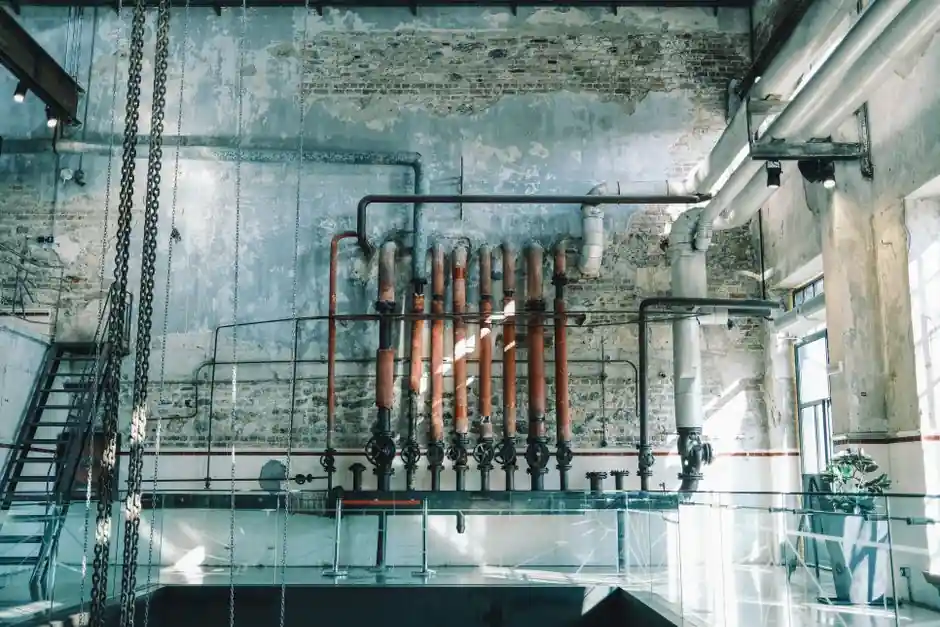
Plunger pumps suit HVAC applications such as high-pressure cleaning, chemical dosing, water jetting, and oil field operations, provided the selected pump matches the required flow rate, operating pressure, fluid compatibility, duty cycle, and power-source availability [S4].
The correct choice depends on required flow, operating pressure, fluid temperature, duty cycle, inlet conditions, drive arrangement, and whether pulsating output is acceptable to the downstream circuit [S4][S5].
Where Plunger Pumps Fit HVAC Duties
A plunger pump is a reciprocating positive-displacement machine: every stroke mechanically displaces a measured liquid volume through a cylindrical chamber, with inlet and outlet valves controlling the direction of flow [S1][S4]. Discharge flow remains comparatively independent of downstream pressure, which makes the pump suitable for pressure regulation, chemical injection, water misting, and cleaning duties where controlled delivery matters more than bulk transfer [S2][S4].
Typical HVAC applications include glycol circulation, boiler-feed or condensate boosting, hydronic pressure control, refrigerant and lubricant transfer, chemical dosing, humidification, and high-pressure tube or surface cleaning [S1][S4]. Cat Pumps lists temperature control, humidity control, gas-turbine inlet fogging, and water-mist fire protection among recognized plunger-pump applications [S3].
These pumps are not normally the first choice for ordinary large-volume HVAC circulation. A centrifugal pump fits a continuous water loop where flow varies with system resistance and pressure requirements remain moderate. The selection becomes credible when at least one of four conditions applies: pressure is high, flow must remain stable as resistance changes, the liquid is viscous, or metering accuracy is required [S2][S4].
Pressure, Flow, and Hydraulic Power
Do not treat the range as a universal rating: confirm the selected model at its specified speed and duty.
Flow is commonly specified in gallons per minute or liters per minute. For an HVAC replacement, use the actual system demand rather than a generic cleaning table. Replacing a 15 L/min pump with a 21 L/min unit changes the load on the water supply, nozzle, regulating valves, and motor [S5].
Selecting the Configuration and Drive

Single-plunger construction is the simplest architecture, while multiple plungers can divide the pressure load and reduce the discharge pulsation associated with reciprocating displacement. The number of cylinders therefore affects both mechanical arrangement and flow quality [S4]. For HVAC systems sensitive to pressure ripple, compare the multi-plunger option against a pulsation dampener installed with a single-plunger unit, rather than assuming the maximum pressure rating settles the decision.
The drive must match the pump speed and load. For direct drive, motor and pump shaft speeds must agree; for belt or gearbox drives, calculate the resulting pump speed from the transmission ratio.
Mechanical fit requires more than a motor-frame comparison. Check shaft diameter, shaft type, keyway, flange dimensions, bolt pattern, shaft position, rotation, and coupling. Record the existing installation dimensions before removing the installed unit, because a replacement with the same nominal flow and pressure may still have incompatible connections [S5].
Motor loading should be verified at the intended operating point through the pump manufacturer’s power requirement. The motor, transmission, coupling, pump speed, and control valve must be treated as one drive train, because changing any one member can alter pressure pulsation, service life, or electrical loading [S5].
Fluid, Inlet, and Thermal Compatibility
Water quality changes the selection materially. Check whether the medium is clean water, treated water, glycol mix, detergent, oil, or a chemical concentrate; a pump specified for cold water must not be assumed suitable for hot water or concentrated detergent [S5].
Inlet conditions include pressure, temperature, filtration, and the need to keep the pump casing flooded. An inadequate inlet can cause incomplete filling, cavitation, valve damage, or unstable operation even when the discharge-pressure rating is adequate [S5]. Specify a filtration requirement rather than treating suction piping as an accessory.
Seal and wetted-material choices depend on the actual fluid and operating temperature. Catalog families include stainless steel, nickel aluminum bronze, chemical-duty, high-temperature, and ATEX versions [S3]. For a hazardous-area installation, specify the exact motor, electrical accessories, and complete pump package for the applicable certification rather than applying a label to the hydraulic unit alone. For temperature-control fluids, verify the manufacturer’s allowable inlet-water temperature and chemical limits against the worst normal and abnormal operating cases [S5].
HVAC Duty, Cycling, and Control Response
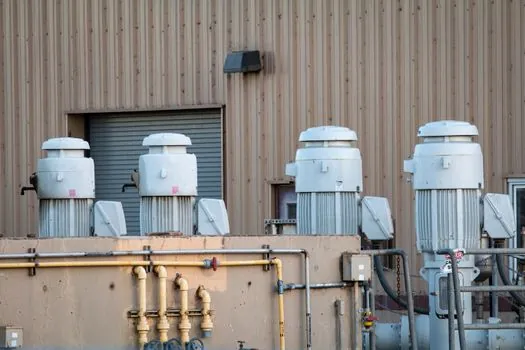
Plunger pumps maintain delivered volume largely independent of discharge pressure, whereas a centrifugal pump’s flow changes with the resistance of the piping system [S2]. This characteristic makes a plunger pump attractive for pressure-regulating loops, but it does not remove the need for a control strategy. A pressure regulator, relief valve, and check valve remain part of the operating envelope rather than optional details.
Duty cycle must match the selected construction. Continuous service demands an approved continuous-duty rating, while intermittent boilers or seasonal HVAC may tolerate a different duty specification if it covers the start-stop frequency and maximum run time [S4]. Confirm the pump speed, fluid temperature, and duty combination rather than ordering only by nominal flow and pressure [S4][S5].
Hydronic-system compatibility must be checked against the controls. In some loops, a centrifugal pump offers smoother pressure and flow behavior with lower maintenance. In a high-pressure dosing or misting branch, a positive-displacement plunger pump gives the better match because flow is less sensitive to discharge-pressure variation and metering performance is stronger [S2].
Where a check valve prevents reverse flow during pump shutdown, its selection and orientation can affect restart behavior and system pressure. The broader requirements for plug valve selection for HVAC systems are relevant only where an isolation valve is included in the same package, but they do not replace verification of the pump’s operating point.
Failure Modes and Procurement Checks
Pulsation is the defining hydraulic drawback of a reciprocating pump: output is constant per stroke but delivered as a pressure ripple rather than a smooth continuous stream [S2]. Excess pulsation can excite piping and controls, increase fatigue loads, and make downstream valves unstable. Keep the discharge path short, use correctly sized hoses, verify the regulator and relief device, and assess a dampener when the measured pressure band is unacceptable [S3][S4].
Valve contamination is another practical failure mechanism because particulate can lodge on inlet or outlet seats. Cleaning and chemical service require compatible seals, lubricants, and wetted materials rather than a generic water-rated configuration [S3][S4]. The canned motor pump architecture may suit a hermetically isolated circulation application, but it does not automatically solve valve wear, high viscosity, or discharge-pressure requirements.
For procurement, require the model code, rated flow at the specified speed, maximum and continuous working pressure, fluid-temperature limits, inlet-pressure range, shaft details, motor kW, and the manufacturer’s power demand at the intended operating point [S5]. A price comparison based only on nominal flow and maximum pressure is incomplete because seals, valve materials, drive arrangement, filtration, and service support alter lifecycle cost [S4].
Shortlist Logic for HVAC Pumps
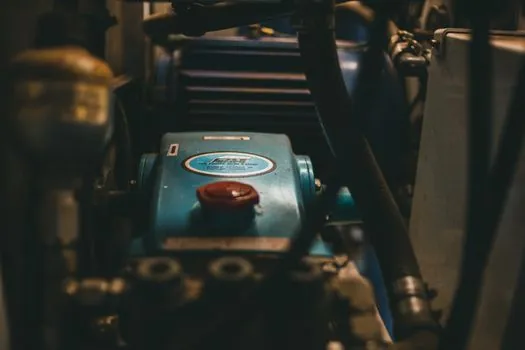
Choose a plunger pump when the duty combines a pressure requirement near the upper part of the equipment’s range, stable delivery under changing downstream resistance, precise chemical delivery, or difficult viscous-liquid handling. A single-plunger model is credible for small or intermittent duties; a multi-plunger model is the stronger candidate for continuous service where pressure ripple must be reduced [S2][S4].
Choose a centrifugal pump when the principal requirement is medium-to-very-high continuous bulk flow, the discharge pressure is low to moderate, and a smooth non-pulsating delivery is more valuable than metering accuracy or very high pressure [S2]. Do not force a plunger pump into a mainstream circulation duty with low pressure and large flow, and do not force a centrifugal pump into a high-pressure dosing branch.
Close the specification only after the calculated operating point, maximum system pressure, startup conditions, fluid temperature, worst-case chemistry, filtration, continuous or intermittent duty, and complete drive train have been checked. The final verification signal is a manufacturer rating that confirms flow at the specified speed and pressure, with motor power derived from the actual duty rather than copied from an existing nameplate [S4][S5].