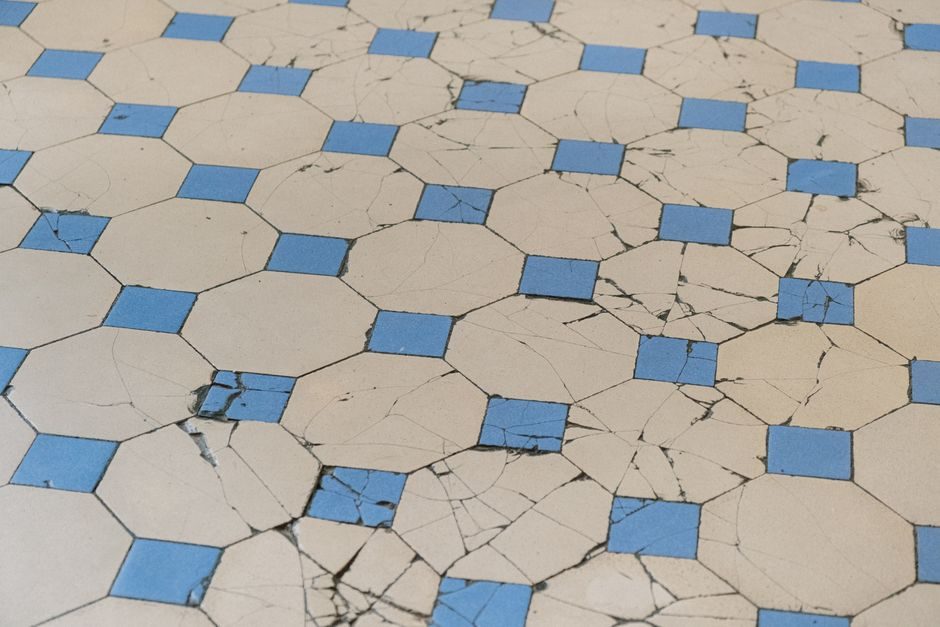
Ceramic tile installation is a substrate-and-adhesive problem first, an aesthetics problem second: tiles laid on a flat, clean, cured substrate with the right thinset and correctly sized joints will outlast walls laid on dubious floors with premium stone [S1].
The core material decision is water absorption: ceramic floor and wall tiles covered in catalogs such as CERA India's range (300×300 mm, 600×600 mm, 600×1200 mm, 800×1600 mm formats) are graded separately from Glazed Vitrified Tiles and Polished Vitrified Tiles, and the chosen adhesive must match that grade [S2]. For a complete primer on what the ceramic tile category covers and how it differs from engineered stone, see the reference entry.
Substrate Flatness, Deflection, and Surface Prep
A cementitious substrate must be flat to ≤3 mm deviation over a 3 m straightedge before any thinset is mixed, because lippage above that threshold telegraphs through the joint and produces trip edges and point-load cracking on 300×300 mm or larger formats [S1][S4]. Concrete slabs must be cured a minimum of 28 days before tiling, and a moisture test (calcium chloride or in-situ RH) should read ≤75% RH for interior applications; values above that require a moisture-mitigation primer before any thinset is applied.
For wooden subfloors, the floor should be built up with a minimum 19 mm exterior-grade plywood or 19 mm cement backer board fastened every 150–200 mm, with a deflection rating of L/360 under design load for the framing; standard residential joists at 400 mm centres generally meet this, but a bouncy floor is a reject condition before tile goes down [S4]. Cracks wider than 3 mm in the slab must be bridged with a crack-isolation membrane, and any previous adhesive, paint, or curing compound must be mechanically removed to expose the bare substrate.
Adhesive Selection: Thinset, Mastic, and Epoxy
Polymer-modified thinset mortar conforming to ANSI A118.4 (or C2-classified per EN 12004) is the default for ceramic wall and floor tile on cementitious substrates, with shear bond strengths above 1.4 MPa at 28 days when mixed to the water ratio printed on the bag [S1][S5]. Non-modified thinset (ANSI A118.1) is reserved for substrates and tiles where the manufacturer has not specified a modified bond coat; using unmodified thinset under large-format or porcelain-bodied tile is a common failure mode because the unmodified paste cannot wet-out a low-absorption body.
Epoxy mortars (ANSI A118.3) carry bond strengths above 2.0 MPa and offer chemical and stain resistance, but they have a 30–45 minute pot life and require stricter substrate tolerance; they are specified for commercial kitchens, laboratories, and areas exposed to acids, not for general residential walls [S8]. For guidance on broader industrial ceramic selection criteria beyond tile, the reference entry maps the same bond-strength and water-absorption logic.
Format vs Substrate: Trowel, Coverage, and Lippage Control

Format drives notch size: a 300×300 mm tile takes a 10 mm×10 mm square-notch trowel; 600×600 mm and larger formats, including 800×1600 mm slabs listed in the CERA range, need a 12 mm×12 mm or U-notch trowel plus back-buttering of each tile to reach ≥85% contact on interior dry areas and ≥95% contact in wet zones such as showers and exterior installations [S2][S5]. Coverage below 80% leaves voids that collect water and crack the tile when point-loaded, so a pull-test should be performed on the first metre of each layout to confirm transfer.
Lippage between adjacent tiles should not exceed 1 mm for joints under 6 mm, or 2 mm for joints 6–10 mm wide, measured with a 600 mm straightedge across the joint. On large-format floors, a self-levelling underlayment (3–10 mm pour) is cheaper than fighting lippage with thinset alone; on walls, the equivalent is a plumb, true substrate rather than a thicker thinset bed. Among substrate prep methods, the contrast between thin-bed and thick-bed (12–25 mm mortar bed) is sharp: thin-bed is the modern default and depends on substrate flatness, while thick-bed is reserved for sloping shower pans and uneven masonry.
Grout Joints, Movement Joints, and Cure Time
Cementitious grout (ANSI A118.6) is the baseline; epoxy grout (ANSI A118.3) gives stain and chemical resistance above pH 3 and is the only practical choice for commercial kitchens, but it is harder to tool and has a 30–45 minute working time at 20 °C.
Movement joints (also called expansion or soft joints) are required at ≤4.5 m intervals on interior floors, ≤3.6 m on interior walls, and at all changes of plane (floor-to-wall, wall-to-wall inside corners); these joints are filled with a neutral-cure silicone or preformed backer-rod-and-sealant system, never grout, because cement grout cannot absorb the 0.5–1.0 mm of seasonal movement without cracking [S4]. Before grouting, thinset must cure a full 24 hours for residential walls and 48–72 hours for floors, with no foot traffic during the cure window. Adhesive bed depths should be checked against the project's tolerance band before grout is mixed, since variations in bed thickness are a leading cause of hollow-sounding tiles after cure.
Layout, Cutting, and Wet-Zone Detailing
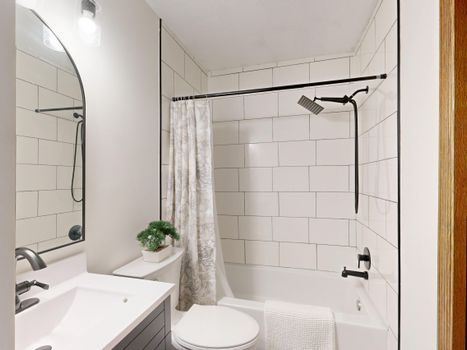
Layout starts from a centre line in both directions of the room; perimeter cuts should be ≥half a tile wide on both walls, and the layout is shifted on paper before any thinset is mixed if the first layout produces slivers under 50 mm [S1][S4].
In wet zones, a liquid-applied or sheet waterproofing membrane (ANSI A118.10) goes on top of the substrate and below the thinset, and pre-formed corners are used at every change of plane; a flood test of 25 mm of water held for 24 hours with no drop in level is the standard acceptance criterion before tile is installed. Substrate tolerance, thinset cure, and waterproofing continuity are the three acceptance gates that separate a passing shower from a leak investigation two months later. Where the install ties into metal trim or transitions to other finishes, the substrate prep practices parallel those used in metal curtain wall panel types, where flatness and fastener spacing govern the long-term result.
Common Failure Modes and When to Repair vs Replace
Hollow-sounding tiles, cracked grout within 90 days, or a single cracked tile under interior furniture usually trace back to one of three root causes: insufficient thinset coverage, missing movement joint, or substrate movement. Spot repair is acceptable when fewer than 5% of tiles in a field are affected and the substrate is otherwise sound; the failed tile is removed with a grinder, the old thinset is chiseled back to the substrate, and the new tile is back-buttered to the same notch profile before re-grouting [S4].
Replacement of the whole field is required when more than ~10% of tiles are affected, when cracks propagate through joints (a movement-joint problem), or when hollow-sounding tiles form a line along a structural joint (a deflection problem). A slope-to-drain failure in a shower pan, persistent efflorescence, or any sign of water migration into adjacent rooms is a hard escalation: stop the install, call a qualified waterproofing or building-envelope inspector, and do not tile over the failure. For comparison, similar escalation logic appears in equipment installs such as arc welding machine installation, where duty-cycle and grounding gates decide whether the unit is accepted as installed or sent back.
Standards, Sourcing, and Acceptance Checklist
The relevant reference documents are ANSI A118.1 (unmodified thinset), ANSI A118.4 (modified thinset), ANSI A118.3 (epoxy), ANSI A118.6 (cement grout), ANSI A118.10 (waterproofing membranes), and EN 12004 (C1/C2 adhesive classification) for European-spec work; ISO 13006 covers tile classification by water absorption (Group I ≤3%, Group IIa 3–6%, Group IIb 6–10%, Group III >10%) and is the cleanest way to check that the tile body matches the chosen adhesive [S1][S2]. For alumina ceramic and wear-resistant ceramic bearing applications, water-absorption thresholds fall well below 0.5% and call for different handling, not the thinset method described here.
Suppliers in ceramic-tile-installation concrete categories listed on sourcing platforms now include 711 entries on Alibaba for epoxy anchoring, epoxy grout, and non-shrink grout products, with 50% domestic-market, 12% Southeast Asia, and 9% Africa distribution across top Chinese factories [S8].