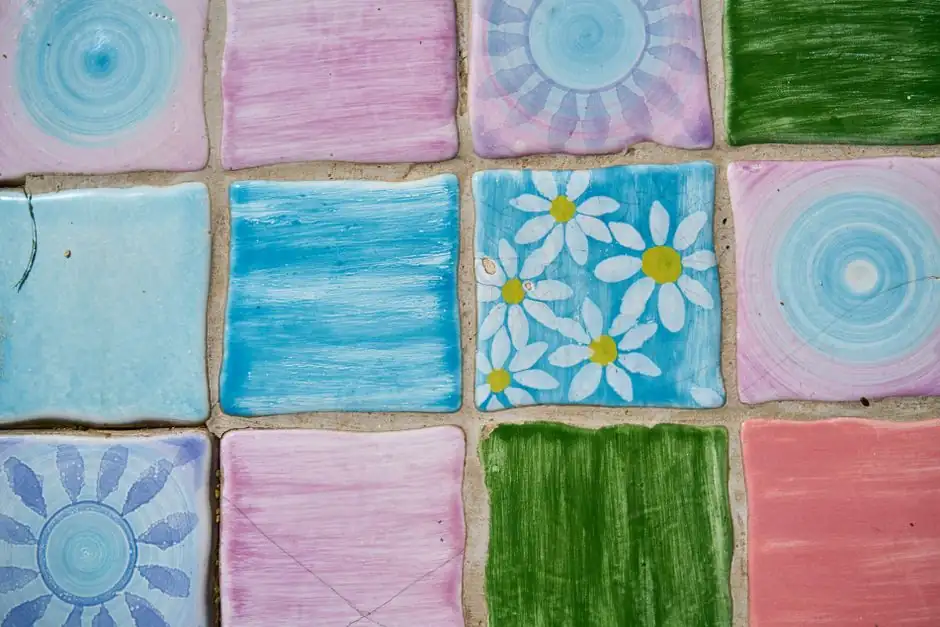
Porcelain tile, defined by water absorption below 0.5% and a PEI abrasion class of IV or V, is the default pick for bathroom floors, kitchen floors, and entries, while non-porcelain ceramic is reserved for walls and dry low-traffic floors [S1][S4].
The selection work in a renovation collapses to four numbers: water absorption (ASTM C373), PEI wear class, COF or DCOF slip rating, and breaking strength. Get these right, and color and pattern become pure aesthetic decisions rather than technical risks [S1][S3][S4].
Define the tile types on the table
Ceramic and porcelain are both kiln-fired clay products, but porcelain uses a finer body and higher firing temperature, which is what drives the <0.5% water absorption threshold and the denser, harder surface [S1][S5]. The split is mechanical, not cosmetic: a porcelain body can carry a higher PEI class and tolerate more freeze-thaw cycles, which is why exterior patios and northern entries lean porcelain [S3][S5].
Natural stone options (marble, slate, travertine) deliver unique veining and a tactile surface, but they are porous, typically require sealing, and demand ongoing maintenance, which makes them a deliberate choice rather than a default [S3][S5]. Mosaic formats (glass, ceramic, porcelain, stone) are not a material class; they are a geometry, and the base material still drives the absorption and wear numbers [S5].
Selection criteria that actually move the spec
Three measurable criteria govern tile selection in a renovation: water absorption per ASTM C373, PEI abrasion class for foot traffic, and a COF or DCOF slip-resistance value for wet zones [S1][S3][S4]. A floor tile that fails any of these is a maintenance liability regardless of how good it looks in a sample board.
For wet floors, the commonly cited DCOF threshold is 0.42 or higher for level interior surfaces likely to be walked on when wet, while matte and textured finishes outperform glossy finishes on the same metric [S1][S3]. A glossy wall tile, by contrast, is fine because wall tile is not loaded the same way a floor tile is; mixing them up is the most common spec error in DIY and contractor-grade renovations [S1][S4].
Material comparison on the four renovation decision criteria
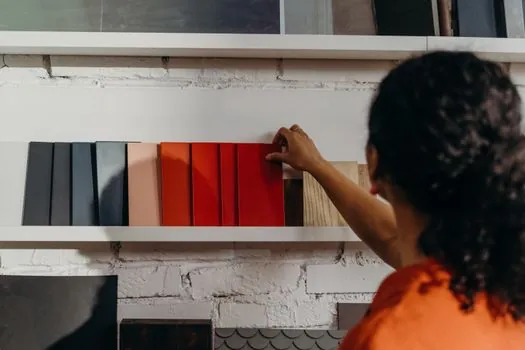
Porcelain leads on water absorption (<0.5%), PEI (typically IV-V), and stain resistance, and is the right pick for bathrooms, kitchens, entries, and exterior patios [S1][S3][S5]. Standard non-porcelain ceramic is cheaper, easier to cut, and available in a wider range of decorative formats, but its higher absorption and lower PEI class cap it at walls and dry low-traffic floors [S1][S5].
Marble and travertine win on visual depth and a natural look, but they are porous, often need sealing, and can etch under acids, so they belong in low-moisture, lower-traffic settings or in accent strips where replacement is feasible [S3][S5]. Slate brings a built-in textured surface that helps wet slip performance, which is why it shows up in bathroom and outdoor applications despite the cost premium [S5]. Glass and metal mosaics are used as accents, not full floors, because of impact breakage and lippage on larger fields [S5].
Who ceramic and porcelain are for, and who they are not
Porcelain is the right call for a full bathroom floor, a curbless shower floor, a kitchen floor, a mudroom, a laundry, and any exterior patio or walkway exposed to freeze-thaw [S1][S3][S5]. Ceramic tile is commonly recommended for bathroom walls and kitchen applications, while porcelain tiles are denser and more resistant to moisture than ceramic [S3][S5].
Natural stone is not the right call where the owner refuses periodic sealing, where hard water or acidic cleaners are the norm, or where the project needs a zero-maintenance warranty. For renovation budgets that cannot absorb sealing cycles, the safer material is glazed porcelain in a stone or marble visual, with the slip and wear numbers of porcelain and the look of stone [S3][S5].
PEI and DCOF: read these two numbers first
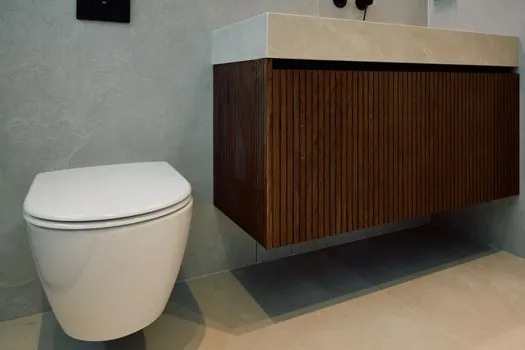
PEI (Porcelain Enamel Institute) abrasion class runs I to V: I and II for walls, III for light residential floors, IV for most residential and light commercial floors, and V for heavy commercial and exterior floors [S4]. A renovation that puts a class II tile on an entry floor will see visible wear in under two years; a class IV or V porcelain on the same floor is built for a 20-year service life [S4].
DCOF (Dynamic Coefficient of Friction) AcuTest is the modern slip metric, and the typical wet-zone threshold for level interior floors is 0.42 or higher; matte and textured finishes hit it, glossy finishes usually do not [S1][S3]. For shower floors and exterior patios where water and soap or algae are constant, the same metric drives a textured porcelain or a slate-style surface rather than a polished marble or a glassy ceramic [S3][S5].
Real renovation use cases and the tile that fits
Curbless shower: porcelain with DCOF ≥ 0.42, a small-format mosaic or textured matte, body matched porcelain trim, and epoxy grout for stain resistance [S1][S4][S5]. A larger-format porcelain can work if the surface texture delivers the slip number, and the format keeps grout joints to a minimum [S1][S4].
Kitchen floor and backsplash: porcelain tile on the floor (PEI IV, DCOF ≥ 0.42), ceramic or glass mosaic on the backsplash where slip and wear are not in play [S3][S5]. For a budget-driven renovation, mixing a porcelain floor field with a higher-end ceramic or glass accent strip gives the visual of stone at the cost of ceramic [S3].
Bathroom wall field, accent, and floor: non-porcelain ceramic on the wall field for cost and ease of cut, porcelain mosaic or wood-look plank on the floor for the slip and wear numbers, and a stone or glass accent strip for visual depth [S1][S3][S5]. For comparison, the same room built entirely in porcelain lands at a higher material cost but lowers the long-term maintenance load and the risk of cracked wall-floor interface tiles [S1].
Grout, trim, and installation details that change the outcome
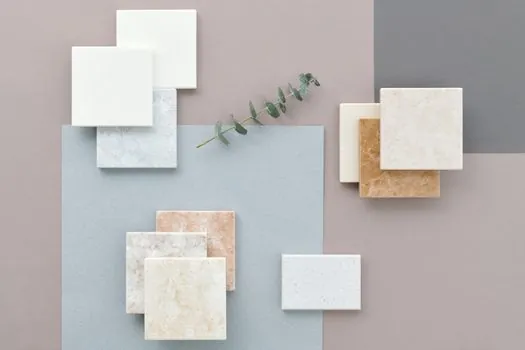
Grout is a spec line, not an afterthought: cement grout is the default and the cheapest, but epoxy grout resists staining and is the right pick for kitchens, showers, and high-moisture bathrooms [S1]. Color choice is a design lever: a matching grout ties the field together, while a contrasting grout highlights the tile geometry; lighter grout shows stains faster, darker grout hides them [S1].
For renovation work that mixes two material types across a single room, plan the transition at a threshold or a feature strip rather than at a random joint, and budget for a movement joint at the perimeter to absorb subfloor movement [S1][S4].
Standards, sourcing, and what to verify before buying
For U.S. renovation projects, the key reference standards are ASTM C373 for water absorption, ASTM C1027 or the PEI rating system for surface abrasion, and ANSI A137.1 / A326.3 for the DCOF AcuTest slip metric [S3][S4].
Not every retailer publishes every rating, and the PEI class is not legally required on the spec sheet, so the practical step is to request the manufacturer's data sheet for water absorption, PEI, DCOF or COF, breaking strength (ASTM C648), and any chemical resistance (ASTM C650) before committing to a full-room order [S3][S4]. Order a single carton first, lay it out in the room under actual lighting, and check for shade variation between cartons before signing off on the full delivery [S1][S4].
Limitations, failure modes, and what to watch on site
Lippage on large-format porcelain is the most common installer error and shows up where the subfloor is not flat to within the tolerance the tile format demands; a 600 mm porcelain on a wavy subfloor will telegraph every high spot as a raised edge that catches feet and breaks under point load [S1][S4]. Cracked tiles at door thresholds and corners usually trace back to missing movement joints, not to a tile defect, and the fix is a perimeter joint and proper substrate prep, not a stronger tile [S1][S4].
Efflorescence on grout joints is a moisture-migration problem in the substrate, not a grout problem, and shows up when a renovation tiles over a concrete slab that still carries moisture; a moisture test and a proper uncoupling membrane or a topical waterproofing layer are the fix, and re-grouting without addressing the substrate will only reset the clock [S1]. For porcelain specified for exterior use in freeze-thaw climates, verify the tile meets ASTM C1026 for freeze-thaw cycling; a porcelain that meets the absorption number but not the freeze-thaw cycle will spall in two winters [S1][S5].
A spec-driven selection like this is the difference between a tile job that lasts the 20-year mortgage and one that needs a re-do at year eight [S1][S3][S4].
For component-level specifications, see ceramic tile, alumina ceramic, and ceramic bearing.
Related analysis: Perimeter Alarm Selection for Oil and Gas Facilities: A Spec-First Map.