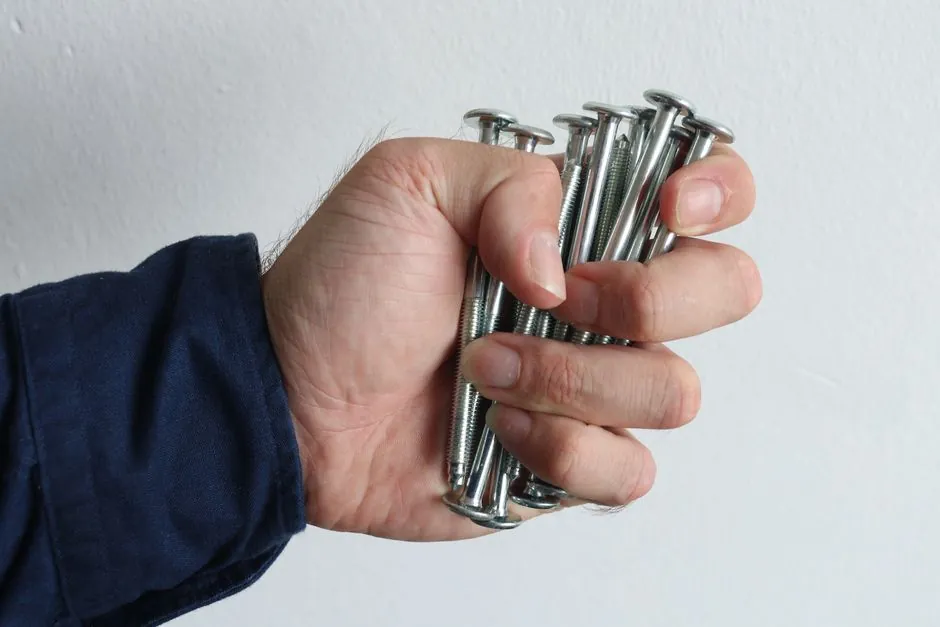
China produces roughly 40% of the world's industrial fasteners (bolts, screws, nuts, washers, rivets, anchors) and the segment generated over $22 billion in domestic revenue in 2025 [S1][S6]. The global industrial fasteners market was valued at USD 103.9 billion in 2025, with Asia Pacific contributing 45.1 percent of revenue and metal fasteners holding about 91 percent of the market, according to Grand View Research as reported in S4.
Concentration of specialist factories in Jiangsu, Zhejiang, Guangdong, and Hebei is the reason procurement teams default to China for both commodity and high-tensile parts [S1]. For buyers who treat fasteners as engineered components, the practical question is not whether to source from China, but how to separate metallurgical control from look-alike production, and how to qualify suppliers before the first PO ships. This map walks through the 2026 buying decisions, with the main trader profiles and the certification tests that actually catch grade substitution.
Product Categories and Where the Supplier Pool Splits
Standard fasteners (DIN, ISO, ANSI metric and imperial) are commodity products available from thousands of Chinese manufacturers, and price differences between suppliers typically reflect material grade and coating quality rather than machining capability [S1]. Specialty parts, including Grade 8.8, 10.9, and 12.9 high-strength structural bolts, aerospace-grade superalloy and titanium components, A2/A4 stainless for marine or chemical service, and custom-geometry parts, are made by a much smaller pool with proven melt control and traceable certification [S1][S4].
Common screw families include timber, chipboard, drywall, self-tapping, self-drilling, concrete, and machine screws; bolt families include hex, flange, carriage, T, U, eye, and wheel-stud variants; anchor families include wedge, sleeve, drop-in, hammer-drive, chemical, and nylon [S3]. Washer and nut ranges (flat, lock, spring, square, hex, nylon-insert, flange, wing, cap, castle) are equally broad and tend to be co-located with bolt makers in the Haiyan (Zhejiang) and Yongnian (Hebei) clusters [S3][S4]. For buyers whose lines also need enclosure and bracket hardware, see the spec guidance on Cangzhou cabinetry and enclosure sourcing, which covers the same Hebei supply base for sheet-metal work.
Grade Substitution: The Dominant Failure Mode
The most common failure mode in China-sourced fasteners is grade substitution, where a supplier ships Grade 4.8 material labelled as Grade 8.8, a condition visually undetectable without testing [S1]. For structural or safety-critical applications, the working protocol is to require a mill test certificate (MTC) traceable to the specific heat batch, then commission independent Rockwell hardness testing on a sample before payment release [S1].
For any fastener rated Grade 8.8 or above, the concrete verification chain is: (1) MTC with heat number, (2) third-party hardness test on the Rockwell B/C scale per ISO 6508, (3) proof load test per ISO 898-1 [S1]. Stainless grades follow a parallel path: A2-70 and A4-80 strength classes are the typical commercial targets for 304 and 316 stainless fasteners respectively, with high-temperature alloy options in Inconel and Hastelloy for energy and chemical service [S4].
Certifications That Actually Filter the Supplier Pool
ISO 9001 is the baseline quality-management system and is necessary but not sufficient for demanding applications; the visible differentiator for automotive Tier 1 and Tier 2 supply is IATF 16949, which signals process control and lot-level traceability [S1]. For corrosion-sensitive or EU-bound parts, RoHS restricts lead, cadmium, and hexavalent chromium in coatings, and REACH imposes specific SVHC (substances of very high concern) limits on plated fasteners [S1].
For higher-risk programs, look for ISO 14001 (environmental), ISO 45001 (occupational health and safety), and, where pressure-bearing fasteners are in scope, the EU Pressure Equipment Directive (PED) certification, all four of which UHC Group holds alongside ISO 9001 [S4]. Buyers sourcing from high-performance fastener traders should match the certificate to the end use, not the marketing brochure: PED for pressure boundary hardware, IATF 16949 for chassis and powertrain, ISO 9001 plus project-specific MTCs for general industrial builds. The trader profiles published in mid-2026 cite UHC Group, Zhejiang New Shifeng, Shanghai Prime Machinery, Fastenal China, and Bossard China as the most-encountered high-performance sources for stainless, alloy, and high-temperature fasteners [S4].
Material and Coating Selection by Service Environment
Stainless steel (A2/A4 grades) is the default for marine, food-processing, and chemical environments; carbon steel covers the bulk of high-strength structural use; titanium and aluminum alloys serve aerospace and weight-sensitive programs; and high-temperature alloys (Inconel, Hastelloy) cover energy and petrochemical service [S2][S4]. Superalloy fasteners were valued at $776.7 million in 2024, and titanium aerospace fasteners are projected to reach $520 million in 2026, a useful proxy for the demand wave hitting qualified Chinese mills [S4].
Coating choice is governed by service environment, and the practical salt-spray ranges are well documented: zinc electroplate (white or yellow passivate) gives 72 to 240 hours, hot-dip galvanising gives 500 to 1,000+ hours, Dacromet/Geomet gives 480 to 720 hours with no hydrogen-embrittlement risk, and Delta-Tone/Magni systems exceed 720 hours [S1]. For buyers specifying coated parts, Dacromet is often the right pick for high-strength Grade 10.9 and 12.9 parts because acid-pickle zinc plating can drive hydrogen into the substrate and cause delayed fracture under sustained tensile load, a real failure mode that catches buyers who spec coatings by colour alone. Wind power alone is forecast at $14.68 billion in 2025 fastener demand, with global wind turbine capacity growing from about 1,100 GW in 2025 to over 2,400 GW by 2030, so the galvanised and Dacromet supply chains in Zhejiang and Hebei are scaling to absorb that volume [S4].
Logistics, MOQ Economics, and Quality-Control Workflow
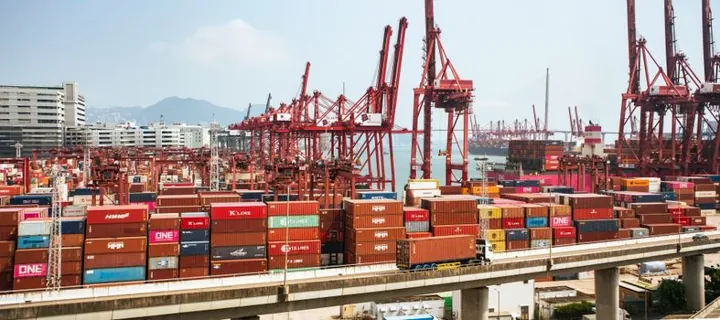
Fasteners ship by weight, and a 20-foot container holds approximately 25 tonnes, which makes sea freight highly economical for volume orders and pushes the per-kg landed cost down sharply once container fill exceeds about 18 tonnes [S1]. The standard sourcing workflow runs: Alibaba plus the Canton Fair plus industry-specific trade shows for shortlisting, then sample evaluation, then a small pilot order with third-party inspection (SGS, Bureau Veritas, or TUV) before the production run is released [S3].
For a working comparison across the main buyer paths: trade-show sourcing (Canton Fair, Fastener Expo Shanghai) gives direct factory contact and faster technical resolution but higher travel cost; Alibaba sourcing gives breadth and price discovery but requires heavy self-vetting; and a local sourcing agent or full-service industrial sourcing partner adds a 5 to 10 percent cost layer in exchange for ground-level supplier audits, translation, and QC oversight [S3][S8]. For most small and mid-volume buyers, the agent path is justified above about $50,000 per order, below which direct factory contact plus a third-party pre-shipment inspection is the lower-friction route. Inline QC checkpoints that pay for themselves on any structural-grade order are: dimensional inspection on a 1 to 2 percent AQL sample, hardness testing per ISO 6508, coating thickness (XRF or eddy current), and salt-spray verification on a coated coupon.
2026 Market Signals Worth Tracking
Two signals are worth watching through the rest of 2026. The global industrial fasteners market is projected to grow from USD 103.9 billion in 2025 to USD 153.7 billion by 2033, with externally threaded fasteners such as bolts and screws accounting for 48.1 percent of global revenue, according to Grand View Research as reported in S4.
Track the next high-temperature alloy capacity additions at Inconel and Hastelloy-capable mills, and the IATF 16949 audit cycle at automotive-grade suppliers, as the two leading indicators of whether 2027 lead times will hold or stretch. For buyers who have not yet adopted a written grade-substitution protocol, the cheapest single improvement in 2026 is adding ISO 6508 hardness testing plus ISO 898-1 proof load to every first-article inspection on Grade 8.8 and above, which catches the majority of look-alike failures before they reach the production line [S1].
Spec-level background on the components involved: linear guide, crossed roller guide, and industrial adhesive.