
China-based liquid cooling supply in 2026 is a three-tier market: server-OEM integrated loops, vendor-neutral DLC specialists, and component-tier fabricators split by load profile, loop topology, and certification chain rather than by headline market share [S4].
AI training racks routinely exceeding 60 kW per rack, hot-water reuse mandates in EU colos, and density-driven HPC retrofits are the three measurable loads pulling demand in 2026, with per-rack heat load, loop topology, and supplier certifications being the three spec gates that separate candidates [S4]. For buyers comparing this segment to adjacent industrial procurement, the AI Server Sourcing from China: Spec-First Buyer's Field Map frames the upstream compute side, while the Liquid Cooling Procurement Strategy: 2026 Spec Gate and Sourcing Map covers procurement mechanics across the full loop.
Tier 1: Server-OEM Integrated Loops vs DLC Specialists
Lenovo Neptune 6th Gen covers three sub-modes (full-system warm water cooling, Neptune Core for component-level CPU/GPU/memory cold plates, and Neptune Air for liquid-assisted air-cooled retrofits), with the rear-door rack water heat exchanger completing the family; Lenovo cites over 12 years of field deployment and up to 40% energy savings versus traditional air cooling [S4]. CoolIT Systems, profiled in Data Center Dynamics' 20-year retrospective, sits in the second tier as a vendor-neutral DLC specialist whose architecture uses warm liquid rather than cold air, allowing most CRAC units and chillers to be removed from operation once rack power exceeds roughly 20 kW, a documented efficiency inflection point for AI training clusters and HPC workloads [S4]. On the China-rack side, Shenzhen Lian Li Liquid Cooling Equipment Technology Co., Ltd. (founded 2014, 12/F Super Channel 3 Technology Building, No. 18 Gaoke Avenue, Longgang District, Shenzhen) markets itself as a liquid-cooling equipment vendor for AI infrastructure and next-generation data centers [S1]. ToneCooling (China) publishes a 5-piece cold-plate prototype MOQ, copper-brazed thermal resistance of 0.04 degC/W at standard flow rates, and integrated support for both NVIDIA GB200 and Chinese GPU platforms (MetaX, Biren, Sunway, Hygon), with a stated 500,000+ units/year capacity [S4].
Tier 2: Component-Tier CDUs, Chillers, and Heat Exchangers
Koolance, ISO 9001 and ISO 14001 dual-certified, lists the ALX-15KA as a 15 kW floor-standing ambient CDU running on 100-240 V AC at 700 W max consumption, and the VLX-2000 as a 2 kW (2000 W) 110 V recirculating chiller, with an optional rack-mount adapter tray for the ALX-3000 released on 2026-06-05 [S4]. On the industrial auxiliary side, Jinan Amrta Air Conditioning lists a 24V/48V 1 kW DC R134A mini water-cooled chiller with evaporative heat exchanger at US$7.50 per set at single-set MOQ, while Guangzhou Hone Machinery lists a 316/304 stainless-steel pneumatic hydraulic high-shear homogenizer at US$1,500-4,000 per set [S1]. Shenglin (Shanghai Shenglin M&E Technology Co., Ltd.) publishes OEM liquid cooling CDU options for buyers integrating their own rack or container builds, with explicit guidance on per-CDU kW class and ambient vs chilled-water loop configurations [S3][S8].
Spec Gates: Material, Process, Loop Topology, and Compliance

Cold-plate material selection (copper versus aluminum) is the first hard engineering trade-off and is not vendor-agnostic because brazing process windows differ by alloy; Winshare Thermal specifies liquid cold plates made of copper or aluminum with internal fluid channels sized to maximize convection between the coolant and the mounting surface, while Mstirling (sister brand of Metalli) lists both vacuum brazing and controlled atmosphere brazing for brazed plate-fin heat exchangers and ultra-low temperature cooling systems [S4]. Loop topology drives fluid selection, which drives materials and leak-detection discipline: dielectric fluids pull different elastomer and connector specs than deionised-water loops, so buyers should pin the dielectric vs deionised-water choice and define allowable coolant conductivity before RFQ [S4]. For cold-plate thermal performance, supplier-side guidance targets thermal resistance of 0.05 degC/W or lower (junction-to-coolant) and system-level delta-T of 15 degC or less under full load, with vibration tolerance rated to withstand 5-500 Hz at 2G RMS and MTBF of 100,000 hours or more at 25 degC ambient (2025-12) [S7].
Filtration, Coolant, and Ancillary Supply
Made-in-China's liquid filter element category alone lists 1,932 manufacturers offering 5,796 products, dominated by Hangzhou and Jiangsu suppliers, with entry-level pleated cartridges starting at US$0.43 per piece and stainless candle filters at US$459 per piece [S1]. For buyers routing coolant through industrial valves and metering with flow meters, the per-piece price of filtration and instrumentation drops two orders of magnitude below DLC rack or CDU pricing, which is why category sourcing (catalog vs RFQ) is the second decision after tier selection. The category spread is the real headline: a single-piece DLC rack is a six-figure USD line item, while cold plates and filters are catalog items bought by the hundred [S1].
Quality Control, Reliability, and OEM Process Discipline
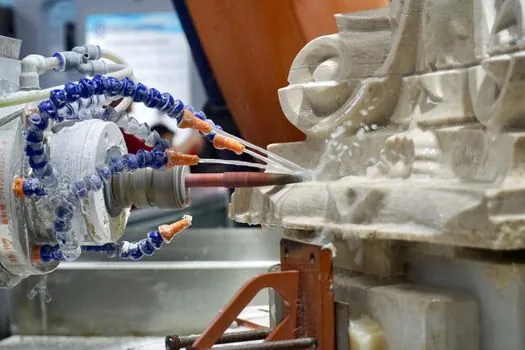
Supplier quality control procedures documented for custom liquid cooling work include dimensional inspection, pressure testing, thermal performance validation, material traceability, and reliability testing, processes positioned as essential for global OEM brand qualification (2025-12) [S7]. Buyers specifying cold plates should require pressure-test evidence, material certificates (mill trace for copper or aluminum), and a published MTBF figure, since brazed cold-plate failure modes (voiding, delamination, fatigue cracking) only surface under thermal cycling that field warranty data will catch long after a sample passes the factory test (2025-12) [S7]. A staged engagement model (thermal analysis and requirement definition, then cooling architecture design, then component engineering and customization) is the published workflow from custom thermal solution suppliers, with CFD simulations used to predict heat transfer performance before physical prototypes are built (2025-12) [S7].
Comparison Table: Three Vendor Tiers on Four Decision Criteria
Tier comparison: Tier 1 OEM-integrated loops (Lenovo Neptune 6th Gen, CoolIT) score high on stack integration and reference base (12+ years deployment, 20-year HPC retrospective) but lock the buyer into server platform choices; Tier 1 China-rack specialists (Lian Li, ToneCooling) score high on capacity (ToneCooling 500,000+ units/year) and domestic GPU platform support but require extra qualification work for non-Chinese deployments; Tier 2 component makers (Koolance ALX-15KA 15 kW / VLX-2000 2 kW, Shenglin OEM CDU) score high on ISO 9001/14001 certification and SKU refresh (ALX-3000 rack-mount adapter 2026-06-05) but require the buyer to assemble the loop; Tier 3 filter and ancillary (1,932 Made-in-China.com suppliers, US$0.43-459 price band) score high on cost and lead time but are catalog items with no stack-level warranty [S1][S4]. The fit depends on whether the buyer is buying a stack or a component, and on whether the rack is above or below the 20 kW warm-water inflection point [S4].
Who This Vendor Map Is For, and Where It Breaks

This map fits procurement managers sourcing DLC stacks, CDU assemblies, or cold plates for HPC, AI training, and density-driven retrofits where per-rack loads are crossing 20 kW toward 60 kW. It does not fit buyers needing two-phase immersion or dielectric waterless loops at scale (LiquidStack, ZutaCore hold separate niches outside this China-tier map) [S4]. It also does not fit single-piece lab cooling purchases, where the Koolance VLX-2000 2 kW recirculating chiller or Jinan Amrta US$7.50-per-set mini chiller are the correct entry points rather than a full DLC OEM engagement [S1][S2]. Buyers cross-checking adjacent industrial instrumentation should note that pressure transmitters and pressure sensors on the secondary loop are not covered in the China liquid-cooling vendor map and require a separate sourcing track, just as linear guides and crossed roller guides sit outside the thermal stack entirely.
Trackable signals for the next sourcing cycle: whether ToneCooling's stated 500,000+ units/year capacity holds under 2026 GB200/Hygon dual-platform demand; whether Koolance's ALX-3000 rack-mount adapter (released 2026-06-05) gets paired with a higher-kW ambient CDU SKU; and whether Made-in-China.com's liquid filter category continues expanding past the 1,932-supplier / 5,796-product mark recorded in July 2026.