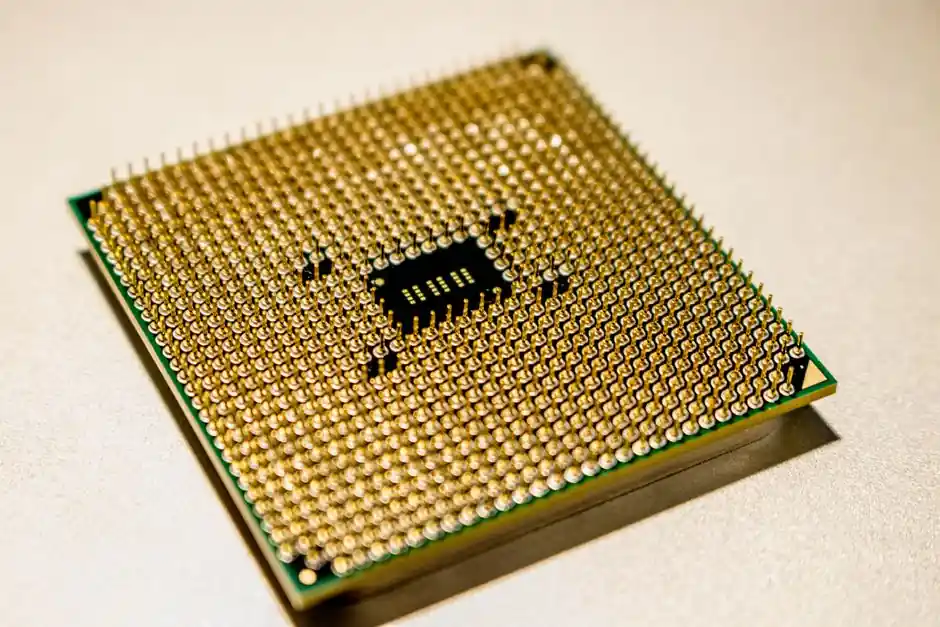
China manufactured more than 60% of the world's IT hardware in 2026, and a complete liquid-cooled GPU rack built in Chinese ODMs runs 25-45% cheaper than a Western-assembled equivalent using identical global-sourced components such as NVIDIA H100/H200/B200 accelerators and Intel Xeon CPUs [S3].
The addressable market confirms the scale: the China AI server segment moved from USD 16.77 billion in 2024 toward a projected USD 128.46 billion in 2029, a 40.4% compound annual growth rate that outpaces the global 34.3% benchmark [S1]. Annual Chinese server output exceeds 5 million units, so capacity is rarely the binding constraint; spec discipline is [S3].
Workload Class Before SKU: Tier the Compute First
The first filter on any AI server quote is workload class, not chassis form factor, and a four-tier split (edge node, mid-range virtualization, dense compute, AI/EDA heavy) maps cleanly to current China ODM catalogs [S4]. AI training and inference nodes diverge sharply from traditional servers: rack-level power jumps from 5-15 kW to 40-120 kW, GPU density rises from 0-4 to 8-72 GPUs per rack, and network bandwidth steps from 1-10 GbE to 400-800 GbE per node [S3].
Per-VM memory sizing is the easiest misquote to catch: a 4 GB RAM floor per instance plus a 4 GB hypervisor overhead reserve means a 16 GB node supports three 4 GB VMs, and the same rule scales linearly to 64 GB, 128 GB, and 256 GB DDR5 platforms that dominate 2026 export quotes [S4]. Always demand a per-channel DIMM count, not a total GB figure, because population rules decide whether rated 4800 MT/s is actually hit.
Chassis Form Factor: 1U, 2U, 4U, and Multi-Node Trade-offs
Four physical templates cover roughly 90% of China-sourced AI server requests, and the choice should be locked before the RFQ goes out: 1U for general compute, 2U for storage-rich or GPU-light nodes, 4U for 4-8 GPU Direct-Attach or high-wattage CPU SKUs on SP5/SP6, and multi-node (2U4N or 4U8N) for hyperscale ARM (Ampere Altra, Huawei Kunpeng 920) [S4].
The spec deltas drive the BOM weight: a 1U chassis typically supports 8-10x 2.5" hot-swap bays and 800-1100 W redundant PSUs; a 2U raises that to 12-24x 3.5" or 24-25x 2.5" with 1300-1600 W redundant supplies; a 4U reaches 36-60x bays with 2000-2400 W redundant 80 PLUS Titanium PSUs [S4]. Multi-node chassis trade per-node expansion (usually 2x 2.5" plus 1x PCIe slot per sled) for density of 4 or 8 nodes per 2U/4U frame. Match chassis to rack PDU early, because a fully populated 4U 8-GPU node draws 3.5-4.5 kW, which dictates 30 A C13/C15 or 60 A C19 PDU provisioning [S4].
CPU, GPU, and Memory Platform Choices
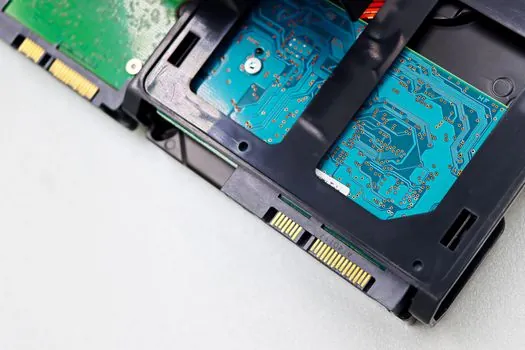
Three CPU platforms cover the export-shipping China server market: Intel Xeon Scalable 4th and 5th Gen on LGA 4677 and LGA 4710-2, AMD EPYC 9004/9005 on SP5 and SP6, and ARM (Ampere Altra/Altra Max, Huawei Kunpeng 920/930) [S4]. Xeon wins on single-thread IPC and software ecosystem, EPYC leads on core density and memory bandwidth, and ARM wins on power-per-core for hyperscale inference.
For AI accelerators, the procurement menu includes NVIDIA H100/H200/B200, AMD MI300X, and a growing slate of domestic alternatives: Huawei Ascend 910B, Cambricon MLU370/MetX, and Biren BR100 [S3]. Memory subsystem choices matter as much as the accelerator: high-bandwidth HBM3/HBM3e on the GPU side pairs with DDR5-4800 registered DIMMs on the host, and skipping per-channel population validation is the most common cause of a quoted speed that never materializes in the rack [S4].
Liquid Cooling: Why Air Cooling Is Already Out
A single NVIDIA H100 or B200 cluster consumes 5-10 kW per rack, exceeding what air cooling can manage efficiently, and next-generation platforms are pushing rack-level density beyond 100 kW [S3]. Three liquid-cooling approaches dominate the Chinese supply base: cold-plate (direct-to-chip) loops for retrofit and mid-density deployments, full immersion single-phase tanks for the highest density, and rear-door heat exchangers as a transitional step.
Thermal envelope dictates facility work: a liquid-cooled rack weighs 1,200-2,500 kg versus 500-800 kg for a traditional rack, so structural floor loading and pump vibration isolation need to be re-validated [S3]. Networking choice has to keep pace too, because InfiniBand or RoCE at 400-800 GbE per node is now the baseline for multi-node scaling; buyers who spec 25 GbE NICs to save cost will bottleneck the cluster before the first training step finishes.
Certification, IP, and the White-Label Trap
The 2025 export tally places China AI-related shipments at USD 840 billion, roughly 22% of the country's total exports, and ODM custom orders now account for 61% of AI hardware shipments as buyers move away from generic white-label boxes [S2]. That same boom has a known failure mode: an 8-megapixel AI camera that arrives with a 4-megapixel sensor and software interpolation, a "5-meter" face-recognition range that barely works at 2 meters, and a CE certificate that turns out to be an unverifiable copy that gets a container detained at the destination port [S2].
The defense is a verification checklist that the spec-first buyer's field guide already enforces: traceable factory patents, in-house algorithm teams for firmware updates, and a chain-of-custody on every certification document, ideally cross-checked against the issuing body rather than the supplier PDF [S2]. Shenzhen is the dominant export gateway for Pearl River Delta integrators, with Shanghai and Qingdao as secondary ports; air-freight to Frankfurt or LAX runs 4-7 days, sea-freight 25-35 days for a 40 ft HQ container [S4].
Logistics, Lead Time, and Total Cost Anchoring
Stock 1U, 2U, and 4U SKUs from Chinese ODM and OEM server lines (Inspur, Sugon, H3C, Lenovo Beijing/Hefei lines, Huawei TaiShan) are typically quoted at 30-60 day lead times for export buyers, with the dominant export port being Shenzhen and Shanghai/Qingdao as alternates [S4]. That lead-time window is shorter than most Tier-1 Western OEM quotes on equivalent GPU SKUs, and it is the reason the same spec can land 25-45% below a Western assembly price even after freight and duty [S3].
Where Chinese AI server quotes are easy to misread: the headline unit price rarely includes the rack-level PDU upgrade, the immersion-tank secondary loop, or the RoCE/InfiniBand switch fabric, all of which are mandatory at 40-120 kW per rack [S3]. A 2U dual-socket E5-2680 v4 chassis, a 2U single-socket Ampere Altra Q80-30 build, and a 4U dual-socket SP5 EPYC 9554P node carry wildly different BOM weight, cooling envelope, and PSU derating curves; treating them as interchangeable is the fastest way to a wrong quote on round one [S4]. The right discipline is to lock chassis tier, CPU/GPU platform, liquid-cooling topology, and certification scope before pricing, and to ask the supplier to itemize each on the same line of the quote so any "engineering change" later is auditable. For buyers also routing low-voltage instrumentation into the same data-hall build, spec discipline in adjacent categories pays off: see how pressure transmitter and flow meter selection cascades from the same rack-PDU and PSU-derating math.
Track these three signals through the rest of 2026: the volume of 800 GbE NIC and RoCE switch SKUs shipping out of Shenzhen (a real-time read on multi-node AI cluster demand), the cadence of 80 PLUS Titanium 2000-2400 W PSU releases from the same ODM base (a proxy for 4U 8-GPU node uptake), and the publication of revised CCC and CE-RED test reports for liquid-cooled racks (the gating step for European data-hall deliveries).
For component-level specifications, see serial server.