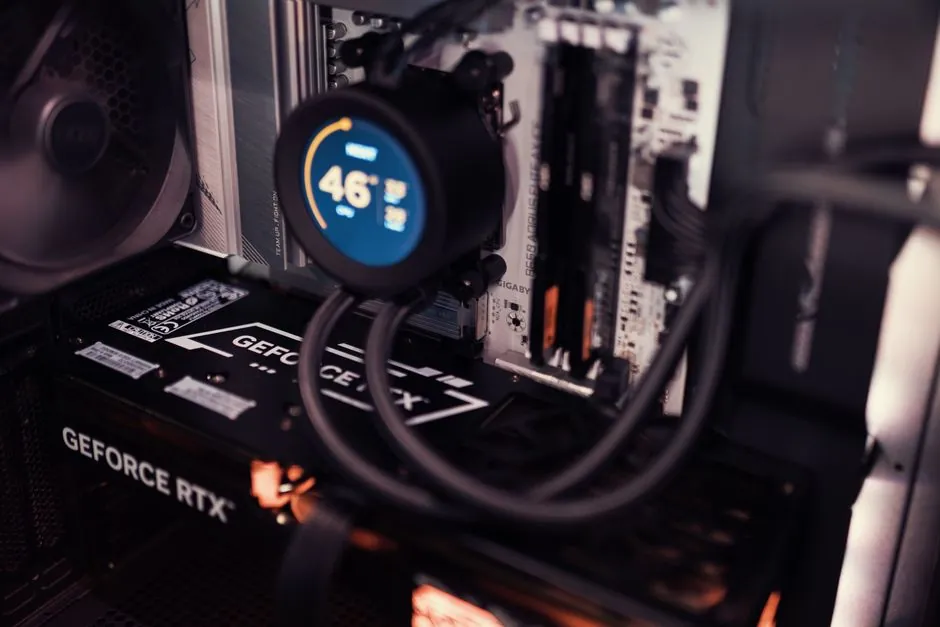
AI training racks exceeded 60 kW per rack in 2026 builds, pushing liquid cooling from a niche HPC option to a default specification for any new accelerator cluster [S1].
Procurement teams now have to score three vendor tiers, three loop topologies, and a stack of certification clauses before price even enters the spreadsheet, and the cheapest line on a 1 MW quote is usually the one with the narrowest scope [S3].
Vendor tier map: OEM loop, DLC specialist, component maker
The 2026 short list is split into three functional classes, and each class changes who carries the integration risk [S1].
Lenovo Neptune 6th Gen sits in the server-OEM tier and ships as a family: full-system warm-water cooling, Neptune Core component-level cold plates for CPU/GPU/memory, Neptune Air for liquid-assisted air-cooled retrofits, and a rear-door rack water heat exchanger, with the vendor claiming up to 100% heat removal on a single rack and over 12 years of field deployment [S1]. CoolIT Systems is the DLC specialist tier, with a 20-year HPC and hyperscale reference base that gives buyers a vendor-neutral cold-plate and CDU stack when they do not want a single-OEM lock-in [S1].
The component-maker tier is where Koolance competes as an ISO 9001 and ISO 14001 dual-certified custom liquid-cooling shop, with cold plates, sub-assemblies, heat exchangers, chillers, pumps, and quick-connect fittings in catalog; the ALX-15KA is a 15 kW floor-standing ambient CDU on 100-240 V AC at 700 W maximum consumption, the VLX-2000 is a 2 kW (2000 W) 110 V recirculating chiller, and an optional rack-mount adapter tray for the ALX-3000 was released on 2026-06-05 [S1]. Buyers who already locked an IT vendor should match the cooling tier to the integration risk: OEM loop for fastest deployment, DLC specialist for multi-vendor racks, component maker for custom builds below ~30 kW per rack.
Selection criteria: kW, topology, and certification chain
Three criteria separate qualified vendors from the rest: per-rack heat load in kW, loop topology (warm-water vs cold-water vs two-phase), and the supplier's quality/environmental certification chain [S1].
Per-rack heat load is the first cut: 15 kW-class ambient CDUs like the ALX-15KA cover a single rack at moderate density, racks above ~30 kW typically need warm-water direct loops, and any rack above 50 kW should be specified as warm-water or two-phase from day one [S1][S4]. Loop topology drives the rest of the spec, because it pins the fluid family (treated water, glycol-water, dielectric) and the materials and leak-detection you have to require [S5].
Certification discipline is the second cut: component-tier vendors that publish ISO 9001 + ISO 14001 give buyers an auditable signal, while OEM-integrated vendors inherit server-platform safety/EMC certifications on the rack PDU but rarely advertise a standalone ISO 14001 on the cooling subsystem itself [S1]. Engineers should also pin allowable coolant conductivity and dielectric vs deionised-water choices in the RFQ, because those clauses decide gasket, O-ring, and quick-disconnect material compatibility downstream [S5].
Topology comparison: RDHx, D2C cold plate, immersion
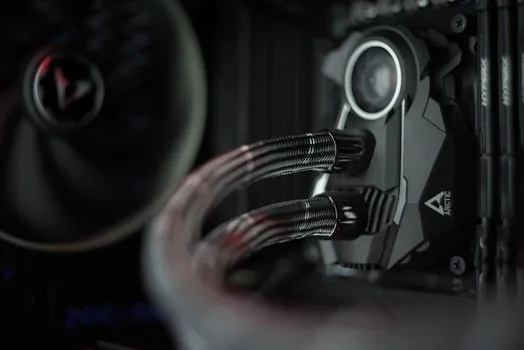
Three cooling methodologies compete inside the rack, and the choice cascades into plumbing, manifold, and cabinet structural specs [S4].
RDHx is the lowest-disruption path for sites that must keep existing PLC and rack-PDU infrastructure in place, and the same philosophy drives OEM "Neptune Air" retrofits [S1][S4]. D2C with a manifold-ready cabinet is the workhorse for AI training, but it forces structural spec: a high-end cabinet should support 3,000 to 5,000 lb (1,360 to 2,268 kg) static load and be reinforced against racking under fluid-filled weight [S4].
RFQ structure: pin scope before price
A 1 MW liquid cooling request is only a starting point, because the same number can cover a single CDU or a full scope with rack manifolds, pumps, facility-side piping, dry coolers, controls, and commissioning, and different suppliers rate equipment at different coolant temperatures, flow rates, and pressure drops [S3].
Disciplined buyers require five separate schedules in every bid: technical compliance, assumptions, deviations and exclusions, guaranteed performance, and itemized pricing, which makes quotations comparable and surfaces missing scope before contract signature [S3]. The RFQ front page should also declare the project stage (budgetary, design development, procurement, expansion) so suppliers do not price the wrong level of engineering and risk; marking data as Confirmed, Preliminary, Supplier to propose, or By others is more useful than leaving fields blank [S3].
For sourcing context beyond cooling, the same four-axis discipline shows up in AI server procurement: a four-axis spec gate for 2026 builds, where IT and cooling are scored together rather than as separate purchase orders.
Component-level specs to verify before signing
Component validation kills more deals than price negotiation, because small numeric gaps compound across hundreds of racks. [S1]
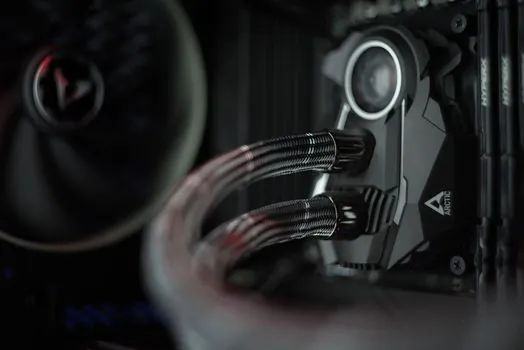
For PC-class and workstation AIO loops, the verification set is: radiator size (240 mm or 360 mm), fan airflow in the 42-85 CFM range, pump stability under continuous load, and bearing type plus lifespan, with hydraulic and fluid dynamic bearings commonly rated 40,000-100,000 hours [S2]. Noise is a procurement lever, not a footnote: optimized 120 mm and 140 mm fans running lower RPM at equivalent load reach 20-28 dBA, which translates directly to lower RMA rates on silent-PC SKUs [S2].
For data-center heat exchangers, the datasheet must carry approach temperature, pressure drop at design flow, plate material and gasket compatibility, and allowable coolant chemistry; thermal performance should be validated against real flow and not the marketing nameplate [S5]. On the controls side, the RFQ should pin BMS protocol, alarm list, monitored points, and which side owns control authority between the CDU PLC and the site BMS, because ambiguity here is the most common cause of post-commissioning disputes [S3].
Risk register: leaks, weight, retrofit friction
Three failure modes dominate liquid-cooling post-install tickets, and each maps to a clause the RFQ should already carry [S4].
Leak risk is the headline fear for any data center manager running liquid next to live electronics, so the cabinet spec must include a leak detection and mitigation system, with the sensor placement and shutoff logic written into the acceptance test rather than left as a vendor option [S4]. Weight and structural integrity are the second failure mode: fluid-filled pipes, manifolds, and high-density servers push cabinet mass far above an air-cooled predecessor, so the static load rating (3,000-5,000 lb / 1,360-2,268 kg) and frame reinforcement against racking have to be on the data sheet, not a marketing bullet [S4].
Retrofit friction is the third, and the cheapest to defuse: RDHx and OEM "Neptune Air" retrofits preserve the existing air-cooled topology and are the lowest-disruption option when the existing PLC and rack-PDU infrastructure must stay in place, while D2C and immersion should be treated as greenfield-only unless the structural survey is already signed off [S1][S4]. For adjacent infrastructure where the same "spec gate first, price second" logic applies, see Control cable suppliers map: electrical vs mechanical camps, 2026 spec gates and Temperature recorder sizing: channel count, span, isolation, accuracy.
Acceptance and sourcing signals to watch

Two signals indicate a 2026 liquid-cooling supplier is still serious: active SKU refresh in 2026, and a published FAT/SAT plan that names the test points [S1][S3].
The 2026-06-05 release of a rack-mount adapter tray for the ALX-3000 is a small but concrete SKU refresh signal from a component-tier vendor, and OEM-integrated vendors counter with multi-mode families (warm-water, cold-plate, air-assisted) that share a common rear-door heat exchanger [S1]. On the acceptance side, the RFQ should require a performance-guarantee schedule with explicit FAT (factory acceptance test) and SAT (site acceptance test) documentation, plus a redundancy clause that names the pump/CDU N+1 configuration and the maximum acceptable fault domain, so a single CDU swap does not take a row offline [S3].
Trackable next nodes: the 2026 CDU and chiller catalog refresh cadence from each of the three vendor tiers, and any new dielectric vs deionised-water guidance published alongside ASHRAE TC 9.9 or equivalent fluid-classification updates; both will reset the materials clause in most 2026 RFQs.
Spec-level background on the components involved: linear guide, crossed roller guide, and pressure transmitter.