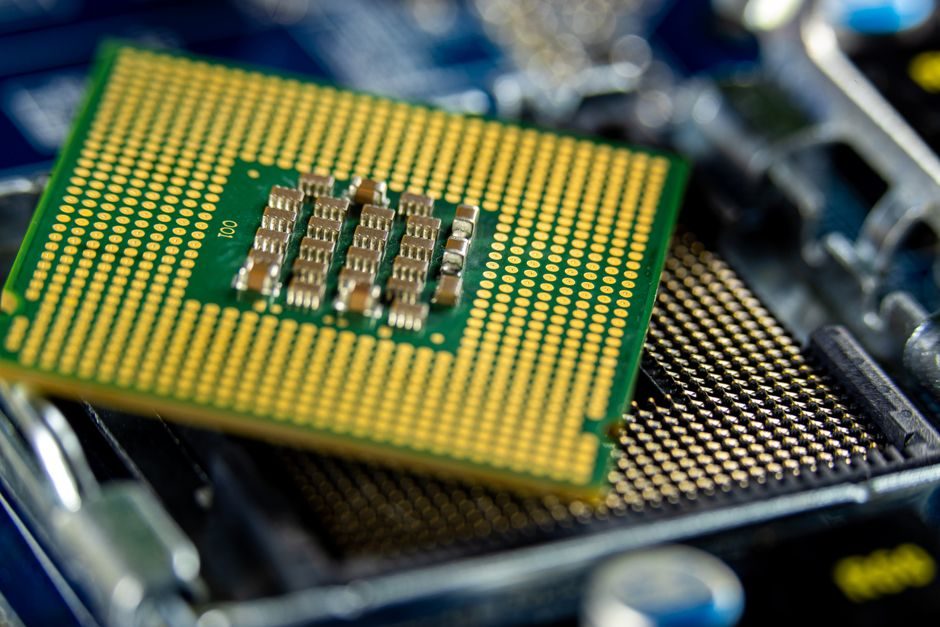
Chip-packaging back-end factories in 2026 are reorganising around three converging layers: high-megapixel AOI/SPI inspection, six-axis robot die/flux handling, and digital-twin line calibration tied to MES data historians [S3][S4].
Rockwell Automation's 2026 industrial-software portfolio explicitly bundles Studio 5000, Emulate3D Digital Twin, Arena Simulation and FactoryTalk Analytics VisionAI into a single design-to-operations stack for SMT and packaging lines [S3]. For process engineers sizing a new backend, the practical question is no longer whether to automate but which inspection, motion, and analytics blocks to integrate first.
Where the 2026 Packaging Line Actually Splits
Modern chip packaging separates into three functional blocks: front-end wafer-level processes, mid-stream SMT/PCBA assembly, and back-end encapsulation, singulation and final test — and each block has its own dominant sensor and motion stack [S3][S4].
The Industrial AI thread in Rockwell's 2026 messaging targets the back-end specifically: closed-loop optical inspection feeding a 2D/3D vision pipeline, with AOI defect data written directly to a historian for SPC charts and lot-level traceability [S3]. On the Smart Meter PCBA Line Map we walked through the SMT, PTH, casing and calibration stack for a related assembly; the same station sequence — loader → solder paste → SPI → pick-and-place → reflow → AOI → 3D AOI — applies to packaging-substrate lines, with the addition of flip-chip bonder and underfill dispense stations upstream of the oven.
Sensor and Camera Stack: AOI, SPI, 3-D Vision
Inline 3-D AOI and solder paste inspection (SPI) are now treated as mandatory, not optional, on new packaging lines; reference designs position 5- to 12-megapixel area cameras with telecentric or confocal optics at each post-reflow and post-bonding station [S3].
FactoryTalk Analytics VisionAI is Rockwell's specific answer: it pushes classification models onto edge IPCs adjacent to the AOI cameras and lets engineers train defect classes against a historian corpus rather than against hand-labelled image sets [S3]. For engineers comparing platforms, the smart camera reference page lays out the on-camera vs edge-IPC decision — back-end packaging usually lands on the edge-IPC topology because lighting, lens and standoff requirements differ sharply between flip-chip, wire-bond and substrate BGA stations.
Motion and Robotics: Delta vs Six-Axis Choice

Delta robots remain the default for high-speed pick-and-place of singulated dies and tray loading, with cycle times in the 0.3-0.5 s range, while six-axis articulated arms take over flux dispense, underfill, and lid-attach stations where approach angle matters more than raw pick rate [S2].
EVER SMART's 2026 biscuit/wafer line is a useful proxy for the back-end flow-wrapper station: a full-servo flow wrapper with a standard dual-spindle backstand and power-feed roller, integrable with Delta robotics and various infeed modules, demonstrates the same modular hand-off pattern that substrate-packaging OEMs quote [S2]. The crossover point is roughly 60-80 picks per minute: below that, a single six-axis arm with vision can replace two or three deltas; above it, dedicated delta cells win on footprint and repeatability [S2].
Digital-Twin Calibration and the MES Backbone
Digital-twin calibration in 2026 means running the line's PLC and motion code against an Emulate3D model before steel is cut, then mirroring live cycle data from FactoryTalk Historian back into the same model for drift detection [S3].
Rockwell's Plex MES and FactoryTalk ProductionCentre are the two production-tracking layers most back-end OEMs now offer alongside the controls stack, and they write lot, recipe and operator data into a single data model the historian can query [S3]. This is the same pattern that Solid-State Battery Smart Manufacturing and Grid-Scale Battery Storage Manufacturing lines are adopting for dry-room and cell-format reasons — the difference for chip packaging is the cycle-time budget, which is roughly an order of magnitude tighter than any battery process step.
Standards, Process Windows and Failure Modes
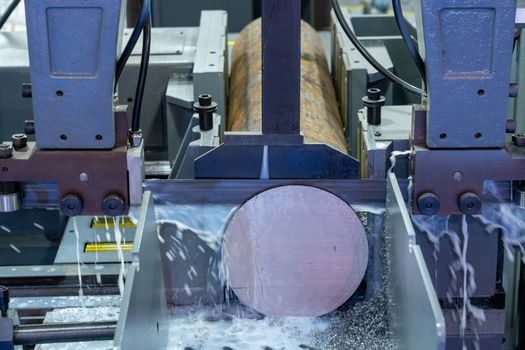
Back-end packaging lines are bounded by IPC-A-610 acceptance criteria for solder joints, IPC-7711/7721 for rework, and IPC J-STD-033 for moisture-sensitive device handling — none of these are optional on a new OEM line [S3][S4].
The most common commissioning failure mode in 2026 is misaligned SPI-to-AOI correlation: paste volume trends flagged at SPI are not mapped to the post-reflow joint inspection, so process engineers chase false defects. The fix is a historian schema that joins SPI lot IDs to AOI panel IDs, exactly the kind of cross-line join that pressure transmitter historians do for HART-tagged loops — different physical domain, identical data-architecture problem.
Who This Stack is For, and Who Should Skip It
The full Studio 5000 + Emulate3D + VisionAI + Plex MES stack is sized for fabs running 50+ packaging lines or contract assemblers with mixed-substrate changeovers; smaller OSATs running a single BGA or QFN line will not recover the integration cost [S3].
If, on the other hand, the line is a development platform for 2.5-D or chiplet packaging, the digital-twin path pays back in weeks, not years, because retooling a physical line is two orders of magnitude more expensive than re-running an Emulate3D scenario [S3].
What to Track Over the Next Two Quarters
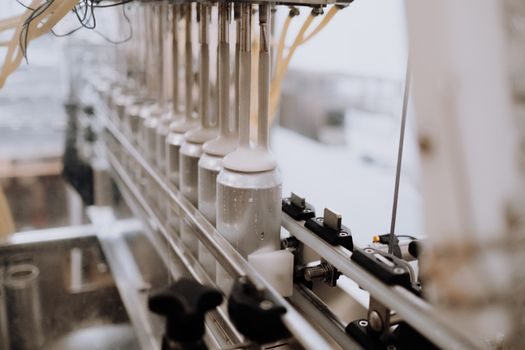
Two signals are worth monitoring: (1) the rate at which edge-IPC vision controllers replace standalone AOI processors on greenfield lines, and (2) the publication of any update to IPC-A-610 acceptance criteria for advanced-packaging substrates. Sino-Pack 2027 (3-6 March 2027, Guangzhou, Area B) is the first major regional trade show to confirm scope including automated packaging production lines, integrated packaging lines, and packaging industrial robots [S5]. Engineers who want to compare back-end line-build philosophies side by side should plan for the March 2027 floor and pre-book Emulate3D demo time with the controls vendor in parallel.
For component-level specifications, see additive manufacturing material.