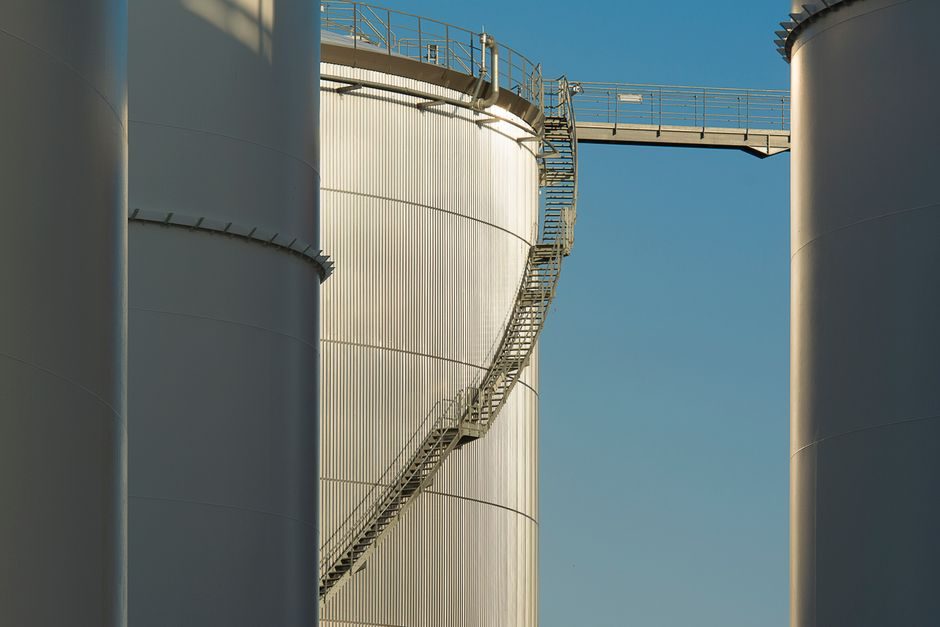
Grid-scale battery energy storage system (BESS) manufacturing in 2026 converges on lithium iron phosphate (LFP) prismatic cells in 280–314 Ah capacity, stacked into 1.5–6 MWh DC-blocks inside 20 ft or 40 ft ISO containers wired to a 1500 V DC bus, with PCS efficiencies published in the 97–98.5% band and round-trip DC efficiencies specified at ≥92% for AC-coupled designs [S2].
Three cell-format families compete for the same 1500 V pack topology: LFP prismatic, LFP large-format cylindrical (e.g. 46105), and LTO/nickel-manganese for high-rate ancillary services. Vendors offering utility-scale SKUs catalogue the cell-to-pack (CTP), battery management system (BMS), and power conversion system (PCS) tiers as separately orderable engineering items, with R&D and Quality Control listed as distinct supplier functions on the vendor side [S2].
Cell format selection: LFP prismatic vs large cylindrical vs CTP blade
LFP prismatic cells in the 280–314 Ah class dominate 2026 utility-scale BESS because aluminium-laminate stacking scales efficiently to 1500 V module strings and tolerates the 0.5–1 C continuous discharge profile typical of frequency-regulation duty cycles; the same chemistry is also being explored in alternative aqueous carriers such as zinc/graphite systems, where solvation-rearrangement research has demonstrated stable cycling behaviour aimed at commercial grid storage [S1].
Large-format cylindrical cells (e.g. 46105) offer better thermal-radial heat rejection and cleaner mechanical venting, but require 2–4× more cell-level welding per kWh. Cell-to-pack blade formats (BYD-style) cut module housings and push volumetric energy above 160 Wh/L at pack level. The trade-off matrix a sourcing engineer should write into an RFQ: prismatic = lowest $/kWh, blade = best energy density, cylindrical = best safety margin under nail-penetration abuse. For an overview of how upstream cell equipment supports these formats, the lithium cell manufacturing equipment map covers coating, calendaring and stacking station specifications.
Module and container line: from dry-room to formation cycling
Pack-assembly lines for utility BESS operate in dry rooms at dewpoint ≤−40 °C (typical specification −40 °C to −60 °C for LFP stacking) to keep cell-jelly moisture below 200 ppm before laser welding of busbars and tab-to-tab interconnects. Module-level production then proceeds to BMS integration, where the cell monitoring, balancing and protection stack is verified against over-voltage, under-voltage, overtemperature and short-circuit thresholds during end-of-line test [S2].
After cell stacking, the line transitions to pack welding, BMS PCB mounting, and high-voltage harness routing, before the battery pack is closed inside a 20 ft or 40 ft ISO container with HVAC, fire-suppression (aerosol or perfluorohexanone) and a 1500 V DC combiner. The downstream container-block tier is where battery pack smart manufacturing welding specs and cell-to-pack automation decisions show up in cycle-time and yield numbers. Formation cycling — the longest single bottleneck — runs at 0.05–0.5 C charge/discharge for 3–7 days per channel, with most 2026 lines targeting channel counts of 256–512 per formation cabinet.
BMS, PCS and the 1500 V DC bus integration envelope
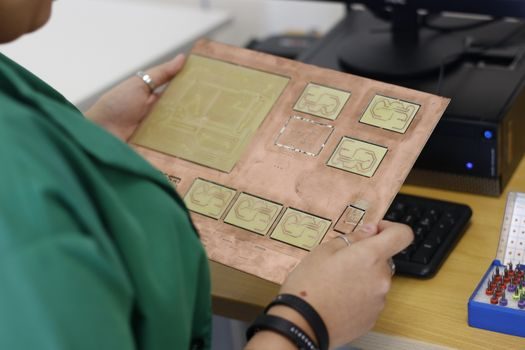
The battery management system inside a 1500 V BESS block is typically a master–slave architecture: a battery management unit (BMU) per module, a battery control unit (BCU) per rack, and a system controller managing the full container. Communication runs CAN-bus internally and Modbus TCP or IEC 61850 externally to the plant SCADA; functional safety targets follow SIL 2 logic on the protection chain. [S1]
On the AC side, the PCS is sized at 1.0–1.25× the DC nameplate capacity to absorb discharge overshoot, and modern 1500 V string inverters are published in the 250–2500 kW range with peak efficiencies of 97.5–98.5%. Where the BESS is paired with a PV plant, the same enclosure often houses the DC-DC converter that lets a solar inverter manufacturing line's string inverter feed the DC bus directly. The PCS enclosure to container wiring typically lands in the 250–2000 kW module with reactive-power support and grid-forming firmware for virtual-plant duty.
Thermal management, fire safety and UL 9540A test envelope
[S2]
Fire-safety test data is anchored on UL 9540A (cell-, module-, unit- and installation-level tests) plus NFPA 855 spacing rules and IFC Section 1207 for indoor and outdoor BESS installations. Vendor product literature is required to disclose the cell-format, BMS architecture, PCS-rated power, operating-temperature range, IP rating of the enclosure (typically IP55 or NEMA 3R), and the cycle-life at 80% depth of discharge (DoD) — these fields appear on utility-grade BESS datasheets as the minimum auditable content [S2].
Use cases and project types: from ancillary services to microgrids

Grid-scale BESS project classes split into four duty profiles: (1) ancillary services and frequency regulation, 1–2 hour duration, 1–2 C continuous, ≥15,000 cycle life requirement; (2) solar and wind time-shifting, 4–6 hour duration, 0.25–0.5 C continuous, 6,000–8,000 cycles; (3) microgrid islanding and black-start, hybrid Li-ion + diesel architecture, 2–4 hour duration; (4) transmission and distribution deferral, 2–6 hour duration, 0.5 C peak, containerised footprint optimisation. [S3]
Microgrid BESS lines bundle additional functionality such as island-mode operation, load-following, and black-start coordination; the system scope on the vendor side is documented as a dedicated microgrid ESS product line distinct from utility-scale ESS, household ESS and EV power supply SKUs [S2]. For projects that want to push beyond 6,000 cycles, solid-state battery smart manufacturing is the emerging 2026–2028 frontier, though volume production lines for the cell stack are still in pre-commercial build-out. Engineers comparing duty cycles should also weigh cathode material manufacturing sourcing logic, since LFP grade, Mn-Fe-PO4 doping and electrolyte choice drive calendar-life end-of-life behaviour as much as cycle-count.
Sourcing checklist, standards and limitations
[S1]
Limitations to flag in any engineering review: liquid-cooling leaks at 1500 V create arc-flash risk that the BMS must detect within 100 ms; 1 C continuous duty accelerates LFP capacity fade beyond vendor warranty envelopes; and containerised 1.5–6 MWh blocks require transport permitting above 3 MWh in many jurisdictions. Upstream raw-material volatility in battery electrolyte manufacturing and separator supply (covered in the battery separator manufacturing process map) still moves the delivered $/kWh band more than the assembly-line cost stack.
For sites evaluating site logistics, vendors publish utility-scale SKUs separately from storage rack and storage cage accessory lines, and the delivery scope is typically the full 20 ft or 40 ft container, not a racked battery shipped loose.
For component-level specifications, see additive manufacturing material.