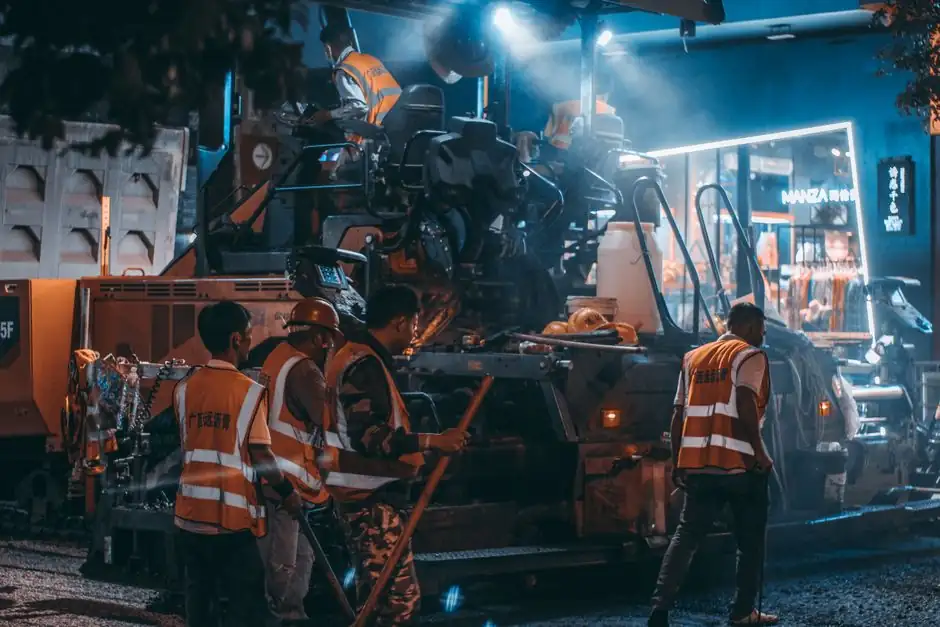
Road maintenance crews in 2026 are running more mechanical-splice rebar on lane patches, bridge-deck overlays, and median-barrier retrofits, which puts the rebar threading machine back on the tool manifest next to the road roller and emulsion sprayer. The reference build on offer from the main Chinese and Indian OEM lines in 2026 is a 380 V, 3-6 kW automatic unit, CE-marked, weighing 100-1000 kg, sized for the 16-40 mm bar range that dominates pavement and bridge-deck rebar [S3].
That machine is rarely the only tool on the truck: it is paired with a rebar upsetter for the parallel-thread (upset-end) coupler system and a manual coupler-pressing machine for the cold-pressed sleeve, which is the only combination that covers both full-size and positional splices used on road-maintenance concrete [S2]. Material inputs are consistent across the segment, with 40CR and 45# carbon-steel for standard threaded couplers and 20# or 16Mn for the cold-pressed sleeve line [S2].
Thread-Rolling vs Thread-Cutting for Field Patches
The 100-300 mm thread length bracket on the high-speed thread-rolling machine, advertised at 100-300 mm by the BARTECH 2026 catalogue, is the practical window for road-maintenance bar because it covers the full range of bar-end thread engagement specified by parallel-thread coupler systems for 16-40 mm bar [S2]. Thread-rolling outperforms cutting on field output because it displaces grain rather than removes it, leaving a continuous-flow thread with higher fatigue life under the live-load cycles that a bridge-deck or jointed pavement splice actually sees.
Thread-cutting machines (lathe-style chasers) are still listed as a product line by both BARTECH and the Indian OEM National Cutting Tools in 2026, and they remain useful for one-off transitional-diameter splices where the bar size on site does not match the rolling die set [S2][S3]. For a road-maintenance gang doing 30-80 splices a day on a bridge-deck patch, the rolling machine pays back the die cost inside one shift because the rolling dies run 5-10x longer than cut chasers on the same bar footage.
Upset-End vs Standard Rolled-End Couplers on Bridge-Deck Work
For high-grade rebar in bridge-deck and pier-cap retrofits, the 2026 OEM line groups couplers into two functional families: rolled-end couplers for general use, made from 40CR or 45# carbon steel, and upset-end (parallel-thread) couplers for higher-grade rebar where full-bar cross-section must be preserved at the splice [S2]. The upset-end line is the one specified where the road-maintenance spec calls for Grade 60 (420 MPa) or higher bar and full Type 2 mechanical-splice performance, because upsetting the bar end restores the cross-section that the thread otherwise removes.
On thin overlays and patch work where the bar is lower grade and the splice is not in the primary tensile path, the rolled-end coupler on 40CR/45# carbon steel is the cost-effective default [S2]. Crews running both should standardise on one rebar coupler family per site to avoid mixing threads; the rolling dies and the upset dies are not interchangeable on a parallel-thread system, and a mixed lot will fail the field torque test on the first bar.
Sizing Motor Power, Voltage, and Spindle Speed to the Job
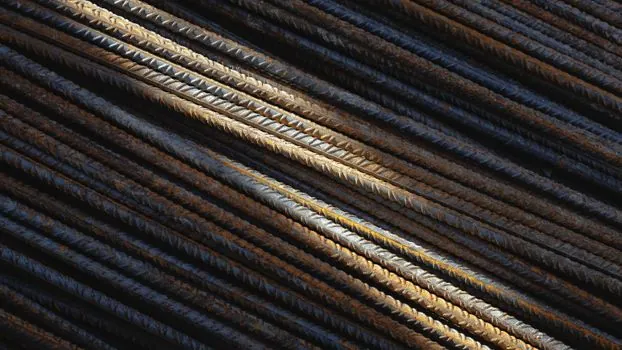
The 380 V, 3-6 kW automatic specification carried by the Indian OEM's 2026 catalogue covers the power band that most road-maintenance rolling machines sit in, with a 100-1000 kg weight class that lets a 1-2 person crew mobilise the unit on a small truck or trailer without a forklift [S3]. A 3 kW machine is sufficient for 16-25 mm bar at production rates, while 6 kW is the right pick once the gang is regularly running 32-40 mm bar or holding tight cycle-time targets on bridge-deck night shifts.
Die-change time, not spindle power, is usually the production bottleneck on field work. Specifying a machine with a quick-change die holder (rather than a bolted die set) cuts die-swap from 15-20 minutes to under 5 minutes, which matters on a road-maintenance job where lane-closure time is paid by the hour and the gang is running two bar sizes on the same pour.
Coupler Sleeve Pressing and the Cold-Pressed Alternative
Where the spec calls for pressed-sleeve couplers rather than threaded ones, the 2026 OEM catalogue still lists the manual coupler-pressing machine as the field tool, with 20# or 16Mn raw-material sleeves delivering higher strength than the rolled-end threaded line on high-grade rebar [S2]. The manual press is the right pick for tight patches and one-off splices because it needs no special operator training and runs off hand hydraulics rather than a 380 V supply, which is often unavailable on a remote pavement-repair site.
Limitation to flag for road-maintenance planners: pressed-sleeve couplers require accurate radial crimping along the full sleeve length, and a manual press on a 32-40 mm bar needs three or four crimps per sleeve. On a deck patch this is acceptable; on a long bridge-deck joint with 200+ splices, the gang should switch to a powered press or stay on the parallel-thread system to keep cycle time inside the lane-closure window.
Acceptance Criteria and Field Test Values

Acceptance on a road-maintenance splice is set by torque test on the coupler and by visual thread-engagement length, not by a rolling-mill certificate. A parallel-thread splice is accepted when the thread engagement matches the coupler manufacturer's nominal value (typically 1.0-1.2 times the bar diameter, e.g. 32-38 mm of thread on a 32 mm bar) and the bar can be torqued to the maker's specified value without bar rotation inside the coupler [S2].
If the bar rotates inside the coupler at the specified torque, the root cause is almost always an under-upsetted bar end (insufficient upset head diameter) or a worn rolling die. The corrective action is to re-cut and re-roll the bar end, or to replace the die set; do not attempt to compensate by over-torquing, which strips the thread and forces a full re-splice. Escalate to a replacement coupler (not a repair) when the thread shows visible galling or the bar end is oval beyond 0.5 mm.
Standards, Certification, and What to Verify Before Buying
CE-marking is the baseline certification on the 2026 automatic threading machines sold by both the Chinese and Indian OEM lines, and ISO 9001-2000 family certification is the usual quality-system reference carried by long-established Chinese threading-machine manufacturers such as Hangzhou Pipe Threader, which has held ISO 9001 since 2000 and exported to Western Europe, the Middle East, and South America for decades [S3][S4]. Beyond the system certificate, the road-maintenance buyer should verify that the threading machine itself carries a CE plate on the nameplate, that the dies are hardness-rated for the bar grade on the job, and that a calibration record for the torque test is included with the machine.
For bar-prep on the same job, pair the threading machine with a rebar cutter sized to the same bar range and a rebar bender that can hold the bend tolerances typical of road-maintenance bar (typically +/- 1 degree on stirrups and +/- 2 degrees on main bars). The rebar feedstock itself should be verified against the project spec for grade and ductility before any thread is cut, because a thread on the wrong-grade bar will pass torque test and fail in service.
Trackable signals for the next 1-2 procurement cycles: (1) watch whether the OEM 2026-2027 lines move from 380 V fixed-voltage to dual-voltage (220/380 V) units, which would let road-maintenance crews run off smaller gensets on remote patches; (2) watch quick-change die holders becoming standard rather than optional, since they are the single biggest field-throughput lever on multi-size pours; (3) verify before purchase that the upsetting machine and the threading machine on the same truck share a die-set standard, because mismatched dies are still the most common cause of a field stoppage on a mechanical-splice rebar job.
Background reading: Holding Furnace Selection for Aerospace Components: 2026 Spec Gates.