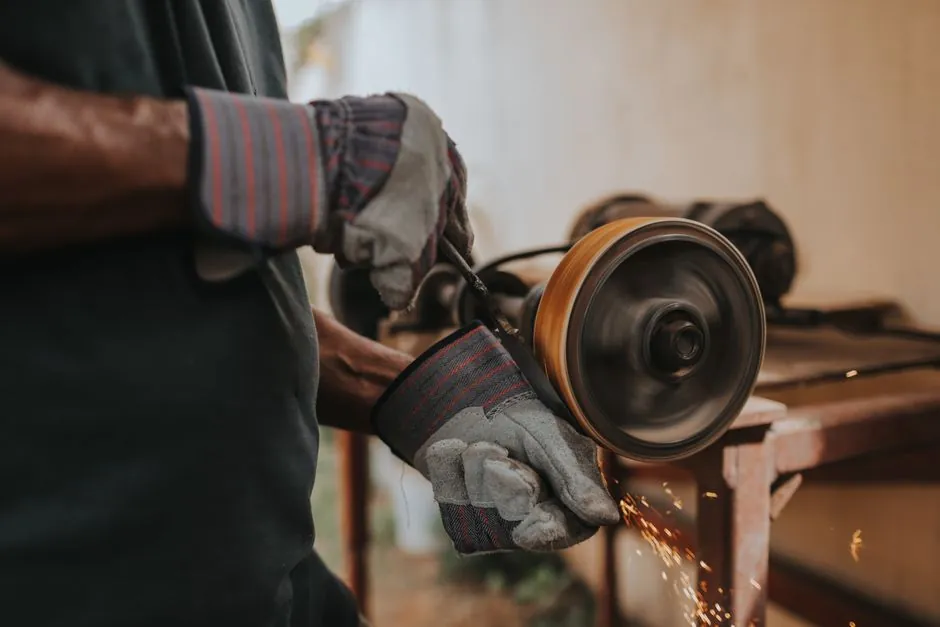
For stainless steel, use a resin-bonded abrasive cut-off wheel with a compatible grain, not a wheel selected only by diameter or shape.
The practical choice is Type 1 for precise, unobstructed 90-degree cuts or Type 27 for angle-grinder work, with ceramic alumina suited to stainless steel and a thin wheel for reduced kerf and burrs.
Resin bond gives thin stainless-steel wheels their cutting behavior
The bond is the material that holds the abrasive grains in place. In a bonded cut-off wheel, grains are combined with resin and specialty fillers to form a solid wheel or disc [S2][S7].
That behavior suits thin, high-speed wheels because the bond can provide useful elasticity while the abrasive layer sheds worn grains and exposes fresh cutting edges.
The stainless steel workpiece should still govern the final wheel designation. A wheel explicitly sold for stainless steel, such as a 4-1/2-inch Type 27 measuring 0.045 inch thick with a 7/8-inch bore, provides a concrete combination of diameter, thickness, shape, and mounting size [S1].
Type 1 and Type 27 solve different cutting problems
Type 1 wheels are completely flat and are intended for thin, precise metal cuts. Their profile permits deeper 90-degree cutting because more of the wheel face can enter the workpiece, while the flat wheel can sit close to the guard [S2][S3].
Type 27 wheels have a depressed center and raised hub. Type 27 wheels are intended for right-angle grinders [S2].
Grain choice matters as much as the bond
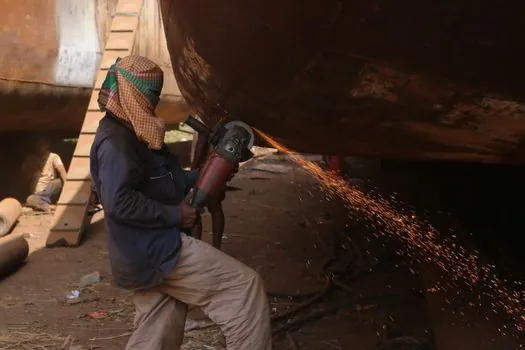
Bond type controls how the wheel behaves, but the grain performs the cutting.
One practical stainless-steel product specification is a 4-1/2-inch by 0.045-inch Type 27 wheel with a 7/8-inch bore and a 0.045-inch cutting edge.
Do not infer that every thin wheel can cut stainless steel. The usable combination is a compatible grain, a suitable resin bond, the correct wheel shape, and a diameter and bore matched to the grinder or cutoff machine.
Thin wheels improve cut precision but weaken side-grinding capacity
Cutting wheels make narrow cuts at approximately 90 degrees and are usually thinner than grinding wheels. Their reduced thickness supports clean, accurate cuts, but they do not have the lateral strength required for side grinding [S2]. This distinction matters when evaluating a cutting machine or mounting an abrasive wheel on an angle grinder.
A wheel damaged by side loading is not a sound choice for a stainless-steel production cut, because the thin section has little margin for radial or lateral abuse.
Keep wheel use within its intended function: use a cut-off wheel for cutting and a grinding wheel for removing substantial stock at a shallow angle. A grinding wheel is not a substitute when geometry, kerf, or burr control drives the selection.
Abrasive and diamond wheels solve different cutting tasks
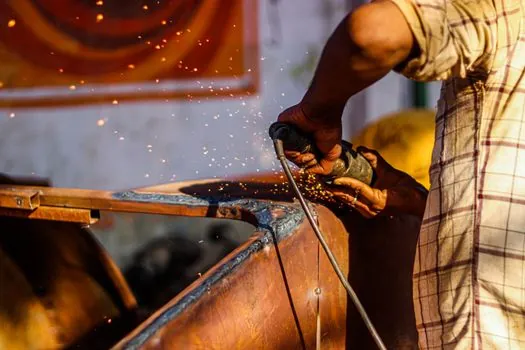
Traditional abrasive wheels remain suited to clean 90-degree cuts through metal pipe, rod, and sheet, and low-priced abrasive wheels can be replaced in quantity [S4].
The comparison should therefore use four criteria: cutting mechanism, intended material, wheel geometry, and machine compatibility. Abrasive wheels are the general metal-cutting option, while diamond wheels should not be selected merely because their name appears in a catalog.
Bond selection must follow the machine and operating conditions
The decisive specification set includes abrasive grain, bond type, wheel shape, outside diameter, thickness, bore, operating speed, and machine class. The tool and die steel being cut does not automatically determine the wheel, because the wheel must also be suitable for the grinder or saw that will drive it. [S2]
Resinoid bonds are characterized by greater elasticity than rigid bonds and are suited to operations involving higher stress or shock [S5]. Vitrified bonds are rigid, strong, and porous, while metal and electroplated bonds use different construction principles [S5]. Those differences matter across grinding systems, but the cut-off-wheel buyer should first verify that the wheel is certified and labeled for the intended cutting operation.
Type 27 is identified with Type 42 as its flat-wheel counterpart, while Type 1 is identified with Type 41 [S2]. The raised hub of a Type 27 wheel allows a recessed locking nut, which is why it fits angle-grinder service and flush cutting better than a flat profile [S2].
Shop by four verified dimensions and the operating limit
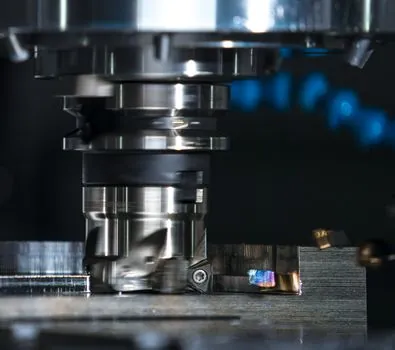
Verify the outside diameter, thickness, bore, and wheel type before ordering. The cited stainless-steel Type 27 example is 4-1/2 inches in diameter, 0.045 inch thick, and 7/8-inch bore [S1]. Type 1 wheels are also offered in 1-millimeter and extended-diameter versions for different cutting systems [S2].
Confirm that the grinder or saw accepts the wheel diameter, bore, thickness, and rated operating speed. Inspect the wheel for cracking, edge damage, contamination, and storage damage before mounting it. Use eye protection, guard the wheel correctly, and keep the work area clear of combustible material, particularly when cutting stainless steel in fabrication environments.
The practical buying rule is straightforward: choose a stainless-steel-rated abrasive grain, normally a resin bond for a thin cut-off wheel, then select Type 1 for precise flat-profile cuts or Type 27 for right-angle grinder access. Track wheel life, burn or discoloration, wheel cracking, and burr level by workpiece grade and thickness, since those operating records provide the cleanest basis for standardizing the next purchase.