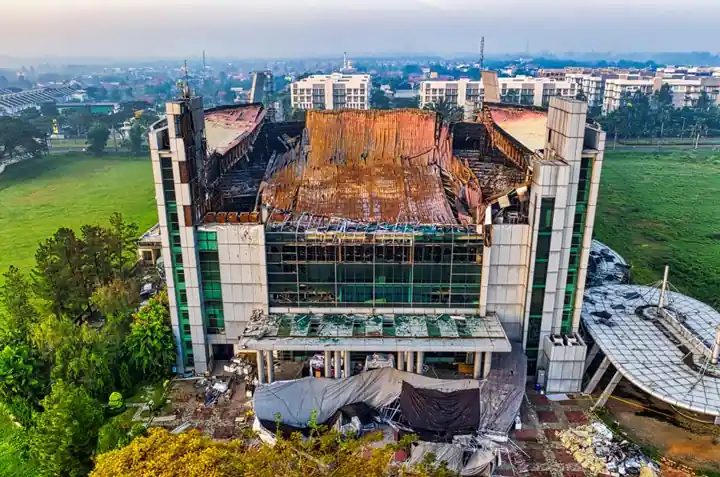
Demolition work rarely gives a climbing formwork crew the same site geometry a greenfield high-rise does, so system selection pivots on crane access, wall height, and whether the existing structure can carry anchor loads. On most teardown sites the decision narrows to two families: crane-climbed jump forms, and self-climbing systems that ride hydraulic rams anchored to the previously cast or sound parent concrete [S1][S3].
Self-climbing formwork is an automatic climbing system that is lifted without using a crane, using hydraulic rams to elevate scaffold, formwork, and secondary formwork to the next pouring cycle [S1]. That single feature, crane independence, is the dominant spec driver on a demolition job where tower crane time is consumed by wrecking balls, pulverizers, and debris sorting rather than formwork lifts.
Why Demolition Reshapes the Climbing Formwork Spec
Climbing formwork pours concrete in lifts, typically one story at a time, after which the entire form assembly, including work platforms and safety screens, is raised to the next level [S3]. On a teardown the upper level is often a partially demolished slab, an exposed transfer beam, or a parapet stub, which changes the anchor and bracing logic compared with new-build cores.
Self-climbing formwork is commonly specified for bridge piers, towers, the cores of high-rise buildings, and projects that require seamless walls, and the same logic maps cleanly to demolition retention walls, new shear cores built inside a partially demolished tower, and reconstruction of dam and sluice walls [S1]. Crane-climbed formwork still covers non-slab walls, dams, and cooling towers where the project has the lifting equipment and weather window to make crane time affordable [S1].
Self-climbing formwork allows builders to continue work in high winds because the system stays anchored to the structure regardless of prevailing weather, a feature the MGC-F rail-guided platform demonstrates with its guide rails and guide shoes [S1]. Demolition sites are notoriously gusty, with open floor plates and missing cladding, so wind tolerance is not a nice-to-have; it sets the daily production envelope.
System Architecture: Components That Decide the Buy
A typical climbing formwork system includes steel-framed form panels with plywood or steel face, climbing brackets (shoes) bolted to anchor points cast into the previously poured concrete, multiple work platform levels, safety screens, and, on self-climbing units, a hydraulic climbing mechanism with rails, cylinders, and control units [S3]. For demolition applications, every one of these sub-assemblies carries extra scrutiny because the parent concrete is variable, not the controlled mix of new construction.
Climbing brackets are attached to preset anchors as part of the first concrete pour, and the system uses two climbing brackets to create a working platform to align and support the panels, transferring wind loads and dead load of the wall formwork and brackets into the structure [S1]. On a teardown, those preset anchors often have to be epoxied into sound existing concrete, drilled-and-set rather than cast-in, which changes the load-test regime the contractor must apply before each lift.
A typical self-climbing system can raise one floor height in 30 to 60 minutes, which is the order-of-magnitude benchmark contractors use to compare hydraulic self-climbers against crane cycle times [S3]. On demolition sites where crane lifts compete with boom-and-bucket debris removal, that 30 to 60 minute window frequently beats waiting half a day for a crane slot.
Selection Criteria From the Constructability Literature
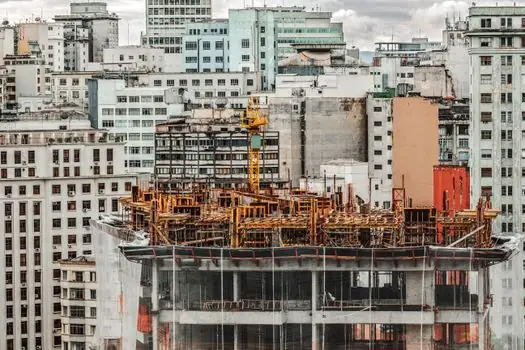
Formwork system selection is a multi-criteria decision where cost, time, quality, safety, and sustainability conflict and compromise, with no single dominant attribute [S6]. The same constructability research that ranks climbing formwork ahead of conventional forming on time, quality, safety, and sustainability for high-rise cores also produces a quantitative index that a demolition estimator can apply to retention walls and infill cores [S2].
Four decision criteria carry the most weight on demolition contracts: crane availability, anchor reliability in existing concrete, wind exposure on open floor plates, and crew skill with hydraulic systems. Crane-climbed systems win on capital cost and simplicity; self-climbers win on schedule, crane independence, and the ability to operate in wind [S1][S3]. On a 20 storey high-rise core, BIM-based constructability comparison shows climbing formwork outperforming conventional forming on those same four indices [S2].
The constructability survey work explicitly compared conventional and different climbing formwork systems for a lift core-wall in a 20 storey high-rise building model using Building Information Modeling, deriving quantitative and qualitative indices for cost, time, quality, safety, and sustainability [S2]. The same index set is reusable on demolition retention cores with minor reweighting toward safety and anchor reliability, since the parent structure is existing rather than purpose-built.
Three Climbing Formwork Types on a Demolition Site
Crane-climbed formwork uses a tower crane to lift each form panel or gang form from one level to the next, the crew guides it into position, and it is secured to brackets attached to the previously poured concrete, the simpler and less expensive option that ties up the crane during form moves [S3]. On small demolition-and-rebuild jobs, such as replacing a lift shaft wall inside a live building, the existing crane is already on the floor, and crane-climbed formwork is the rational pick.
Self-climbing formwork uses hydraulic jacks or climbing mechanisms built into the form system to raise itself without a crane, with climbing rails or brackets anchored to the cured concrete and hydraulic cylinders pushing the form assembly upward, which frees the crane for other work and is faster for tall buildings where crane time is scarce [S3]. On demolition sites the scarce resource is the crane, and the scarce commodity is daylight, both of which favor self-climbers.
Single-sided climbing formwork is essential where the concrete pressure that develops during pouring is transferred into the wall below through braces and wall struts instead of being transmitted into an opposite formwork through ties, and is commonly used for dams, sluices, and similar structures [S1]. On demolition work against a party wall or site boundary, single-sided systems are often the only geometric option because there is no opposite formwork face to tie into.
Where Climbing Formwork Fits, and Where It Does Not
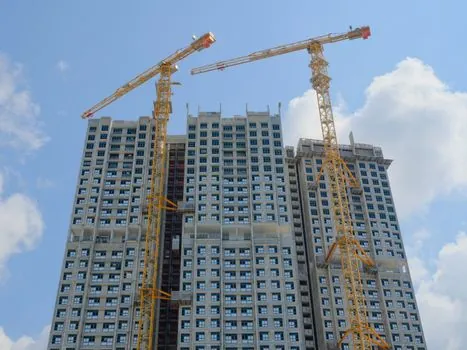
Climbing formwork is designed for tall vertical structures such as skyscrapers, high-rise residential buildings, airport control towers, and lift shafts, with seamless wall structures and repetitive floor plates [S1]. Demolition projects that build new lift cores, retention walls, or reconstruction shear walls inside a partly demolished tower fall squarely into that scope, and the EFCO-anchored 57-story Beaudry tower in Los Angeles shows the same self-climbing logic working for a new-build core more than 600 ft tall [S5].
Climbing formwork is not the right tool for shallow strip foundations, isolated pads, or one-off pier repairs, where conventional formwork or a small crane-climbed gang is faster to mobilize. The constructability literature also flags adoption barriers: in markets where climbing formwork is a specialized trade, lack of awareness and misconception about erection and operation push contractors back to conventional forming even when the schedule math favors climbing [S2].
Edge protection and self-climbing systems meet the increasing demand for independent solutions that can raise formwork vertically without relying on cranes, a category that also pairs naturally with full-perimeter leading-edge fall protection systems such as the EFCO POWER SHIELD 3.0, which uses pre-built standard units up to 12 ft wide for fast off-site assembly [S5]. Demolition crews should treat edge protection and self-climbing as a bundled spec, not two independent purchases.
Anchor and Structural Validation on Existing Concrete
Climbing brackets rely on anchor points cast into the previously poured concrete to transfer wind loads and dead load into the structure, which means the parent member must be probed for compressive strength, rebar cover, and soundness before any anchor is loaded [S1]. On demolition sites, sounding, GPR scanning, and pull-out tests on trial anchors are the standard pre-lift validation, and any anchor that fails the test is re-located rather than re-used.
Self-climbing formwork systems also let builders continue work in very windy conditions, but the working wind limit is set by the anchor capacity, not by the hydraulic ram, so the same anchor regime applies to demolition work in exposed conditions [S1]. A typical job-site rule of thumb is to derate anchor capacity by 25 to 50 percent on partially distressed parent concrete, which on a teardown often means more anchors per bracket and shorter pour lifts.
Comparison: Crane-Climbed vs Self-Climbed vs Single-Sided for Demolition
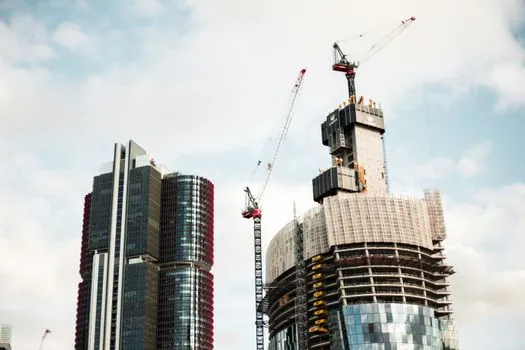
The three families line up against the criteria a demolition estimator actually weights. Crane-climbed jump forms score well on capital cost and crew familiarity, but lose on crane time and wind tolerance. Self-climbers score well on schedule, crane independence, and wind resilience, with a higher capital outlay and a need for hydraulic-trained crews [S1][S3]. Single-sided systems are the only option where there is no opposite formwork face, and they trade speed for geometric flexibility [S1].
Form panels for jump forms are typically ganged together for the full wall height of each lift, 10 to 14 ft, and a self-climbing system can raise one floor height in 30 to 60 minutes, which together define the production envelope a contractor can bid against [S3]. On a demolition retention core with a 12 ft pour lift, a self-climber therefore completes one cycle inside one hour of productive shift time, with no crane waiting on the deck.
For reference, the Beaudry 57-story core used self-climbing formwork paired with a specialized concrete mix containing Orca aggregates that delivered a 24% reduction in the project's total embodied carbon footprint, a side benefit that aligns with the GCCA roadmap to fully decarbonize by 2050 [S5]. Demolition contracts increasingly carry embodied-carbon clauses on the replacement structure, and the climbing formwork choice influences the wall-cycle concrete volume and therefore the carbon number.
Field-Procedure Notes From the Climbing Cycle
Each floor follows the same sequence: close and align the forms, install form ties, place rebar and embeds, pour concrete, cure to stripping strength, then lift the assembly to the next level [S3]. On a demolition site the close-and-align step usually includes a survey of the existing substrate and a final check that the new pour interface is clean, since debris contamination is the single most common cause of bond failure at the cold joint.
Once the concrete has been poured, suspension shoes and screws are attached, then both the climbing platform and the formwork are lifted to the new suspension point to be used for the next pouring cycle [S1]. That sequence repeats every 1 to 3 working days on a typical self-climbing core, and the demolition contractor should plan debris removal and concrete supply around the same daily cycle to avoid double-handling.
For demolition crews sizing hydraulic breakers and pulverizers that work alongside a self-climbing formwork rig, the air impact wrench sizing guide for plumbing installation and the rebar threading machine picks for demolition round out the mechanical toolchain on the same floor. Where the demolition involves partial slab retention, the laser level selection map for concrete work helps the formwork surveyor keep pour lifts within tolerance.
Spec Limits and What to Watch on the Next Job
Self-climbing formwork is the default for demolition work above roughly four stories, on sites with restricted crane access, and where wind on open floor plates regularly exceeds 25 mph, with crane-climbed jump forms retained for low-rise, crane-rich, sheltered sites and single-sided systems reserved for boundary-wall and dam-type geometries [S1][S3]. Watch on the next bid cycle: anchor-pull test reports from prior demolition projects, hydraulic ram service intervals on rented self-climbers, and any tightening of embodied-carbon clauses on the replacement structure's concrete supply [S5][S6].
For the relevant spec sheets and selection criteria, see climbing formwork, demolition hammer, and aerial work platform.