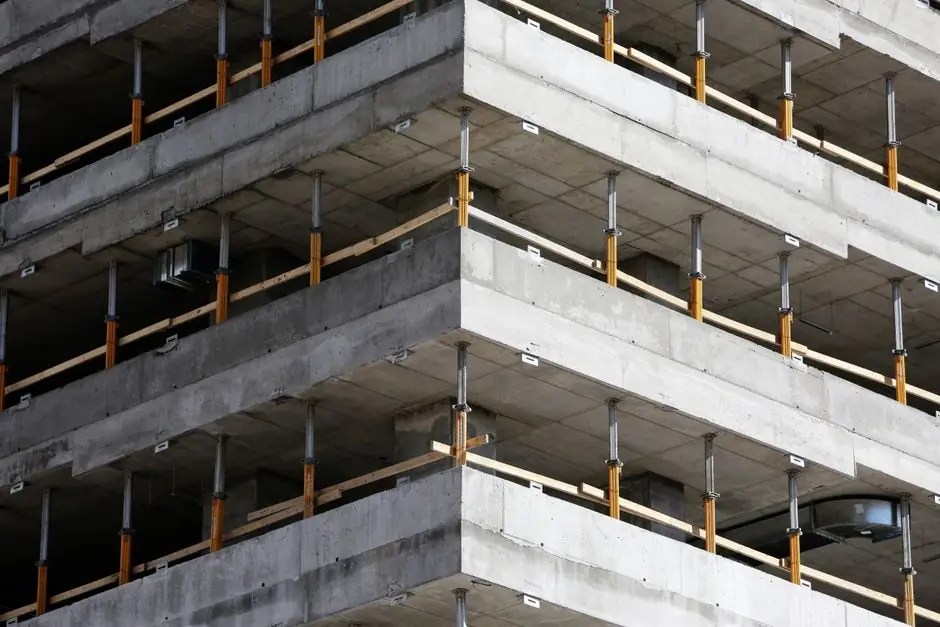
Specifying a laser level for flatwork in 2026 starts with three numbers: ±1/8 inch accuracy at 100 ft, a 600–2,600 ft working range, and an IP66 or better ingress rating for site conditions [S3]. Rotary units are the default for slabs and form-setting because they project a 360° plane, while line and dot units cover tighter interior layout tasks [S2][S5].
Three families dominate the category: self-leveling rotary for production flatwork, manual rotary for low-budget renovations, and dual-slope rotary for driveways, ramps, and drainage planes that need a fixed fall rather than a flat reference [S3]. The right pick is driven less by brand than by beam color, range with detector, and self-leveling window, all of which are grounded in the project scope.
Self-Leveling Rotary: Default Spec for Slab and Form Work
A self-leveling rotary laser is the right tool when the work is setting slab elevations, aligning forms, and verifying screed passes across a 30–80 ft pour radius, with a working range from 600 ft on the low end to 2,600 ft with a receiver on the high end [S3]. The instrument auto-levels within roughly ±4–5 degrees and typically shuts the beam off if knocked out of plumb, which protects accuracy on a vibrating deck [S3]. The Spectra LL300S, for example, is rated at 1/16 inch at 100 ft with a 2,600 ft receiver range and IP66 housing, and is widely used as a reference spec for outdoor flatwork [S3]. For interior slabs and indoor layout, a green-beam rotary such as the Topcon RL-H5A is easier to see with the naked eye, which removes the need for a detector at short ranges [S3].
A self-leveling unit pays back its price premium on any pour larger than a small residential pad, because manual re-leveling between setups costs more labor than the tool itself on a single day [S3]. For related layout work on rebar and anchors, see Stud Welder Selection for Concrete: Drawn-Arc vs CD, Size, and Fit, which covers the welding side of the same concrete workflow.
Manual, Dual-Slope, and Line Lasers: Where Each Fits
Manual rotary lasers are budget tools that require the operator to level vials by hand before each reading; they are accurate enough for small renovations but slow on anything larger than a garage slab [S3]. Dual-slope rotaries add independent X and Y grade settings, which is what you need for parking lots, ramp approaches, and trench drains where a single slope line is not enough [S3]. For purely indoor work, a 3x360° green cross-line laser (such as the Huepar 3D line laser) projects three orthogonal planes and works well for form alignment, cabinet-height transfer, and short-run screed checks, but it is not a substitute for a rotary on outdoor pours [S5]. Pipe lasers, a fourth category, are aimed at setting invert elevations in trenches rather than flat slabs, and they are out of scope for typical concrete flatwork [S2].
Match the instrument to the dominant task, not the catalog. If 80% of the work is flat slab and form setting, a self-leveling rotary covers 80% of the need; adding a cross-line unit for interior layout is cheaper than buying a dual-slope rotary you only use twice a year.
Beam Color, Detector, and Range: Decision Criteria

Beam color is not cosmetic. Green diodes sit around 532 nm and look 2–4 times brighter to the human eye than red 635 nm diodes at the same output power, which is why green is preferred indoors where detectors are not used and ambient light is controlled [S3]. Red beam units paired with a detector are the cost-effective outdoor choice, because the detector resolves the beam in full sunlight where the eye cannot [S3]. Range claims are always two numbers: visible range (eye-only) and receiver range, and on professional rotaries the receiver range of 1,500–2,600 ft is the real working number for outdoor flatwork [S3].
Set up the laser at least 10 ft from the work area on a stable tripod, then check elevation at the far end of the pour with the detector before any concrete is placed; this single check catches the most common field error, which is a tripod that has settled since the last reading [S3].
Accuracy, IP Rating, and Power: Hard Specs for the PO
Three specifications belong on every purchase order. First, accuracy, expressed as ±1/8 inch at 100 ft for general concrete work and ±1/16 inch at 100 ft for slabs where finish tolerance is tight, such as warehouse floors and food-processing pads [S3]. Second, IP66 or higher for dust and water-jet resistance, because a concrete site will expose the instrument to slurry and rain within the first month [S3]. Third, power source: rechargeable Li-ion packs with a second hot-swap battery are now standard on professional units, while NiMH and alkaline remain common on budget models; the practical effect is that a 40-hour workweek on a single charge is achievable on the better rotary platforms [S3][S5].
Standard reference planes matter. The 360° plane from a self-leveling rotary is the modern equivalent of a water-level hose, and the older transit-and-rod method (an automatic optical level on a tripod with a grade rod, listed separately in the surveying catalog [S2]) is still cheaper for one-off elevation checks but slower for repeated reads across a pour.
Setup Workflow and Common Failure Modes
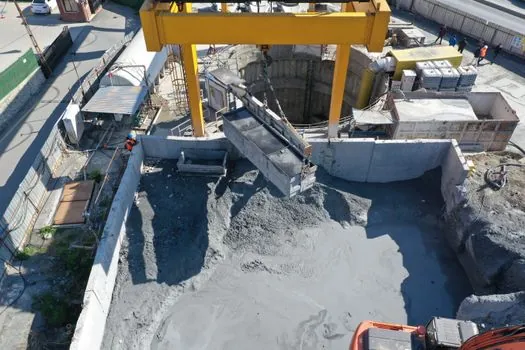
Field procedure: set a fixed reference point, mount the laser on a tripod at least 10 ft from the work area, self-level within ±4–5 degrees, then verify the beam with a detector at the far end of the pour [S3][S5]. The most common failure modes on a real pour are tripod settlement (caught by rechecking the far end), beam shadowing from rebar or formwork (caught by walking the receiver around the pour), and a unit that has been knocked out of its leveling window (caught by the auto-shutoff indicator on self-leveling models) [S3]. For deeper coverage of concrete-side power tools used alongside the laser, see Rotary hammer selection for tunnel construction: a spec-level guide, which maps a different but adjacent tool category to spec sheets.
Maintenance is simple and worth doing: clean the rotor window after each pour, store the unit in its case, and rotate the battery pack to keep cells above 40% state of charge in storage; these three steps roughly double the service life of a rotary on a commercial concrete crew [S3].
Limitations: What a Laser Level Does Not Replace
A laser level does not replace a total station for finished-grade surveys with sub-cm tolerances, nor does it replace a pipe laser for trench invert work [S2]. It also does not replace a hand level or automatic optical level for quick one-off reads at a single point, where setting up a rotary is overkill. A self-leveling rotary is a flat-plane reference, not a measurement instrument in the surveying sense; if the project requires recorded elevations tied to a benchmark, you still need an optical or digital level and a grade rod [S2].
For crews that run both concrete and rebar or anchor work, the encyclopedia entry on laser levels gives a broader category map that places rotary, line, and dot units next to related layout instruments.
Track three signals over the next 12 months: green-diode cost (still falling, which keeps moving the indoor/outdoor preference line), detector sensitivity in lux (anything below 500 lux usable without a shroud matters for shade work), and dual-slope grade accuracy spec (the current X and Y grade accuracy figure is the leading indicator for whether dual-slope rotaries will replace single-slope on more commercial sites). For the adjacent finishing step after the pour, see Rebar Bender Specs for HVAC Installation: 2026 Selection Guide, which covers the rebar side of the same concrete workflow.
The underlying component specifications are covered under aerial work platform, and aerial work truck.

