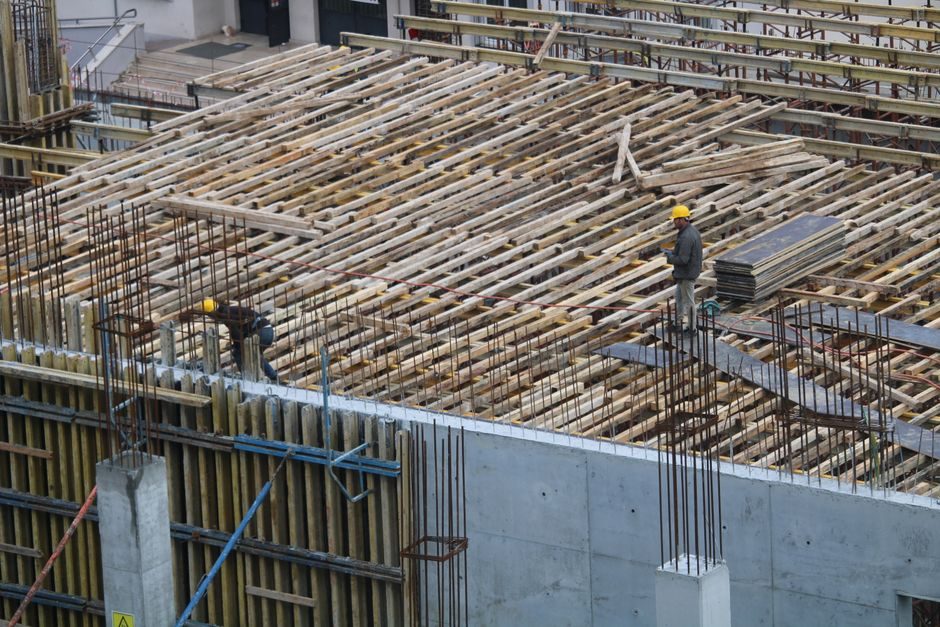
A self-climbing formwork system can lift a 4-6 m wall section in roughly 1-2 hours per cycle without a tower crane, while crane-climbed formwork typically ties up crane capacity for 3-6 hours per lift on the same pour size [S5][S6].
What TCO Means for Climbing Formwork Specifically
Total cost of ownership, in the Gartner-pioneered sense later formalised across procurement manuals, is the sum of acquisition cost plus every downstream cost incurred over the service life of the asset: operating cost, maintenance, training, support, and end-of-life disposal [S1][S2][S3][S4]. Applied to climbing formwork, the "asset" is a rentable or owned formwork set that climbs with the structure across typically 20-60 pours, and the dominant downstream costs are not the steel panels themselves but the cycle-time cost (labour + crane), the re-use count (how many pours the set delivers before refurbishment), and the refurbishment cycle (re-plying the plywood face, welding repairs, hydraulic seal replacement on self-climbing units) [S1]. A working TCO model for climbing formwork therefore needs four inputs beyond the per-set quote: pours per set, hours per cycle, crane cost per hour or self-climbing energy/maintenance cost, and labour headcount on the deck.
The Five Cost Drivers, Ranked
Driver 1 — Cycle time per lift. Crane-climbed systems on a typical high-rise core run 3-6 hours per climbing cycle including rigging, slackening, lifting, alignment, and re-plumbing; self-climbing (ACS / hydraulic) systems on the same pour drop this to 1-2 hours because the hydraulic rams do the lift while the crane is free for rebar or concrete placement [S5]. Driver 2 — Re-use count. Standard crane-climbed formwork is commonly specified for 20-40 pours before major re-plying; engineered self-climbing sets from established Chinese suppliers such as the kitsen and Beijing Yunhai product lines are typically rated for 40-60+ pours per set with interim face-sheet swaps, which is the single largest amortisation lever in the TCO stack [S5][S6]. Driver 3 — Crane time. Tower-crane hourly cost on a dense urban high-rise commonly runs several hundred to over a thousand dollars per hour when operator, fuel, and standing time are loaded; multiplying that by 3-5 hours per cycle across 40 pours is the line item that flips a "cheaper" crane-climbed quote into a more expensive project. Driver 4 — Labour on the deck. Self-climbing formwork typically reduces the climbing crew from 6-10 to 3-5 workers per cycle, and those workers are also freed from working at height during the lift, which is a safety and PPE-cost line that real TCO models now carry. Driver 5 — Refurbishment and re-plying.
Crane-Climbed vs Self-Climbing vs Automatic Climbing: A Criteria Comparison
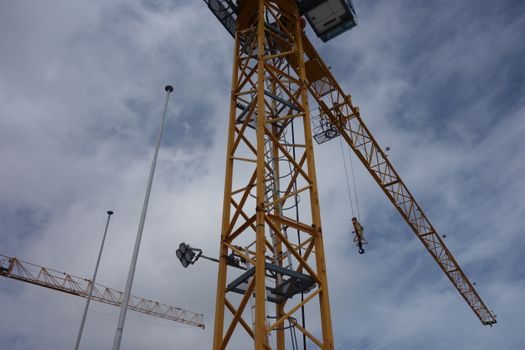
Three options are commonly compared on high-rise core tenders, and the decision pivots on four criteria: cycle time, crane dependency, re-use count, and per-set price. Crane-climbed (conventional) formwork scores lowest on per-set price, moderate on cycle time, and worst on crane dependency and re-use count, which makes it the right pick for low-rise or one-off cores under 15 storeys where the amortisation window is short. Self-climbing hydraulic formwork (the "ACS" / Automatic Climbing System family supplied by manufacturers including kitsen and Beijing Yunhai) scores best on cycle time, best on re-use count (40-60+ pours per set), and best on crane dependency (zero crane hours for the lift itself), at a per-set price typically 1.5-2.5x a crane-climbed set [S5][S6]. A third option, rail-guided jump form, sits between the two on cycle time and price, and is the common compromise on bridge piers and chimney shafts where wall geometry is regular but the pour count is too low to justify full hydraulic self-climbing. The TCO crossover point — where the higher self-climbing purchase price is recovered through cycle-time and labour savings — typically lands at 25-35 pours per set on a labour market where the climbing crew is billed at fully loaded rates above 30 USD/hr; below that pour count, the cheaper crane-climbed set wins on TCO even with the crane hours loaded.
Real Use Cases Where Each Option Pays
On a 40-plus-storey residential or hotel core with repetitive wall geometry, a self-climbing set will usually close the cost gap in 20-30 pours and then run pure savings for the remaining 10-30 pours; this is the textbook case where procurement teams that compared only the per-set quote have lost the project margin to the formwork sub [S5]. On bridge piers and chimney shafts under 30 m, crane-climbed or rail-guided jump form remains the default because the pour count is too low for self-climbing amortisation. On irregular cores with frequent geometry changes, the re-use count of any climbing system drops sharply because every geometry change forces a panel rework, and in that case a lower per-set crane-climbed system is often the rational TCO choice even on a tall structure. A 2025 procurement guidance note on cloud-migration TCO makes the same point in a different domain: the cheapest per-unit configuration is rarely the lowest total cost once operating labour and re-licensing are loaded [S3].
Limitations, Failure Modes, and What the Quote Does Not Show
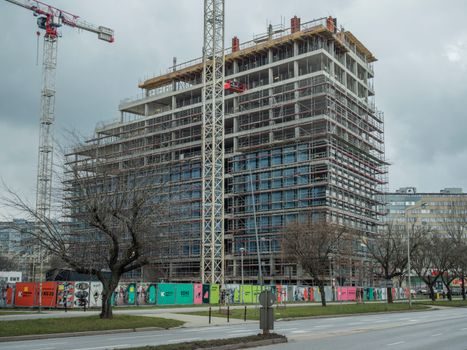
Climbing formwork TCO models are sensitive to four hidden costs that suppliers' standard quotes usually exclude. First, the crane standing-time allowance on dense urban sites is frequently under-counted, because the crane is needed for the lift even when the climbing system is self-powered — for the rigging, alignment, and final plumbing. Second, hydraulic self-climbing systems carry a seal-and-hose refurbishment cost every 30-40 pours that, on a 60-pour project, is a non-trivial mid-life spend. Third, the face-sheet (plywood or composite) replacement interval depends on concrete release-agent discipline and panel handling, and poor site practice halves the re-use count without warning. Fourth, dismantling and lowering at the top of the structure is a non-recoverable cost that is sometimes carried by the formwork supplier and sometimes by the contractor, and the boundary is the most common source of post-contract disputes. [S1]
How to Build the TCO on a Real Tender
Step 1: count the pours and the wall height per pour — this fixes the cycle count and the panel area the system must serve. Step 2: cost the per-cycle time at the project's actual fully loaded labour and crane rate, not generic numbers. Step 3: apply the supplier-stated re-use count and divide the per-set purchase price by that number to get the per-pour amortised panel cost. Step 5: add dismantle and lower at end of structure. The sum across all pours is the TCO per set; the cheapest per-set quote is the cheapest TCO only when cycle time, re-use count, and crane dependency are equal across the bidders, which is rarely the case in practice. The same disciplined step-by-step breakdown is the approach Microsoft documents for cloud-migration TCO and the approach CoSN recommends for technology procurement [S3][S4].
For a deeper cross-domain view of TCO on building-envelope systems, the system window and door 30-year cost stack and the concrete batching plant cost stack both apply the same driver-ranking method to adjacent capital-equipment decisions, and they confirm the same pattern: cycle time and re-use count, not per-unit price, decide the long-run number. Track, on the next tender, (1) the supplier-stated re-use count per set versus the contractually warranted count, and (2) the actual hours per cycle logged on the first five pours — those two numbers will recalibrate the TCO model before the pour count doubles.
For the relevant spec sheets and selection criteria, see climbing formwork, total station, and asrs system.