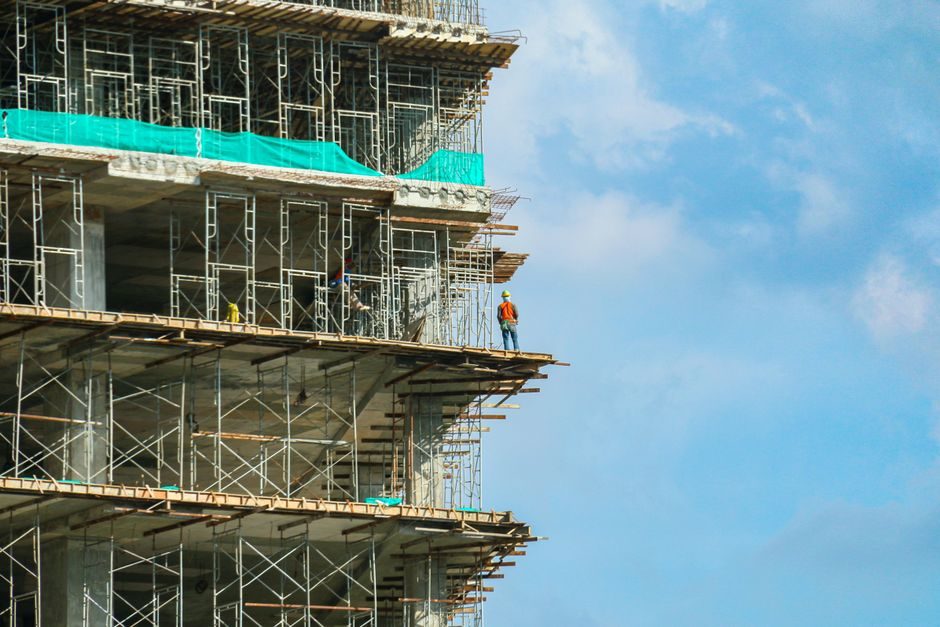
Climbing formwork and scaffolding are routinely specified as substitutes on the same high-rise project, but the two product families carry different loads, move on different cycles and answer to different design codes [S1][S3].
The decision usually shows up at the formwork engineering stage of a shear-wall or core-wall pour: do you hang the work platform off the formwork itself (CB240 / SCB180 / ACS self-climbing), or do you build an independent access scaffold outside the wall [S6][S8]? The choice changes the anchor pattern, the crane-hour budget, the labour mix and the wind-bracing scheme on the deck [S4][S10].
Definition and Scope: What Each System Actually Is
A climbing formwork system is a load-bearing bracket assembly (typical family codes CB240, CB210, SCB180) that anchors into cured concrete and carries both the wall formwork and the working platform as a single unit that is lifted to the next pour [S6][S8][S10]. Doka markets this as a modular climbing family that scales from simple crane-lifted brackets through to fully automatic hydraulic self-climbing formwork (ACS) for very tall cores [S4].
Scaffolding, by contrast, is a tubular or modular access/support frame erected independently of the formwork; on facade work the climbing-scaffold sub-family is the variant that travels vertically, but the platform is not coupled to the formwork [S2][S3]. PERI's product taxonomy explicitly separates "Climbing Systems / Self-Climbing System / Climbing Scaffold / Climbing Protection Panel" into distinct platform types within one catalogue, which is the clearest marker that the industry treats these as different equipment classes [S3].
The DirectIndustry index for "climbing scaffolding" lists 9 products from 7 manufacturers, with types split as suspended (4), mobile (3) and fixed (2), and applications dominated by facade (8) and wind-turbine tower (1) [S2]. The taxonomy gap is structural: most climbing-scaffold units are access-only, while every climbing-formwork unit on the index is also a structural load path for fresh-concrete pressure [S1][S2].
Selection Criteria: Load, Height, Concrete Pressure and Cycle Time
Climbing formwork brackets such as the CB240 and CB210 are designed to support large-area wall formwork against the hydrostatic pressure of fresh concrete, transferring that load back through anchor points into the previously poured lift [S6][S10]. Single-side variants like the SCB180 carry the same load where the wall is cast against an existing structure and there is no access from the rear face [S8].
Scaffolding working load is governed by EN 12811 / EN 12810 load classes (typically 1.5 kN/m² to 6.0 kN/m² for Class 1–6), which are an order of magnitude below the 40–80 kN/m² lateral pressures a wall formwork has to resist on a 4 m/hr pour [S3]. That ratio is the single most useful check on the drawing: if the platform has to hold back wet concrete, it is climbing formwork, regardless of what the supplier calls it.
Height is the second gate. Faresin's hydraulic climbing system targets skyscrapers, bridges and dams where very elevated heights make conventional access uneconomic [S1]. Standard climbing-scaffold facades from the catalogue cover the working-height band 8 m to ~40 m without anchor redesign, while automatic climbing formwork is normally specified above 70–100 m core height because the labour saving on the lift cycle offsets the higher system cost [S1][S2][S4].
Cycle time on a typical core wall is roughly 1 day per lift with crane-climbed formwork, dropping to 0.7–0.8 days per lift with hydraulic self-climbing systems, while independent access scaffold is repositioned once every 3–4 pours because it does not need to track every lift [S3][S4].
Who Climbing Formwork Is For — And Who Should Stay on Scaffolding
Climbing formwork is the right call for shear walls, core walls, bridge piers, dam faces and any vertical element that needs formwork on at least one face for a sustained run of pours [S4][S6][S8]. For a high-rise residential or hotel tower the core usually dictates the system, with the climbing bracket family chosen to match the core plan size and the available crane capacity [S4].
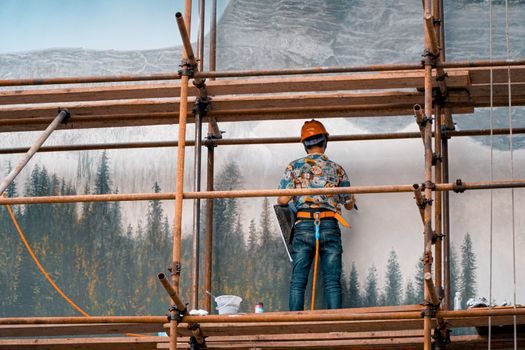
Scaffolding is the right call for facade maintenance, plastering, painting, exterior cladding, soffit formwork at low level, and any work where the platform does not need to be a structural reaction for fresh concrete [S2][S3]. Climbing-scaffold variants (suspended, mobile, fixed) cover facade access on occupied buildings, retrofit work and wind-turbine tower maintenance, where bringing in a tied formwork system would over-engineer the access [S2].
Use of climbing formwork for short, low-rise or one-off pours is the classic mis-spec: a 6 m retaining wall or a 3-storey stair core does not justify the anchor preparation, the strip-down time or the design effort of a CB-class system; a braced traditional formwork with scaffold access is faster and cheaper [S3][S10].
System-by-System Comparison Across the Decision Gates
The three configurations a buyer actually evaluates are crane-climbed formwork, automatic/self-climbing formwork, and independent climbing scaffold. They sit on a 2 × 3 decision matrix of load-path × height-band: [S1]
— Crane-climbed climbing formwork (CB240 / CB210 / SCB180): concrete pressure load path, 15 m to ~80 m core height, lowest capex, 1 crane hour per lift [S6][S8][S10].
— Automatic / self-climbing formwork (ACS / hydraulic): concrete pressure load path, ~70 m upward with no crane dependency, highest capex, fastest cycle on tall cores [S1][S4].
— Climbing scaffold: access load only, 8 m to ~40 m, lowest capex of the three, no concrete pressure role, repositioned every 3–4 lifts [S2][S3].
On a 35-storey core, the auto-climbing system recovers its premium over a crane-climbed bracket on a typical 1.5-day cycle once the project passes roughly 60–80 lifts, after which the saved crane hours and the eliminated weather-day risk dominate the cost model [S1][S4].
Real Project Use Cases in 2026 Specification
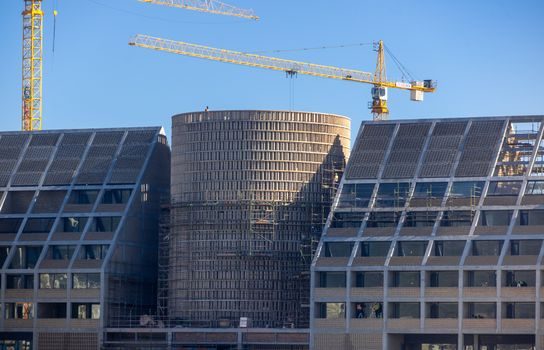
For a 200 m+ office core the specification is now almost always an automatic climbing formwork system from one of the major formwork OEMs, with the bracket anchor pattern designed to follow the core plan shrinkage on the upper floors [S4]. A bridge-pier contract of 30 m to 60 m height will typically run crane-climbed CB-class brackets on both faces, with the climbing scaffold reduced to a small inspection platform at the cap [S6][S10].
For an 80 m residential facade retrofit, the typical bill of material is a suspended or mobile climbing scaffold, with formwork replaced by mast-climbing work platforms and the wet-trade work scheduled as a separate package [S2]. The China supply chain in 2026 lists climbing formwork, attached lifting scaffolding and self-climbing systems as overlapping product categories, with monthly supply capability quoted at up to 150,000 m² for the larger aluminium-formwork suppliers [S7][S9].
For a 150 m wind-turbine tower the working-height problem is solved by a tower-internal climbing platform and an external climbing scaffold supplied separately; the index lists wind-turbine as a dedicated application on the climbing-scaffold side and is silent on the formwork side, which is a useful heuristic when classifying an unknown spec sheet [S2].
Limitations, Failure Modes and Sourcing Watch-Outs
Climbing formwork failure modes concentrate at the anchor: insufficient concrete strength at the time of lift, missed rebar at embedment locations, and bracket distortion under asymmetric pour pressure [S6][S8]. Standard mitigation is the 10 MPa minimum cube-strength gate before striking, which the bracket data sheets call out and the formwork engineer has to verify pour-by-pour [S3].
Scaffolding failure modes are predominantly tie-pattern and bracing: under-tied scaffolds on tall facades and inadequate plan bracing on mobile towers are the recurring root causes in published incident data, and the control is the EN 12811 tie-pattern check at every tie row, not the equipment class itself [S3].
Sourcing watch-out for buyers in 2026: the boundary between "climbing formwork" and "attached lifting scaffolding" in the Chinese supplier base is loose — the same factory may list both with overlapping model codes, and the lead-time quoted (often 15–30 days) usually applies to a re-stocked catalogue item, not a custom bracket layout [S5][S9]. For non-standard geometry, the engineering submittal and the anchor-approval loop add 4–6 weeks on top of the headline lead time [S4][S5].
Standards, Codes and Sourcing References
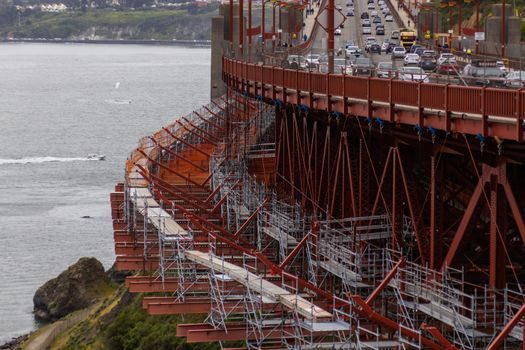
Climbing formwork design in the European supply chain is governed by EN 12812 (load-bearing timber formwork) and the relevant Eurocode parts for the concrete pressure and the steel bracket, while the access scaffold side is governed by EN 12810 / EN 12811 for the working load classes and tie patterns [S3]. The same EN 12811 reference is used by PERI's Climbing Scaffold family, and the product data sheets on the index flag the working-height and facade-application fields that feed the EN 12811 tie-pattern calculation [S2][S3].
Doka's climbing-formwork page is explicit that the system is a "modular system, based on decades-long experience of widely differing construction tasks" and is delivered as a configured package rather than a catalogue SKU [S4]. The PERI 2012 catalogue still serves as the reference taxonomy that splits Climbing Systems, Self-Climbing System, Climbing Scaffold and Climbing Protection Panel into separate families — a split every buyer should reproduce in their own spec [S3].
For 2026 sourcing, the actionable references are the Faresin hydraulic climbing system (sky-scraper / bridge / dam) [S1], the DirectIndustry climbing-scaffold index of 7 manufacturers and 9 products [S2], the Doka climbing-formwork solution page [S4], the CB240 / CB210 / SCB180 bracket data sheets for crane-climbed systems [S6][S8][S10], and the Chinese aluminium-formwork suppliers running 150,000 m²/month capacity for re-stock orders [S7].
Buyers evaluating a tower-core spec in mid-2026 should treat the working-height band 15 m to 70 m as crane-climbed bracket territory, the band above 70 m as automatic-climbing territory, and the band 8 m to 40 m on facade-only work as climbing-scaffold territory, with anchor verification and EN 12811 tie-pattern check as the two non-negotiable gate items before any lift. For a deeper dive on the scaffolding pricing and order-size levers that sit next to this decision, see the scaffolding 2026 price & cost guide; for the selection-criteria side of the same problem, the scaffolding selection criteria 2026 write-up carries the load-class and site-gate checklist. A broader view of how the climbing formwork fits into the wider formwork and access catalogue is in the climbing formwork and scaffolding reference entries.
For component-level specifications, see asrs system.