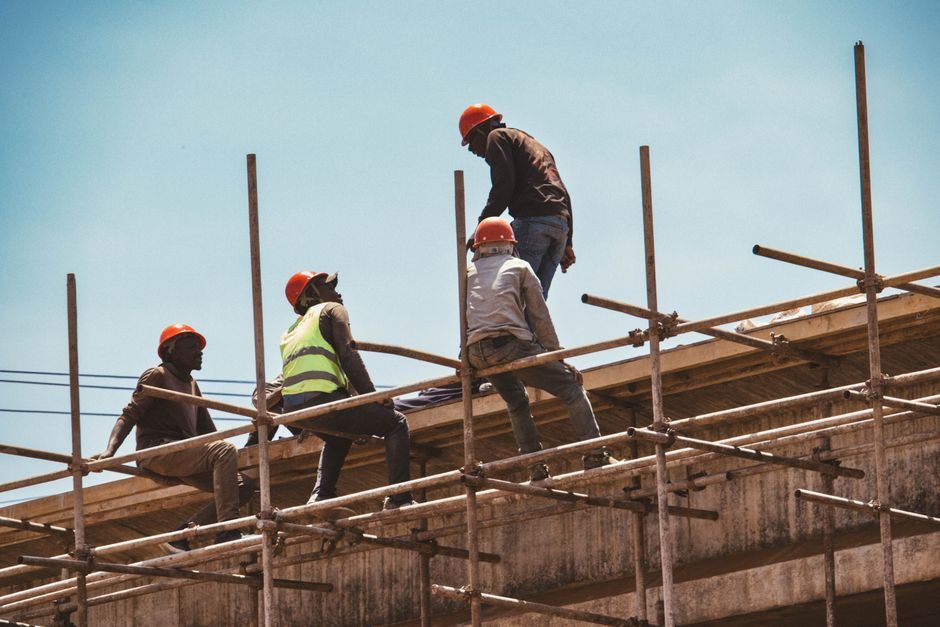
Modular galvanised scaffolding systems from tier-1 Chinese mills were listed at US$8.50–25 per piece for full hot-dip galvanised ringlock/Cuplock sets in early June 2026, with the spread set by steel grade (Q235 vs Q345), tube size 48.3 mm × 3.25 mm and order volume [S3][S1].
This guide covers the four pricing levers that move a scaffolding RFQ the most: system type (ringlock, Cuplock, frame, tube-and-clamp), raw material (Q235 vs Q345 hot-dip galvanised tube), surface treatment (painted vs pre-galv vs hot-dip galv) and order size (sample cartons vs 20 GP FCL vs project tonnage). For the engineering basis behind these cost decisions, see the Scaffolding Selection Criteria 2026: Load Class, System Type and Site Gates reference [S1].
System type and how each one prices
Ringlock (Layher-style) modular sets with hot-dip galvanised rosette nodes, verticals, horizontals and diagonals were listed at US$8.5–25 per piece on multi-supplier catalogues in June 2026, while Cuplock sets in the same data set cluster within a similar band once the node-count is normalised [S3].
Frame-style scaffolding (H-frame + cross brace) sits below modular per-piece pricing on a per-tonne basis because the BOM is dominated by two verticals and a brace rather than a full rosette/ledger/diagonal kit, but it loses the multi-angle flexibility that ringlock and Cuplock offer on irregular façades [S1].
Tube-and-clamp (also called tube-and-coupler) is the highest-labour system on a per-tonne installed basis, even though the raw tube stock is the cheapest of the four families — the cost driver is the right-angle and swivel coupler count, not the tube itself [S1].
Material and tube specification as a cost driver
Cuplock verticals quoted in the active supplier pool use Q345 tube at 48.3 mm OD × 3.25 mm wall, hot-dip galvanised after fabrication, with the steel-grade upgrade from Q235 to Q345 the single largest mechanical-property lever in the scaffolding BOM [S1].
Tube OD and wall drive weight per metre and therefore FCL utilisation: 48.3 mm × 3.25 mm is the de-facto EN 12810/12811 system standard, and deviations from that OD/wall pair force a redesign of the cuplock node geometry rather than a simple re-quote [S1].
Pre-galvanised tube (zinc-coated strip welded into tube) is cheaper than post-fabrication hot-dip galvanising but cannot match the cut-end and weld-zone coverage of a true hot-dip batch, which is why structural verticals on petrochemical and offshore scaffolds are almost universally specified HDG after fab [S1].
Surface treatment and galvanising mass
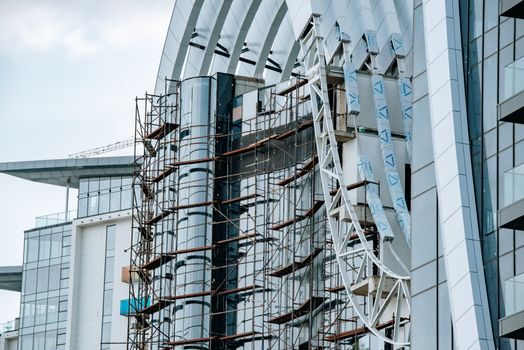
Hot-dip galvanising after fabrication is the default for export-grade Cuplock and ringlock sets, with paint, electro-galvanising and pre-galv limited to lighter-duty non-structural accessories [S1].
Galvanising mass is the silent second lever inside the same HDG line item: a 40–55 µm coating passes typical inland-construction service-life expectations, while 70–85 µm is the band specified for coastal, marine or chemical-atmosphere service where zinc loss rate runs materially higher [S1].
For a fuller read on how coating choice interacts with bracket systems, brackets, and toe-boards on a complete scaffold BOM, the cross-reference selection guide covers load class and site-gate logic that feeds back into these finish decisions [S1].
Order size, MOQ and FCL economics
Multi-supplier catalogues list hot-dip galvanised ringlock scaffolding at US$8.5–25 per piece in June 2026, with the lower band typically tied to full 20 GP / 40 HQ container-load orders and the upper band to sample or mixed-spec cartons under 5-tonne lots [S3].
Scaffolding frame connector manufacturing lines (the automated welding cells that produce H-frame and ringlock nodes) were quoted at US$1,100–1,200 per ton of output, which is the right benchmark to anchor a capital-expenditure conversation if the buyer is also evaluating backward integration [S3].
For project tonnage above ~200 t/month, the conversation shifts from per-piece to per-tonne landed cost, and at that scale hot-dip galvanising capacity — not raw tube — is usually the binding constraint on supplier selection [S1].
Comparison: how the four main system types line up
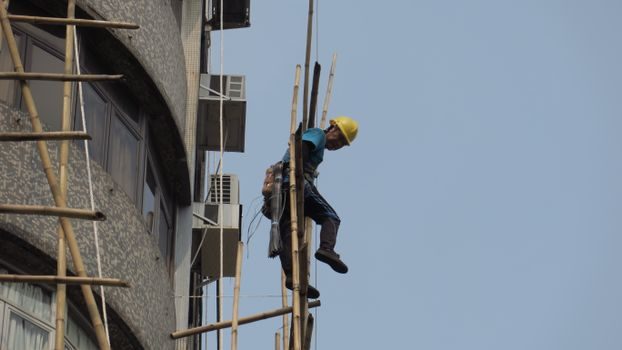
Ringlock scores highest on assembly speed and multi-angle rosette geometry, Cuplock on node stiffness and 48.3 mm × 3.25 mm Q345 vertical compatibility with EN 12810/12811 couplers, H-frame on raw-material cost per tonne, and tube-and-clamp on irregular-shape adaptability at the expense of labour hours across the scaffolding family [S1].
On unit cost for full galvanised modular sets in June 2026 catalogues, ringlock and Cuplock overlap in the US$8.5–25/piece band, H-frame sits below that per-piece band but inside a similar per-tonne envelope, and tube-and-clamp is the cheapest on tube stock yet the most expensive once qualified labour is added [S3].
On coating durability, HDG-after-fab dominates across all four families for export service, while pre-galv and painted finishes are limited to non-structural accessories where the cut/weld-zone risk is acceptable [S1].
Standards, certification and what the buyer should pin in the RFQ
EN 12810 / EN 12811 (façade scaffold performance and structural design) and the corresponding SSFI / OSHA / AS/NZS 1576 regional codes are the documents that turn a per-piece price into a defensible technical quote — without naming the system standard in the RFQ, a low bid can quietly substitute Q235 for Q345 or pre-galv for HDG [S1].
For buyers in oil & gas, coastal or chemical-atmosphere service, the second gate is galvanising mass and salt-spray performance; pairing EN 12810/12811 with a stated HDG coating thickness and a documented Q345 mill certificate is the minimum spec set that prevents the headline price from drifting at the sampling stage [S1].
For related cost-reading across other industrial buys, the Rock Wool 2026 Price & Cost Guide: Density, Fire Class and Order Size Set the Spread covers a different density-driven commodity, while the Case Packer 2026 Price & Cost Guide: Spec Levers, Tiers and Sourcing tracks how spec tiers translate into the spread on capital equipment lines [S1].
Common procurement pitfalls and how to avoid them
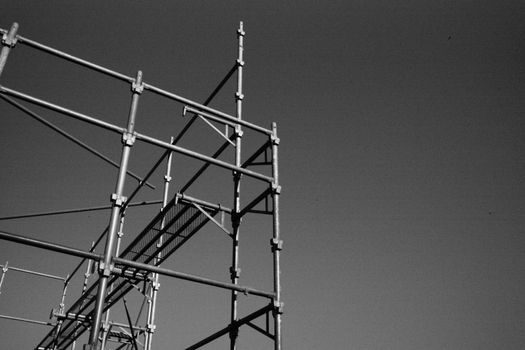
The single most common pitfall is quoting on per-piece price without converting to per-tonne or per-cubic-metre-of-scaffold — a Cuplock set at US$15/piece can be cheaper or more expensive than a ringlock set at US$12/piece once the rosette count and bay geometry are normalised [S3].
The second pitfall is accepting a Q235 quote in place of Q345 because the supplier's datasheet lists only "Q345-equivalent" or "high-strength tube" — the yield-strength delta of roughly 50–60% between the two grades is exactly the lever that lets one bid undercut another at the same tube OD/wall [S1].
For a working knowledge baseline on the broader scaffolding system families, node geometry and the load-class/height tables that drive the per-bay cost, the encyclopedia entry is the right starting reference [S1].
Trackable signals for the next procurement cycle: (1) Chinese OEM mill certificate traceability for Q345 vs Q235 substitution, verifiable on the MTC per batch; (2) hot-dip galvanising bath capacity at the named supplier, verifiable by a plant audit or a third-party SGS/BV report; (3) FCL price spread between 20 GP and 40 HQ for the same SKU, which is the cleanest read on whether the per-piece quote is anchored on actual shipping density [S3][S1].
For component-level specifications, see linear guide, and crossed roller guide.