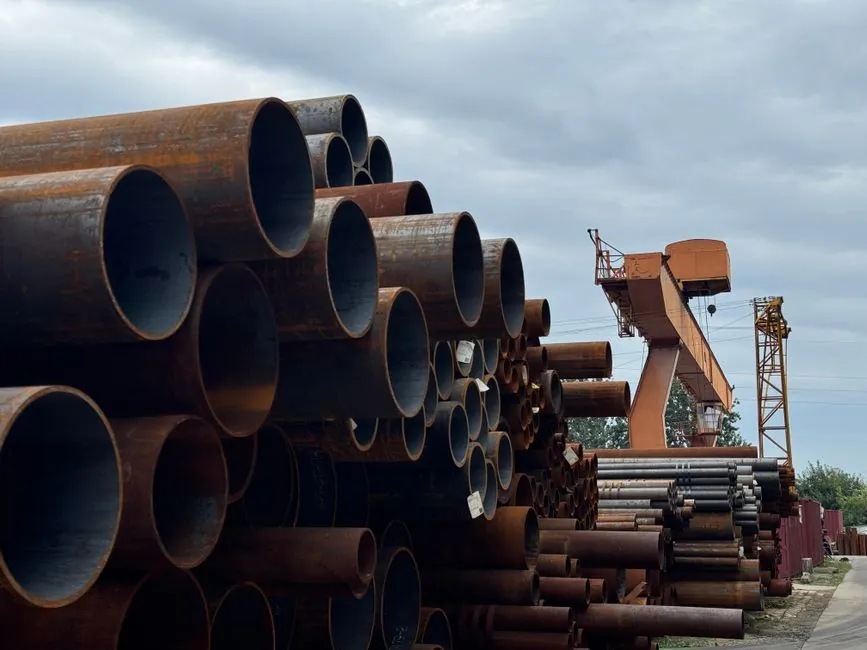
Specifying the wrong duty class burns money twice: a Class C crane in a foundry wears out 2x faster than designed, and a Class D in a machine shop ties up roughly $100,000 in unused hoist and bearing capacity for a job that only cycles a few times an hour [S4].
Both classes sit on the Crane Manufacturers Association of America (CMAA) duty ladder between standby (A) and severe service (E), and they share the same 15 ft average lift height. The split is defined by three hard numbers: lifts per hour (5-10 vs 10-20), share of lifts at full capacity (≤50% vs ≤65%), and rated-capacity utilization (average 50% vs approaching 50% constantly) [S1][S2].
Where the C/D boundary actually sits
Class C moderate service covers machine shops, paper mill machine rooms, and light fabrication where the crane averages 50% of rated capacity, runs 5-10 lifts per hour, and never sees more than half its lifts at full nameplate [S1][S5]. Class D heavy service covers heavy machine shops, foundries, fabricating plants, steel warehouses, container yards, lumber mills, and standard-duty bucket or magnet operations where loads approach 50% of rated capacity throughout the shift, at 10-20 lifts per hour, with up to 65% of lifts at rated load [S1][S2][S5]. The 50% utilization figure is identical on paper; the difference is whether it is an average (Class C) or a sustained operating point (Class D). For the broader overhead bridge crane family, this C/D decision sets the bridge-girder design, the hoist selection, and the end-truck bearings in one stroke.
Shift count is another gate: Class C is specified for single-shift operation, while Class D is rated for one or two shift operation with the implicit assumption that the crane will see a second shift of near-equal loading [S2][S3]. This is why a Class D crane in a two-shift foundry is not over-specified, it is correctly specified.
Component deltas that drive the price gap
Three mechanical numbers separate a Class C build from a Class D build, and they are the same numbers the OEM will quote when justifying the upgrade. The bridge-motion service factor steps from 1.15 (Class C) to 1.3 (Class D); the L-10 bearing life requirement doubles from 5,000 hours to 10,000 hours; and the hoist duty moves from H3 to H4 on the Hoist Manufacturers Institute scale [S2][S3].
Per [S2], Class D also requires a "built-up hoist" tailored to a heavy duty cycle, whereas Class C is typically satisfied by a commercial H3 ready-built hoist. The motor, brake, and gear sizing on a Class D hoist are sized so the crane can run at higher speeds, since the spec says "high speeds are desirable for this type of service" at 10-20 lifts per hour [S1][S5]. The end trucks, bridge drives, and electrical controls scale with the same 1.3 vs 1.15 service-factor logic, and that is where the headline $100,000 price spread between two equal-span, equal-capacity cranes at adjacent duty classes comes from [S4].
Decision matrix: which class fits which job

Side-by-side on the four CMAA decision inputs (rated load utilization, lifts per hour, shifts per day, peak-load fraction), the comparison reads as follows for a single girder crane or top-running bridge application [S1][S2][S3][S5]:
1) Rated load utilization: Class C averages 50%; Class D approaches 50% continuously through the shift. 2) Lifts per hour: 5-10 (C) versus 10-20 (D). 3) Average lift height: 15 ft for both, so travel distance is not the discriminator. 4) Fraction of lifts at rated capacity: ≤50% (C) versus ≤65% (D). 5) Shifts per day: single (C) versus one or two (D). 6) Hoist duty: H3 (C) versus H4 (D), with a built-up hoist typically required at D. 7) Bridge service factor: 1.15 (C) versus 1.3 (D). 8) L-10 bearing life: 5,000 hr (C) versus 10,000 hr (D).
The first four rows are the user-supplied inputs the specifier must establish before talking to the OEM; the last four are engineered outputs the manufacturer commits to. Misreading inputs 1 and 4 is the most common way buyers land on the wrong side of the line.
Use cases: who is Class C, who is Class D
Class C is the right call for machine shops moving workpieces between stations, paper-mill machine rooms handling rolls, light-to-moderate fabrication, and general assembly bays where the cycle is 5-10 lifts per hour and the bulk of lifts are well under nameplate [S1][S2][S5][S6]. Per [S5], "most cranes" in general industry fall into Class C, which is why OEM catalogs are stocked with H3 hoists and 1.15 service-factor bridges as the default offering.
Class D is mandatory for foundries pouring and shake-out cycles, steel warehouses handling coils and plate, fabricating plants with repetitive plate transfer, container yards, lumber mills moving stacks, and standard-duty bucket or magnet operations where the lifting tool is always hanging from the hook and the load is the magnet or bucket itself [S1][S2][S3][S7]. Per [S7], a Class D crane is "designed for heavy duty applications" with sustained loading, which is the engineering signal that duty-cycle-driven fatigue, not peak load, is the controlling failure mode. For these production environments, a gantry crane or top-running bridge on Class D service is also the minimum acceptable spec for OSHA-compliant duty-cycle reporting.
Failure modes when the class is wrong

Under-classing a Class D job as Class C is the more dangerous and more expensive error. The H3 hoist in a Class C build is not fatigue-rated for 10-20 lifts per hour at approaching-rated loads, and the 5,000 hr L-10 bearings in the end trucks will reach their statistical fatigue life roughly halfway through the design service interval, leading to premature wheel-bearing replacement and potential bridge-drive trips [S2][S4]. Standard-duty bucket and magnet cranes that were under-specified typically show hoist-motor thermal overloads and brake-wear rates 2-3x the OEM's calculated mean time between failures within the first 18 months [S4].
Over-classing a Class C job as Class D is wasteful but not unsafe. The user pays the roughly $100,000 premium for a 1.3 service-factor bridge, 10,000 hr L-10 bearings, and an H4 built-up hoist that will only see 5-10 lifts per hour at half-rated load on a single shift [S4]. The crane will not fail; it will simply never approach its design duty, and the owner will never recover the upcharge through avoided downtime. The economic breakeven only flips in the buyer's favor if a documented near-term production expansion will push the operation into Class D territory within the crane's first service life, which is exactly the future-needs caveat called out in [S4].
International cross-reference: FEM, HMI, ISO, and DIN
For a North American buyer, CMAA is the spec. For a European or globally-built crane, the same C vs D decision maps to FEM 1Am/H3/M4 (Class C) and FEM 2m/H4/M5 (Class D) on the Federation Europeenne de la Manutention / Hoist Manufacturers Institute / ISO triple, with DIN 15018 carrying the structural side at H2/B3 for both classes [S3][S4]. The cross-reference table in [S3] shows Class C aligning with FEM 1Am, HMI H3, ISO M4, and DIN H2/B3, while Class D aligns with FEM 2m, HMI H4, ISO M5, and the same DIN H2/B3 baseline. The next FEM step up, 3m/H4/M6, still lands inside Class D for general workshop work and shifts to Class D or E only at FEM 4m/H4-5/M7 for grab, magnet, or very heavy two-to-three shift operation [S3].
For a buyer sourcing a mobile crane or a crawler crane where CMAA does not apply, this C/D terminology is not the controlling spec; instead, the equivalent rating is found in the OEM's load-moment chart and the structural/fatigue class on the nameplate, which are governed by ASME B30.5 and the manufacturer's own design standard rather than the CMAA duty ladder.
Selection checklist and what to ask the OEM
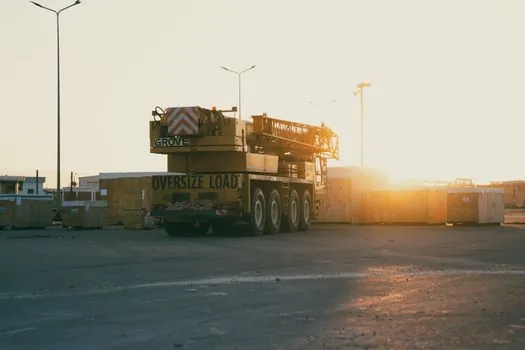
Per [S4], four inputs must be nailed down before a quotation request: estimated lifts at or near rated capacity, total hours of operation per day, average lifts per hour including bridge and trolley motion, and average distance of each movement. The OEM then converts those into a CMAA class, picks the HMI hoist duty, sizes the bridge service factor, and commits the L-10 bearing life in the proposal [S1][S2][S4].
Ask for the bridge-motion service factor (1.15 vs 1.3) and the L-10 bearing life (5,000 vs 10,000 hr) in writing. Ask whether the hoist is a commercial H3/H4 ready-built unit or a built-up hoist tailored to the duty cycle. Ask for the operating-speed envelope, since Class D is supposed to deliver higher hoist, trolley, and bridge speeds than Class C, and a slow Class D build is a red flag [S1][S2][S3]. Finally, document any planned shift count or capacity increase so the specifier can decide whether to land on C, D, or step up to E before the purchase order is cut.
For an industry-side read on related heavy-lift rating logic, see the duty-cycle discussion in Duty cycle crawler cranes: dragline and clamshell spec map, which applies a parallel cycle-and-utilization framework to a different machine family. The next trackable signal for specifiers is the CMAA Spec 74 revision cycle and any tightening of the 1.15-to-1.3 service-factor mapping, which would shift the cost delta between C and D builds without changing the lifts-per-hour thresholds.