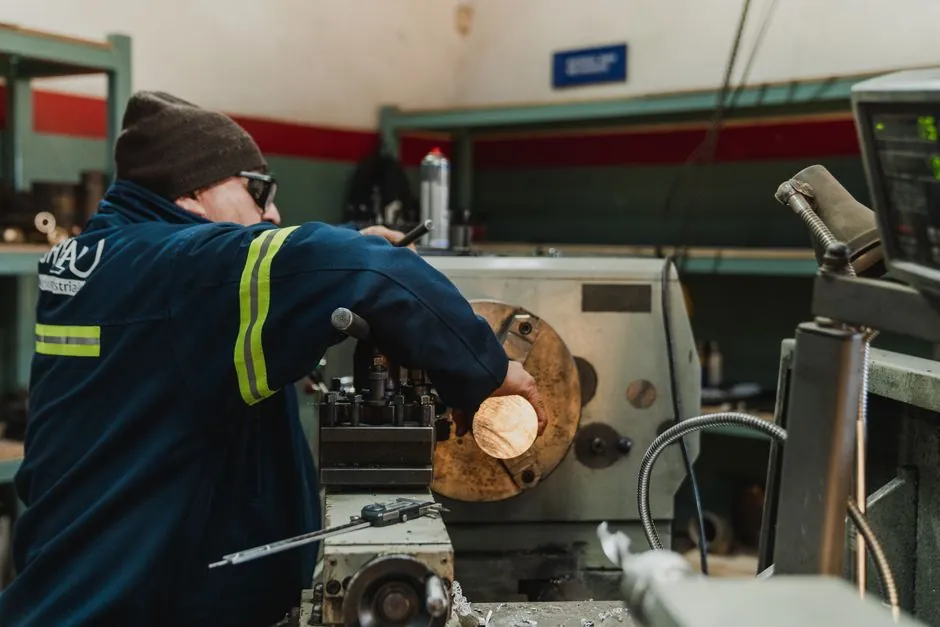
Capacity planning for a CNC cell in 2026 is a numbers exercise, not a forecasting exercise: it converts part-mix, cycle time, and available spindle hours into a yes/no on whether the planned order book can ship on date [S3].
The three workloads most often confused are RRP (rough-cut, 12 months to 3 year horizon, product family level), RCCP (critical work center gate), and CRP (finite-capacity match against MRP-released hours) [S3]. Picking the wrong one is the single most common reason a CNC cell misses its promise date.
Define the cell by what it actually does, not by machine model
Modern CNC spring and wire-forming machines from manufacturers such as Dongzheng cover a wire diameter envelope of 0.08-9.0mm across 3 to 12 axis configurations, with positioning accuracy held to ±0.01mm and feed rates up to 110 m/min on the high-speed models [S2]. That envelope, not the brochure, is the unit of capacity you plan against.
For a mixed-product cell, group parts into families that share tooling, wire stock, and axis configuration; capacity is then expressed as available spindle hours per family per week, benchmarked against cycle time pulled from the last 30 days of production data. The CNC cutting machine class is the right reference for any cell that includes wire EDM or rotary cutoff stations, since their duty cycles determine the bottleneck shift.
Throughput math: spindle hours, OEE, and the 150-set ceiling
Annual machine output is bounded by (available hours per year) x (OEE) / (average cycle time per part). A single CNC spring machine with two shifts at 4,000 scheduled hours/year and 75% OEE delivers roughly 3,000 productive hours; at a 10-minute average cycle, that is about 18,000 parts/machine/year before changeovers [S2][S3].
Dongzheng's published 150+ sets/year capacity across a 5,000 m2 facility is the kind of ceiling a capacity plan must respect: when a customer's forecast approaches 80% of that ceiling, the cell needs a second machine, a second shift, or a sub-supplier, not a "we'll work harder" line item [S2]. When you compare a spring-forming cell to a milling cell, the spring cell wins on parts-per-spindle-hour but loses on changeover flexibility, a tradeoff the CNC core machine reference page documents in more detail.
Selection criteria that decide the build
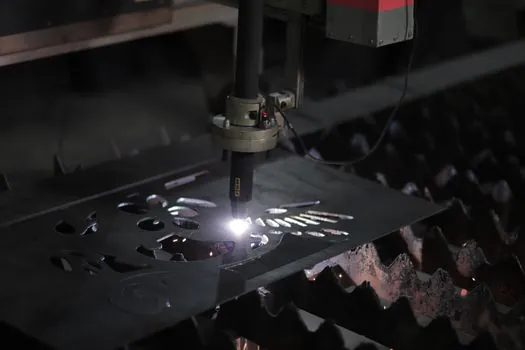
Three numbers drive every CNC capacity decision in 2026: wire diameter range (0.08-9.0mm for spring cells, larger for general CNC), axis count (3-12 for spring, 3-5 for milling), and positioning accuracy (±0.01mm is the spring-forming norm, ±0.005mm is the upper tier for connector and medical parts) [S2]. Buyers who fix on price first usually end up re-tooling within 18 months; buyers who fix on accuracy class first hold the line for 5+ years.
For plants already running an industrial PC selection for water treatment style of control room, the next question is whether the CNC fleet can publish MTConnect or OPC UA so the capacity dashboard reads live spindle hours instead of a monthly Excel paste. The reliability audit on a CNC cell is identical to any other automation asset: a machine safety review runs in parallel, not after, the capacity plan.
Who CNC capacity planning is for, and who it is not
This discipline is for job shops with 5+ CNC assets, contract manufacturers with quarterly order boards, and tier-2 suppliers serving automotive, medical, or electronics OEMs where ±0.01mm tolerance is contractually binding [S2]. It is not for one-off prototype shops, where a single machine's calendar is the entire plan.
Plants that skip CRP and run RCCP only will pass the rough-cut gate and still miss ship date, because RCCP only checks critical work centers and ignores the long tail of secondary operations [S3]. Plants that run CRP but feed it stale cycle times will pass the math and still miss ship date, because the input data is fiction.
Limits, failure modes, and what the math does not see
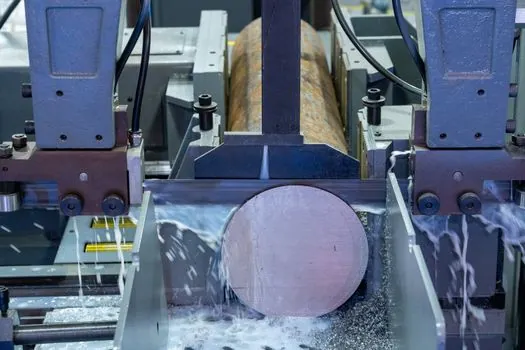
Cycle time variance is the silent killer: a ±15% swing on a 10-minute cycle is a 1.5-minute swing, which on a 3,000-hour/year machine is 75 hours of unforecast capacity loss, roughly 450 parts [S3]. Tooling life is the second silent killer, especially on abrasive wire stocks above 6.0mm where dressing cycles cut effective spindle hours by 10-20% [S2].
Changeover time is the third: a cell that averages 30 minutes of changeover per family switch loses 2 hours per shift at 4 changeovers, which over 250 working days is 1,000 hours, or one full machine-quarter. None of these losses show up in a naive spindle-hours-only model, which is why the RRP layer must be validated against actual CRP output before any capital request is signed [S3].
Standards, sourcing, and what to put in writing
For automotive cells, AS9100D-compliant suppliers and ISO 9001-certified work centers are the baseline; for medical parts, USP Class VI compatible surface treatment and validated cleaning protocols sit on top [S2]. For any cell handling spring wire above 3.0mm in industrial or oil-and-gas service, the CNC filling machine and CNC labeling machine classes are not directly relevant, but their changeover-discipline sections apply, since both classes are OEE-sensitive.
One verifiable signal to track after publication: whether the cell's measured OEE for the trailing 90 days lands within ±5% of the OEE assumed in the RRP model; a wider gap means the next RCCP run is fiction. A second signal: the ratio of CRP-recommended hours to RCCP-recommended hours; values above 1.2 indicate the rough-cut model is hiding bottlenecks and the next capital ask is mis-sized [S3].