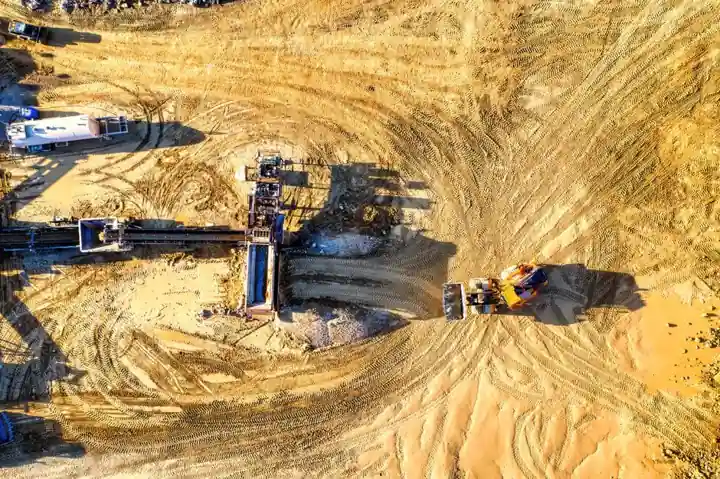
Industry 4.0 (I4.0) in mining centres on cyber-physical systems, the Industrial Internet of Things (IIoT), and data-driven decision loops layered onto existing shovels, drills, and process plant [S1]. The 2021 Springer review defines I4.0 around cyber-physical production systems, big-data analytics, and autonomous robotics as the core enabling stack, and explicitly flags cybersecurity, legacy integration, and organisational change as the binding constraints on adoption [S1].
In a 2026 mining context, that stack shows up as sensors on rope and hydraulic shovel undercarriages, automated batching for downstream materials, and 3D-printed spares for high-wear ground-engaging tools [S3][S5]. For capital-equipment specifiers, the practical question is no longer whether to connect a machine, but which classes of equipment, which protocols, and which rebuild-vs-replace decisions actually pay back underground.
Scope: What "Mining I4.0" Covers in 2026
Industry 4.0 in mining spans nine technology clusters in the Springer framework: IIoT, cyber-physical systems, big data analytics, cloud computing, autonomous robots, additive manufacturing, simulation, augmented reality, and horizontal/vertical system integration [S1]. On a mine site, these map to connected fleets (Sandvik Rock Technology positions digital fleet management, automation, and parts services as the integrated value proposition for mining customers) [S3].
Equipment-side, I4.0 covers three layers: (1) production machines, rope shovels, hydraulic shovels, blasthole drills, underground LHDs, and conveyors; (2) support plant, including gearboxes, cylinders, and undercarriage systems; and (3) auxiliary logistics such as intelligent 3D warehouses and automated batching feeding internal mixers and kneaders [S2][S5]. Underground equipment categories sold through global mining-equipment channels (drifts, DTH hammers, slim drills, wagon drills, pneumatic ventilation fans, slurry pumps, cement injection pumps) form the long tail of assets that any site-wide I4.0 rollout must instrument or accept as blind nodes [S4].
Decision Criteria: Where I4.0 Pays Back on a Mine
Adoption of Industry 4.0 in mining is gated less by technology availability and more by perceived usefulness, perceived ease of use, and acceptance factors covered in the UTAUT/Davis frameworks cited in the 2021 review [S1]. Concretely, four engineering criteria separate a high-ROI deployment from a stranded pilot: (1) asset criticality and downtime cost, (2) data openness from the OEM, (3) underground connectivity (LTE, Wi-Fi mesh, leaky feeder), and (4) cybersecurity posture under ENISA's "cybersecurity as key enabler" framing [S1].
Boundary Equipment, which rebuilds shovels, drills, and plant, and inspects and tests every component before return to service, treats condition-data integration on rebuilt gearboxes, cylinders, and undercarriage systems as the core differentiator versus pure parts replacement [S5]. For specifiers, that translates into a rebuild-first strategy: instrument the existing asset, harvest vibration/temperature/load telemetry, and only step up to full autonomous operation when the data layer is already trusted.
Options Compared: Sensors, Telemetry, Automation, and Additive
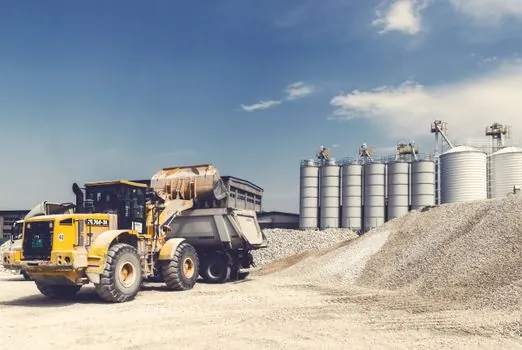
For a 2026 mining buyer, the I4.0 options line up against four decision axes: cost, deployment lead time, required connectivity, and impact on mean time between failures (MTBF). The Springer review treats IIoT, cyber-physical systems, big-data analytics, and autonomous robotics as the highest-impact clusters, with cloud, simulation, AR, and additive manufacturing as supporting layers [S1].
On shovels and blasthole drills, vibration and temperature sensors plus OEM telematics (e.g. Sandvik's digital offerings) form the entry tier, with modest capex and short lead time but limited autonomous benefit [S3]. On support plant, gearbox and cylinder rebuilds with documented pre-/post-test data sit in the mid tier, and on-site additive manufacturing of high-wear parts adds a long-tail option where logistics penalties are severe [S1][S5]. At the top, fully autonomous drilling and haulage require dedicated connectivity, vendor-controlled data stacks, and capital reallocation, so they only suit large open-pit operations or well-capitalised underground mines.
Use Cases: Rebuilds, Batching, and Connected Fleets
Condition-monitoring rebuilds are the lowest-friction entry point: Boundary Equipment supports mining operations with components, rebuilds, and design improvements for equipment that cannot afford downtime, including custom engineering, mining component rebuilds, gearbox rebuilds, cylinder rebuilds, and specialty tooling design, and explicitly inspects and tests every component before it returns to service [S5]. For heavy-duty rope and hydraulic shovel undercarriage systems, the stated goal is to extend service life in high-load applications, which lines up with the I4.0 objective of moving from scheduled to predictive maintenance [S3][S5].
Downstream, I4.0 has matured fastest in materials handling for processing plants. Mach Technology, founded in 1996, provides integrated Industry 4.0 software and equipment solutions, including automatic batching systems for rubber, plastics, friction materials, and welding consumables, intelligent 3D warehouses, intelligent logistics and transport systems, and online environmental monitoring, following the design principles of intelligent control, advanced technology, practical stability, simple operation, and convenient maintenance [S2]. A connected batching and warehouse stack removes the manual handoffs that traditionally break production visibility in mining-adjacent mineral and metal processing. For the long tail of underground assets such as drifters, DTH hammers, slim drills, wagon drills, ventilation fans, slurry pumps, and cement injection pumps, instrumentation tends to be retrofit rather than native, and specifiers should plan for edge gateways rather than direct cloud connection [S4].
Who I4.0 Is For, and Who It Is Not For
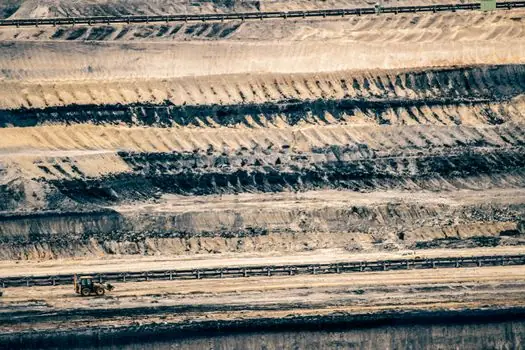
I4.0 is built for operations where downtime cost per hour exceeds the per-asset cost of sensors, gateways, and analytics, which is the case for rope and hydraulic shovels, large blasthole drills, and mill gearboxes in production [S3][S5]. It is also built for sites where the OEM exposes data via documented APIs or telematics services, since closed protocols and proprietary data buses remain a binding constraint, a point reinforced by ENISA and by the cybersecurity-as-enabler framing in the Springer review [S1].
I4.0 is a poor fit for low-criticality, short-life consumables, for example hand-held pneumatic breakers, paving breakers, chipping hammers, rivet busters, clay diggers, and concrete saws, where the IIoT capex swamps the spares value, and where replacement lead times measured in days, not months, make predictive telemetry redundant [S4]. It is also a poor fit for sites lacking reliable power and connectivity at the face, since cyber-physical integration is a prerequisite for I4.0 benefit, not an optional extra [S1].
Limitations, Failure Modes, and Cybersecurity
The Springer review is explicit that cybersecurity is one of the binding constraints on I4.0 adoption, and the ENISA position cited in that work is that cybersecurity is a key enabler, not a downstream concern [S1]. On a mine site this maps to network segmentation between OT and IT, strict control of remote-access pathways to shovel and drill telematics, and lifecycle management for the sensors and gateways on support plant. Hyperconnected mining systems without that posture expose operators to ransomware, safety incidents, and regulatory exposure under mining safety legislation.
Other failure modes are more mundane: brownfield integration pain with proprietary fieldbuses on legacy shovels, sensor fouling in dusty and wet underground environments, and the organisational gap between data scientists and maintenance crews [S1]. Boundary Equipment mitigates the maintenance-side gap by combining rebuilds with reliability support and a global footprint spanning Edmonton, Vancouver, South America, and Johannesburg [S5]. Specifiers should treat that organisational layer, not the sensor bill of materials, as the larger line item.
Standards, Sourcing, and Internal Reference
There is no single ISO/IEC standard that defines "Industry 4.0 for mining." The Springer 2021 review frames I4.0 as an umbrella of cyber-physical systems, IIoT, big data, cloud, autonomous robotics, additive manufacturing, simulation, AR, and horizontal/vertical integration, drawing on Davis 1989, UTAUT, the ENISA 2018 position, and the IIoT analysis framework of Boyes et al. 2018 [S1]. Equipment-side, buyers should still apply the conventional standards that govern the underlying machines, for example ASME pressure codes for process plant, ISO 21873 for earth-moving machinery, and IEC 60079-series for explosive atmospheres in underground coal and oil-sand operations, none of which are redefined by I4.0.
For capital-equipment specifiers comparing connected vs conventional asset classes, a useful starting point is the broader process-equipment reference set, since I4.0 success depends on the underlying sensors, drives, and field instruments behaving to spec. Readers evaluating connected mining dump truck fleets, for example, should anchor payload, brake, and tyre-pressure telemetry to the same engineering reference set used for instrumented process plant, and consult the pressure transmitter and flow meter reference pages for the field-instrument layer that feeds the analytics stack.
Cross-link for adjacent spec work: for materials-handling plants that feed the mine, the spec map in Tower Crane Selection for Urban Infrastructure: 2026 Site Envelope Guide shares the same envelope-and-load-lineup logic, while Mining Hearing Protector Selection: Spec Map for 2026 Field Use covers the PPE side of connected-worker programmes. For shop-floor load monitoring on rebuilt gearboxes, the criteria in Load Cell Selection Guide: Force, Capacity, Geometry, Class carry over directly.
Trackable signals over the next reporting cycle: (1) OEM disclosure of documented telematics APIs on rope and hydraulic shovel lines, (2) site-level OT/IT segmentation audits referenced to ENISA guidance, and (3) rebuild-vs-replace decisions on shovel undercarriage and mill gearboxes with documented pre- and post-test condition data. The 2026 question is no longer whether to adopt Industry 4.0, but which asset classes earn the connectivity, and which are still best left unconnected.