
Two independent 2026 forecasts put the global CNC machine market at USD 108.58B (Fortune Business Insights) and USD 109.36B (Maximize Market Research), with forward CAGRs of 11.10% and 8.7% through 2034 and 2034 respectively, both reaching above USD 230B by the end of the forecast window [S3][S4].
Competitive differentiation in 2026 is no longer driven by spindle power or axis count alone; quoting software, AI-assisted CAM, IoT-enabled uptime telemetry, and high-mix low-volume (HMLV) throughput now sit at the top of procurement checklists [S6][S7]. Europe alone is tracked at USD 24.47B in 2025 with a 10.08% CAGR projected to 2034, while a separate desktop-CNC forecast values that sub-segment at USD 33,800.77B (2025) growing to USD 48,703.68B by 2035 at 3.72% CAGR [S5][S8].
Market sizing: where the two 2026 baselines disagree, and what they agree on
Fortune Business Insights pegs 2026 revenue at USD 108.58B with an 11.10% CAGR to USD 251.61B by 2034, while Maximize Market Research values 2025 at USD 109.36B with an 8.7% CAGR to USD 231.7B by 2034 [S3][S4]. The 2025/2026 baseline values differ by less than 1%, so the spread is purely in the growth-rate assumption: roughly 240 basis points between the bullish and conservative case.
Both houses agree on directional drivers: automotive, aerospace, defence, electronics, healthcare, and metal fabrication pull demand for higher-tolerance parts, while Industry 4.0 adoption, CAD/CAM/ERP integration, and IoT/ML-based predictive maintenance expand the addressable spend per machine [S4]. North America is described as the dominant regional market in Maximize's segmentation, with Asia Pacific and Europe as the other two principal consumption blocks [S4].
Competitive axis in 2026: from spindle hardware to software stack and service
The 2026 competitive advantage is increasingly driven by data and intelligence layered on top of the machine tool, not by the cutting hardware itself, per Taikan Machine's June 2026 trend survey [S7]. The 2026 procurement profile in Dashnode's pricing survey lists four buyer pressure points: shorter product life cycles, HMLV demand, increased traceability/precision requirements, and sustained cost pressure, all of which favour vendors that can quote fast, switch jobs fast, and prove part-level quality data [S6].
Three vendor tiers are visible in the 2026 landscape. Tier 1 covers the established Japanese and German builders (DMG MORI, Mazak, Okuma, Makino, GF, Hermle, Nakamura-Tome) competing on 5-axis simultaneous machining, thermal stability, and factory-floor MES integration. Tier 2 is the Korean/Taiwanese/Chinese mid-range (Doosan, Hyundai Wia, Haas, Tongtai, Quaser, Antishicnc-class suppliers) competing on price-per-axis and HMLV flexibility, with Chinese suppliers like ANTS Machine explicitly offering CNC lathes, milling machines, EDM, laser cutting, and pipe bending under one product line [S2]. Tier 3 is desktop and prosumer (X-Carve, Shapeoko, Bantam Tools, Snapmaker, Sienci Labs, Inventables), where MRFR counts the major US/CN/CA players above and a 3.72% CAGR through 2035 [S5].
Selection criteria for buyers in 2026
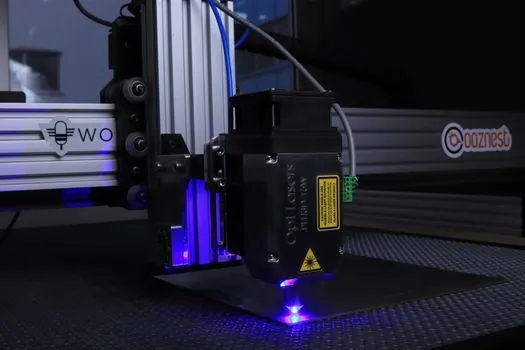
For high-mix low-volume job shops, the four decision criteria that actually differentiate vendors in 2026 are: (a) quoting and CAM automation depth, (b) controller openness and post-processor coverage, (c) HMLV setup-time reduction features such as automated work-offset probing and ATC repeatability below 0.005 mm, and (d) uptime telemetry, MTBF, and service response SLA [S6][S7]. A buyer running aerospace structural parts will weight (a) and (c) heavily; a Tier-1 automotive line running 50,000-unit batches will weight (d) and spindle thermal stability.
For OEM procurement at the factory-floor level, the comparison flips: the relevant criteria become total cost of ownership over a 10-year horizon, controller compatibility with existing FANUC, Siemens, or Heidenhain fleets, energy efficiency per kWh per part, and retrofit/upgrade path for the installed base. Retrofit and software upgrades are a stated service line at the independent service channel, where vendors such as In-House CNC Service list component replacement, calibration/alignment, and software optimization as billable workstreams [S1].
Who this market is for, and who it is not for
The 2026 CNC market is for buyers who can absorb a high upfront capital outlay, integrate CAM/MES stacks, and operate multi-axis equipment with a skilled labour pool, all of which are gating factors in the published market research [S3][S4]. It is NOT for SMEs in cost-sensitive regions, where high capital cost and the G-code/CAD-CAM skill gap are explicitly named as market restraints by Maximize Market Research [S4].
Buyers evaluating desktop CNC are a separate cohort: hobbyists, small enterprises, educational institutions, and prototyping shops, where MRFR's segmentation lists woodworking, metalworking, model making, jewellery, and prototyping as the dominant applications, and where the named major players (X-Carve, Shapeoko, Bantam Tools, Snapmaker, Sienci Labs) compete largely on user-friendliness and ecosystem, not on cutting envelope [S5].
Real use cases in 2026: aerospace, automotive, prototyping, service retrofit

Aerospace structural parts, defence components, and high-tolerance automotive powertrain parts remain the headline use cases for 5-axis CNC, while prototyping and small-batch production pull the desktop and benchtop segment [S4][S5]. The retrofit and service channel is a separate, large use case: independent service providers, such as In-House CNC Service, position preventive maintenance, emergency repair, component replacement (motors, drives, control boards, sensors), and calibration/alignment as core revenue lines, with software upgrades and retrofitting as the modernization layer over an aging installed base [S1].
Adjacent industrial product categories in 2026 procurement cycles are also running their own spec-first reviews, including CNC machine demand sizing 2026-2030, which segments the same market by axis count and end-user industry, and VFD suppliers in 2026, which maps the variable-frequency drive side of every CNC spindle and servo axis. For process-control instrumentation on the machine tool itself, see the machine tool process-control instrumentation stack.
Limitations, constraints, and failure modes
The named structural constraints in 2026 are: high capital cost for AI/IoT-enabled machines, a G-code/CAM-skilled labour gap, and limited SME access in cost-sensitive markets [S4]. CloudNC's March 2026 hiring survey goes further: the CNC machinist shortage is no longer a future risk, it is already constraining throughput, lead times, and growth across US machine shops, which is why AI-assisted CAM and automated quoting are moving from nice-to-have to procurement requirement [S9].
Failure modes buyers should spec against: control obsolescence on 10-15-year-old fleets, spindle thermal drift on long aerospace cycles, servo drive failures on legacy FANUC/Siemens platforms, and the inability of older controllers to ingest modern CAM post-processors. Independent service channels explicitly market component replacement, calibration, and software upgrades against these exact failure modes [S1].
Sourcing, standards, and decision nodes to watch
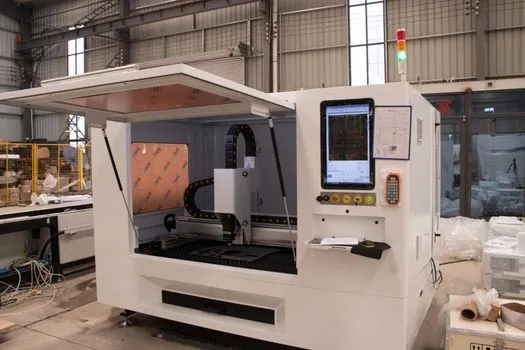
Procurement teams in 2026 should anchor sourcing decisions on three trackable nodes: (1) controller generation (FANUC 31i-MB5, Siemens SINUMERIK ONE, Heidenhain TNC 640) and its CAM post-processor coverage, (2) the vendor's published MTBF and service-level response time, and (3) the energy-per-part figure for the specific spindle/workpiece pairing. The machine tool production line design reference is a useful adjacent read for buyers sizing full cells rather than individual machines. For comparison, the mining equipment demand outlook tracks a parallel capex cycle in heavy industry that competes for the same skilled labour pool, and the wind turbine procurement strategy guide covers a parallel spec-first framework for another capex-heavy category. The selection criteria covered for cutting machines, coding machines, and machine safety are also transferable when specifying guarding, CE/UL conformity, and risk-assessment documentation for new CNC cells. [S4]