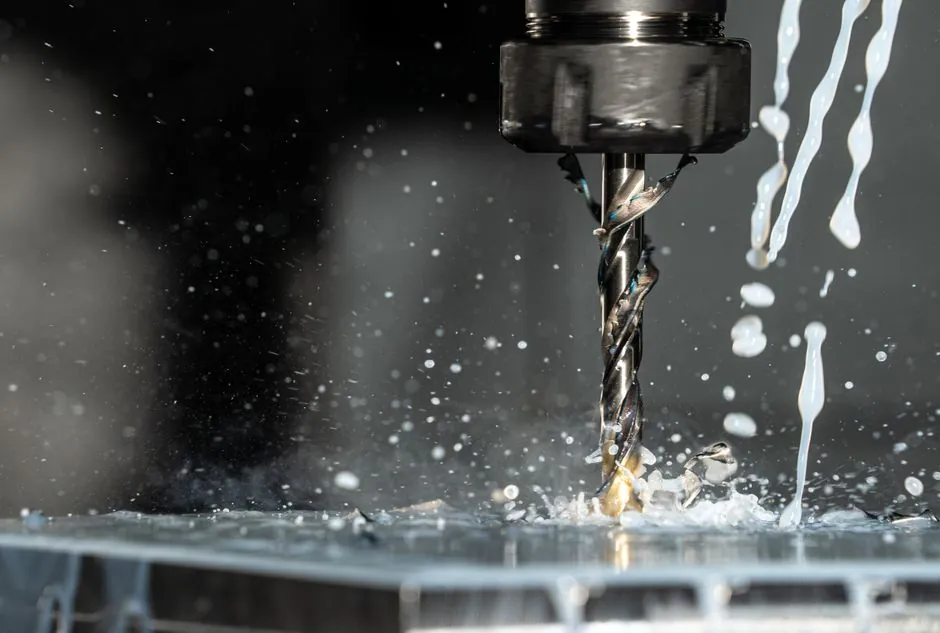
China-based CNC builders continue to broaden export reach, with Ningbo BLIN Machinery reporting shipments to 78 countries across four domestic manufacturing bases totalling 40,000 m² of workshop capacity and a 1979 founding year [S1].
Specialised aerospace CNC builders are scaling 5-axis simultaneous machining, dual-head gantry, and moving-crossbeam platforms, with one state-designated Chinese high-tech enterprise, Ningqing Aerospace Intelligent Equipment (Nanjing), claiming over 80% market share in aerospace intelligent equipment and automated hand-tool production lines through its Hunan Ningqing subsidiary [S2].
Vendor Tiers and What Each One Actually Sells
Chinese mid-tier CNC builders now dominate the export channel for general-purpose lathes, machining centres, and gantry mills, and BLIN operates as a UN-listed supplier serving automotive, aerospace, and medical end users with 18+ years of dedicated export activity [S1]. Product mix at this tier skews toward slant-bed CNC lathes, vertical CNC lathes, and CNC machining centres sized for job-shop work rather than ultra-large aerospace structures.
At the specialised aerospace tier, Ningqing's portfolio centres on beam-moving gantry machining centres, 5-axis simultaneous dual-head platforms, high-speed gantry mills for large aerospace structures, and movable-column heavy-cutting machining centres, with application pages claiming integral roles in aircraft, photovoltaic, wind power, precision-mold, and new-energy-vehicle component lines [S2]. The split between the two tiers is functional: BLIN-class builders chase volume through distribution, while Ningqing-class builders pursue AVIC-aligned aerospace programmes where qualification, not unit price, gates the order.
Market-Side Framing: What Public Research Actually Says
The publicly available Global NC Machine Market 2018-2023 study from Askci segments the industry by type into lathe, milling, laser, grinding, welding, and winding machines, and by application into automotive, aerospace, shipbuilding, medical products, and electrical and electronics, with regional coverage spanning North America, Europe, Asia-Pacific, South America, and MEA [S3]. The report's own CAGR and 2023 market-size figures are redacted in the public abstract as 'xx%' and 'xx million US$', so any quoted growth rate or dollar total should be sourced to the full paid report rather than inferred [S3].
That same study lists its covered manufacturers as 3D Systems, Autodesk, Dassault Systèmes, Hexagon, Siemens, Missler Software, NTT Data Engineering, Napa, and Chevrolet, which reflects a software-and-systems framing rather than a machine-tool builder list, and buyers should treat the vendor list as a CAD/CAM and CNC-control software roster, not a hardware OEM ranking [S3]. For hardware share, the only verifiable share figure inside the supplied research is Ningqing's claim of 80%+ in its declared aerospace intelligent equipment niche [S2].
Selection Criteria: How a Buyer Should Read a Share Claim

A first-pass decision filter is machine class: lathes (including slant-bed, vertical, and Swiss-type) versus milling (3-axis VMC, 5-axis simultaneous, gantry) versus special-purpose (laser, grinder, welder, winder), and the Askci segmentation gives a usable taxonomy for RFP scoping [S3]. A second filter is application certification: aerospace programmes route through AVIC-aligned Chinese builders or established Western primes, while automotive tier-1 lines more often spec Fanuc-, Siemens-, or Mitsubishi-controlled machining centres regardless of mechanical builder.
A third filter is export track record, and BLIN's 78-country footprint, UN supplier listing, and 20+ engineer support team provide a measurable data point for distributor risk assessment, though the company does not disclose installed base or unit shipment counts on its public site [S1]. A fourth filter, for buyers in forging, casting, or steel service centres looking at complementary equipment, is to review how a cutting machine integrates upstream with a CNC cell, since plasma or laser cutting feeds the mill or lathe and dictates blank tolerances.
Comparison: Where Each Vendor Class Wins on Concrete Criteria
On four procurement criteria drawn from the research: (1) aerospace qualification depth, Ningqing's 36-year history, AVIC project references, and 5-axis dual-head gantry line score highest, with the 80%+ aerospace intelligent equipment share claim as a differentiator [S2]; (2) export distribution reach, BLIN's 78-country footprint and 18+ year export programme lead, supported by a UN supplier listing and exclusive regional agency policy [S1]; (3) product breadth across machine types, the Askci-cited market structure confirms lathe and milling remain the two largest segments, with laser, grinding, welding, and winding as secondary lines, so a builder offering all six is structurally rare [S3]; (4) software and control stack, the Askci vendor list (Siemens, Hexagon, Dassault, Autodesk, 3D Systems) shows where CAM, NC simulation, and digital-twin ecosystems cluster, and Chinese hardware builders typically integrate with one of these rather than developing their own [S3].
The practical read is that no single builder wins all four criteria, and procurement teams in mould-and-die, automotive, and energy typically split orders between a Chinese hardware OEM for capacity and a Western software vendor for programming and post-processing, with the core machine category covering the structural and spindle platform decisions that hardware OEMs control.
Use Cases and Where CNC Share Actually Moves

Aerospace structural-parts machining is the segment where Chinese builders are publicly claiming share, with Ningqing's Hunan Ningqing subsidiary declaring over 80% market share in aerospace intelligent equipment and automated hand-tool production lines, and its Xi'an Fuxing and Chengdu Fuxing units explicitly aligned to AVIC project work [S2]. Photovoltaics, wind power, new-energy vehicles, and precision moulds are named as adjacent application pillars on the same site, and each pillar corresponds to a distinct machine configuration rather than a single platform [S2].
General manufacturing growth is the segment where Chinese volume exporters are gaining share, with BLIN's CCMT 2026 participation (Hall N4, Booth A213, Shanghai) and ongoing editorial content on slant-bed and Swiss-type lathes signalling active push into precision-turning segments that historically belonged to Japanese and Taiwanese suppliers [S1]. Buyers comparing labeling machine and downstream packaging automation alongside CNC cells should note that Chinese factory-automation vendors increasingly bundle machine-tool cells with downstream equipment, which affects total-system lead-time and after-sales coverage.
Limitations, Sourcing Gaps, and Standards Risk
The most important limitation in the public research is the absence of a verifiable global CNC machine OEM market-share table for 2025 or 2026; the only named share number is Ningqing's self-reported 80%+ in a single declared sub-segment [S2], and the Askci report's headline CAGR and 2023 value are redacted as 'xx%' and 'xx million US$' in the public abstract [S3]. Any buyer relying on a percentage figure for sourcing strategy should request the underlying methodology, since self-reported share in a self-defined niche is not equivalent to audited global share.
A second limitation is vendor list framing: the Askci manufacturer roster (3D Systems, Autodesk, Dassault Systèmes, Hexagon, Siemens, Missler Software, NTT Data Engineering, Napa, Chevrolet) is a software-and-CAD roster, not a hardware-OEM ranking, and conflating the two will distort any shortlist [S3]. For machine-safety compliance on new CNC cells, buyers should cross-reference functional-safety and risk-assessment requirements on a machine safety reference rather than inferring them from vendor marketing copy.
Sourcing Standards and What to Verify Before Placing an Order
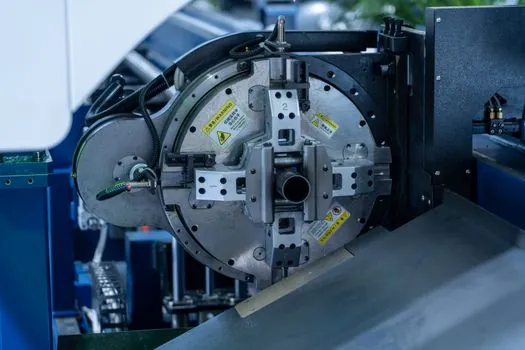
Buyers should anchor any CNC procurement on verifiable machine-tool and quality standards, including ISO 230 series for machine-tool accuracy tests, ISO 10791 for machining-centre test conditions, and customer-specific PPAP or aerospace AS9100 flow-down clauses, with CE marking and applicable IEC 60204-1 electrical-equipment safety declarations as the baseline for European-bound machines. A pragmatic sourcing checklist, drawn only from the supplied research, is: confirm the supplier's export track record (78-country footprint for BLIN is documented [S1]); confirm aerospace-programme references where claimed (AVIC project alignment is documented for Ningqing's Xi'an and Chengdu units [S2]); and confirm machine-class fit against the Askci segmentation so lathe, milling, laser, grinder, welder, and winder requirements are not confused at the RFP stage [S3].
Trackable next signals for the next quarter include: BLIN's CCMT 2026 booth activity (Hall N4, Booth A213, Shanghai, dated 2026-04-08 on the company news page [S1]); Ningqing's continued product-page updates on 5-axis dual-head and moving-crossbeam gantry platforms [S2]; and any 2025-2026 paid edition of the Askci NC Machine report that discloses the redacted CAGR and 2023 dollar value [S3]. For related industrial sourcing, see this conveyor sorting line spec guide for 2026 warehouse builds and this overhead bridge crane spec guide for quarrying, both of which address upstream material-handling decisions that feed a CNC cell's raw-stock flow.