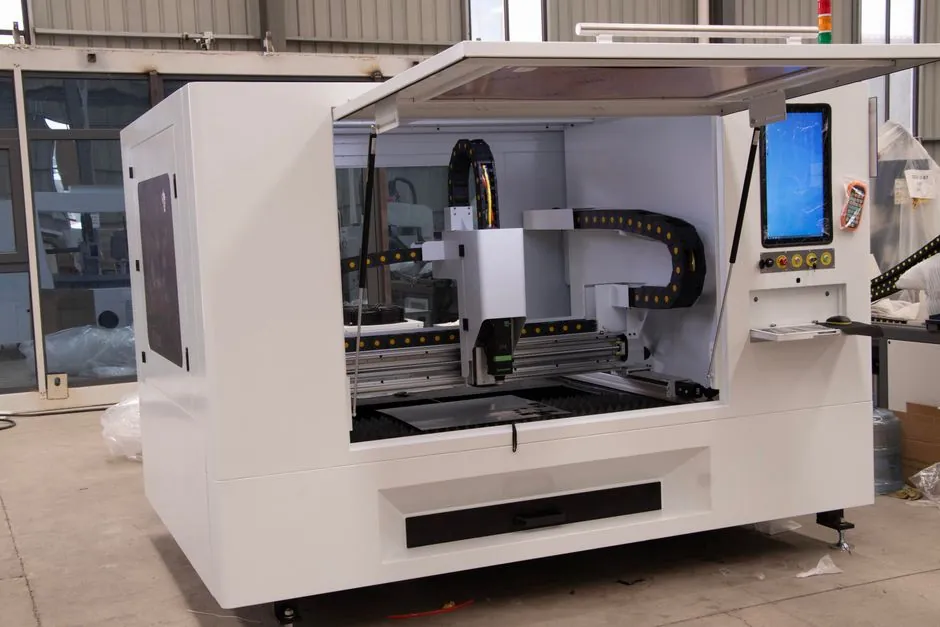
ISO 9001:2015 is the baseline QMS specified across Tier-1 and Tier-2 CNC job shops, with AS9100D layered on top for any shop holding aerospace part numbers and ITAR registration required for US defense work, per current vendor disclosures from a Kansas-based Tier-1 aerospace supplier operating since 1998 [S1].
Quality outcome data published by that same shop shows a 99% on-time delivery and quality scorecard across aerospace, agriculture, transportation, recreation, and military customers, supported by 77,000 sq. ft. of temperature-controlled floor space designed to hold thermal drift inside the linear-encoder envelope [S1].
Which standards actually govern a CNC machine build
ISO 9001:2015 defines the process-control and documentation discipline a CNC manufacturer must run; AS9100D adds the configuration-management, FAI per AS9102, and risk-based thinking clauses that aerospace primes require their Tier-1 suppliers to maintain [S1].
For machine builders, ISO 230-2 governs positioning accuracy and repeatability tests on each axis, while ISO 21920 (the successor to ISO 1302 surface texture) defines Ra parameter reporting; machine builders quoting 4- and 5-axis equipment routinely cite both when customers ask for a print-to-part trace [S1][S6].
Defense work adds ITAR registration, which is why the same vendor explicitly carries ITAR certification alongside AS9100D, and why procurement specs for military components must include the USML category and ECCN on every PO line [S1].
Acceptance criteria buyers should write into the PO
A spec-first PO for a CNC machined part sets three gates: geometric tolerance per ASME Y14.5 (GD&T), surface roughness Ra in microinches or micrometres per ISO 21920, and process-capability evidence (Cpk ≥ 1.33 short-run, ≥ 1.67 for safety-critical features). [S2]
For 3-, 4-, and 5-axis milling, the same envelope covers more than 50 stocked metals and plastics, including aluminum, copper, zinc, and magnesium, with a Swiss-type turning option for slender, high-aspect-ratio features that would whip on a standard lathe [S6].
Machine-side, buyers should also pin the work envelope in mm or inches, the spindle taper (BT30, BT40, HSK-A63, CAT40, NT40, NT50), and the controller family (FANUC, Siemens SINUMERIK, Mitsubishi M80) so the shop cannot swap to a smaller-frame machine after the order is released [S3][S5].
Machine-class comparison: what each tier delivers
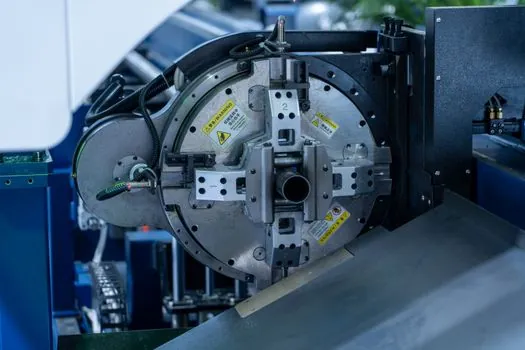
Entry-level single-tool CNC routers in 4x4, 4x8, and 5x10 ft sizes start around USD 12,900 and target short-run or one-off projects, while mid-range machines with an 8- to 12-position automatic tool changer sit in the USD 21,900-38,900 band [S3].
Industrial CNC platforms with FANUC controls, 12-position tool changer, and a 16.1 HP spindle start around USD 74,500 and are designed for sustained three-shift production where positioning repeatability has to hold over months of unattended cycles [S3].
On the milling-machine side, knee-type vertical mills typically offer 30-40 inches of X travel, 12-16 inches of Y travel, 5 inches of Z travel, R8 or NT40 taper, and 4,500 RPM spindles, while bed-type verticals scale up to 59 inches X, 20 inches Y, and 28 inches Z with NT50 tapers and 1,500 RPM geared heads for heavy stock removal [S5].
Specialised CNC routers for stone, foam, acrylic, and composites, plus high-speed 2D/3D engravers with ball screws and travels up to 1,400 x 1,050 mm, occupy a separate product lane where dust extraction, not coolant, defines the surrounding cell [S2][S4].
Who this standard stack is for, and who it is not
The ISO 9001 + AS9100D + ITAR stack is the right fit for shops bidding into aerospace primes, US Department of Defense supply chains, and Tier-1 automotive safety-critical components, where a single non-conformance can trigger an AS9102 re-FAI [S1].
It is overkill for a maker-space buyer, a sign shop, or a stone-countertop fabricator whose output is bounded by cosmetic, not geometric, acceptance; those buyers are better served by an entry-level 4x8 router with a FANUC control upgrade path than by an AS9100D-certified supplier [S3][S4].
Specifying AS9100D for a non-aerospace buyer adds 5-15% audit and FAI overhead that cannot be recovered on a one-off run, so the procurement signal to write into the RFQ is the standard matched to the end-use, not the highest standard the shop happens to hold [S1].
2026 sourcing signals and selection workflow
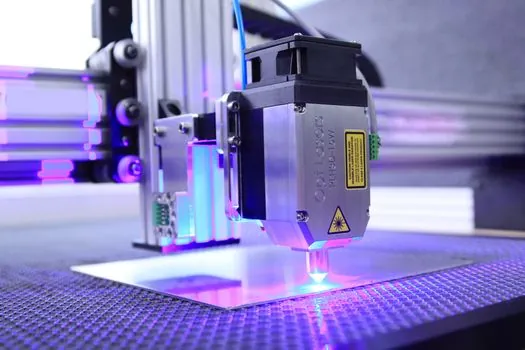
Current 2026 sourcing pages show Chinese OEMs (Elephant CNC, Xiongyi) competing on multi-axis milling and Swiss-type lathes with published factory-floor footprints and global shipping reach, while US-based assemblers (Millennium, Phantom, Sharp) compete on local service, FANUC control integration, and bundled QMS documentation [S2][S3][S5][S7].
European builders such as CNC-STEP continue to ship ball-screw routers with documented 1,400 x 1,050 mm envelopes plus heavy-frame steel mills reaching 8,000 x 2,600 mm, signalling that large-format 2.5D and 3D work in stone and composites is a separate, still-active equipment niche [S4].
Selection workflow for a 2026 buyer: lock the GD&T and Ra first, then fix the machine class by axis count and work envelope, then verify the QMS chain (ISO 9001:2015 baseline, AS9100D if aerospace, ITAR if ITAR-listed), and only then negotiate price, lead time, and Cpk evidence; this matches the spec-first approach used in adjacent spec-driven articles such as pipe clamp supplier selection and gantry crane selection for ports, where standards and dimensions are fixed before vendor shortlisting.
For defense-adjacent work, also cross-reference how federal-budget items are separated from non-defense product lines, since the same manufacturer may hold both POM and CNC capability with very different certification requirements, as detailed in POM selection for defense.
Trackable next signals: any 2026 update to ISO 230-2 test code revisions, the next AS9100 revision (D-2024 onward), and any FANUC controller firmware EOL that would force a re-spec of the control platform; for related process-engineering context, see our additive manufacturing material reference and the cutting machine spec pages and core machine spec pages on the encyclopedia side.