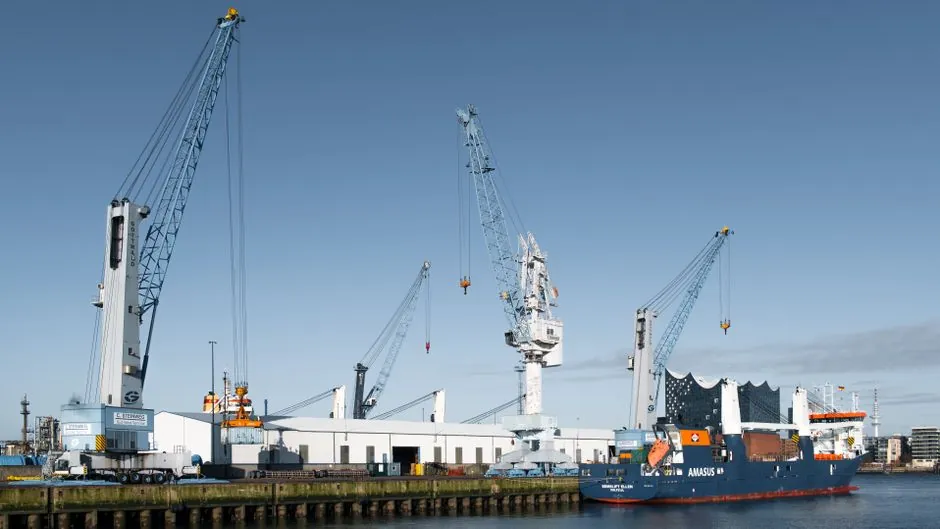
Rail-mounted gantry (RMG), rubber-tired gantry (RTG), and double-rail mounted gantry (DRMG) cranes are the three primary equipment families used in container yard stacking, with selection driven by automation intent, ground-bearing strategy, and stack density per hectare [S2].
Over 60% of global deep-sea cargo moves in containers, and yard handling equipment, including automated guided vehicles (AGVs) and RMG/RTG/DRMG cranes, is the lever terminals use to convert a fixed land footprint into higher throughput [S2]. A gantry crane is structurally a bridge crane set on two supporting legs that run on ground tracks, used for handling and erailing in open storage yards, shipyards, power stations, ports, and railway freight depots [S7].
RMG, RTG, and DRMG Compared on Four Decision Criteria
Selection between the three yard crane types is a four-axis decision: automation readiness, ground preparation cost, stack density, and weather exposure. RMG cranes run on fixed rails embedded in a civil foundation and are the default for fully automated, high-density blocks because the rail governs positional accuracy for twin-lift and automated trolley cycles [S2]. RTG cranes run on rubber tires across a paved or concrete-block yard, require no rail foundation, and remain the workhorse for brownfield or lower-density terminals [S2]. DRMG sits between the two, using two parallel ground rails for higher stability and longer spans than a single-rail RMG, and is the configuration Container Terminal Burchardkai (Hamburg) implemented as a triple-rail mounted gantry (TRMG) in 2012, with twin cranes on one rail set plus a large cross-over crane on its own rails [S2].
A practical comparison for terminal planners: RMG offers the highest stack density per hectare and the cleanest path to remote operation, but demands the largest upfront civil works. RTG is the lowest-capex option and is re-deployable when yard layouts change, but diesel-hydraulic RTG units have higher operating cost and emissions. DRMG/TRMG increases productivity per block when three cranes share one stack, at the cost of more complex anti-collision logic and inter-crane interference analysis [S2]. For projects that also need vessel-side heavy lifts, the yard crane decision should be cross-checked against a parallel mobile crane spec for ship-to-shore interface.
Structural Definition and Why Span Drives Drive Selection
A gantry crane's lifting mechanism, trolley running mechanism, and bridge structure are functionally identical to those of an overhead bridge crane, but the large span between the two supporting legs means most gantry crane operating mechanisms are driven separately to prevent skewing during travel [S7]. For a port yard, this span is typically the width of a container block plus lane allowance, often in the 30–50 m range, so drive synchronization, rail gauge tolerance, and wheel-rail contact become spec-level items rather than installation details.
For container yards specifically, span and stack height together determine lift-cycle time and therefore the number of cranes per block. A crawler crane is sometimes substituted for yard work during construction phases, but the in-service yard fleet is dominated by the gantry family because only gantry geometry clears a full container stack plus a transfer lane in one pass.
Automation Levels and the Path From Manual to Fully Automated
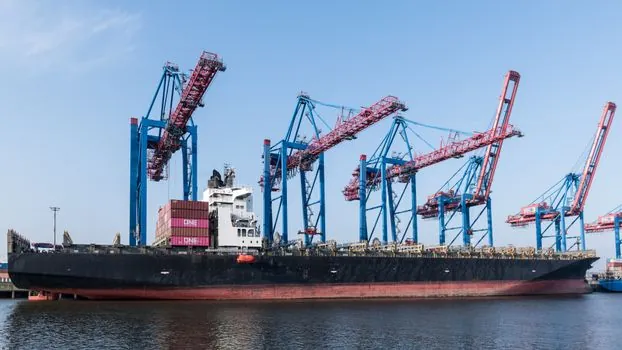
Automated RMG (ARMG), automated RTG (ARTG), and automated DRMG are the equipment categories most terminals evaluate when pursuing higher throughput without expanding land area; the trade-off is that adding a third crane to a block does not automatically raise productivity if the cranes interfere, which is why simulation is part of the procurement workflow [S2]. Vendor portfolios now expose this explicitly: Konecranes lists gantry cranes under its overhead-cranes product line and ties them to its Konecranes Portal and TRUCONNECT remote-monitoring platforms, with port customers using its zone tool to design their own terminal concepts before engaging engineering [S5]. Nante Crane likewise targets more than 30 industries from a single lifting platform, including construction, oil and gas, heavy machinery, port, warehouses, aerospace, and power station applications, after 30+ years of design and manufacture experience [S4].
For greenfield Asian and European automated terminals, the dominant configuration is twin-lift ARMGs on fixed rails, with DGPS- or transponder-based trolley positioning and anti-collision zones defined in the control system. For terminals modernizing an existing RTG fleet, the more common path is selective automation: remote operation, auto-steering on the rubber tires, and auto-spooling of the spreader, rather than full unmanned operation.
Operational Constraints: Wind, IP Rating, and Power Quality
Outdoor yard operation subjects every gantry crane to wind loading on the boom and trolley, rain ingress on electrical enclosures, and harmonics from variable-frequency drives (VFDs) in the hoist and travel motions. Two recent OEM technical posts frame the spec deltas: IP55 versus IP65 motor enclosures for overhead and gantry cranes, with IP65 specified where wash-down, coastal salt spray, or heavy dust exposure is expected, and IP55 retained as the cost-effective default for sheltered indoor duty [S3]. A companion post on wire-rope hoist drift after stopping ties hoist brake selection to VFD brake-delay settings, brake wear, and electrical faults, which is directly relevant to RTG hoist behaviour when the trolley decelerates near a stack [S3].
For port-yard engineers, the consequence is that the gantry crane bill of materials should pin motor enclosure class, brake type, and EMC/harmonic mitigation in the same spec section; otherwise a procurement team can receive IP55 motors with default braking on a machine that will sit in a Tier-1 coastal yard. Crane-scale weighing on the hook, used for load verification and overload protection, is a separate spec item that ties into the same drive architecture; a crane scale is typically added at the spreader block rather than the hoist frame on container-handling units.
Application Domains Beyond Container Stacking
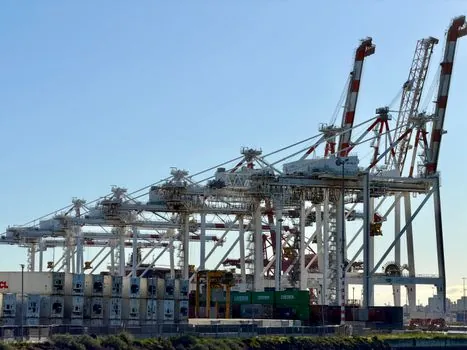
Gantry cranes are specified in at least seven non-container roles that port planners also need to consider: open storage yards for steel and project cargo, shipyards for hull and engine handling, power stations for turbine and transformer lifts, railway freight depots for container-on-flatcar transfer, oil and gas yards for pipe and module handling, precast concrete yards for beam and segment lifts, and bridge/highway segment casting beds [S6] [S4]. Nante's product line covers overhead, gantry, truss gantry, offshore, jib, launching, segment-lifter, and form-traveler variants, with green-energy, oil and gas, metal and steel, precast, and mining listed as active verticals [S4].
For project cargo or wind-energy marshalling yards adjacent to a port, the gantry crane is often paired with electric chain hoists or wire-rope hoists and a radio-remote control pendant; the Flex JX, EX, Mini, and Eco series radio controls listed by Gantry Cranes Australia are typical of the operator-control hardware now standard on single- and double-girder gantries [S1]. Lighting for night-shift yard operation, including high-bay LED floodlighting on the gantry itself and area lighting on the yard, is part of the same specification package; see lighting equipment and electric lamps for the lamp-side selection.
Selection Checklist for a Container-Yard Gantry Crane Spec
Eight items belong in a defensible 2026 gantry-crane specification for a port or terminal: (1) span and stack height with block layout; (2) lift capacity and twin-lift or single-lift configuration; (3) rail gauge and rail-embedment detail for RMG/DRMG, or paved-yard turning radius for RTG; (4) drive synchronization between legs and trolley to prevent skew on long-span units [S7]; (5) motor IP rating matched to coastal or dust exposure, defaulting to IP65 for marine terminals and IP55 for sheltered yards [S3]; (6) hoist brake and VFD brake-delay settings with drift acceptance limits [S3]; (7) automation level from manual through remote to fully automated, with anti-collision logic defined; (8) EMC and harmonic-mitigation provisions on crane control panels, including VFD line filters where adjacent terminal block cabinets feed signalling electronics.
For procurement teams that also need to weigh adjacent equipment lines, cross-references in the wider spec library cover comparable decision logic for related heavy-lift categories, such as the selection logic for rough-terrain and crawler equipment in construction yards at rough terrain crane selection and the structural-fit logic for tunneling projects at tunneling gantry crane selection.
Trackable signals over the next procurement cycle: (a) tender documents for new greenfield Asian and Middle-East terminals that disclose RMG versus DRMG block configurations; (b) OEM updates to ARMG/ARTG controller firmware that bundle anti-collision with VFD braking; (c) port-operator disclosures of RTG-to-ARMG conversion projects, since the retrofit economics are the most likely swing factor in 2026-2027 capex decisions.