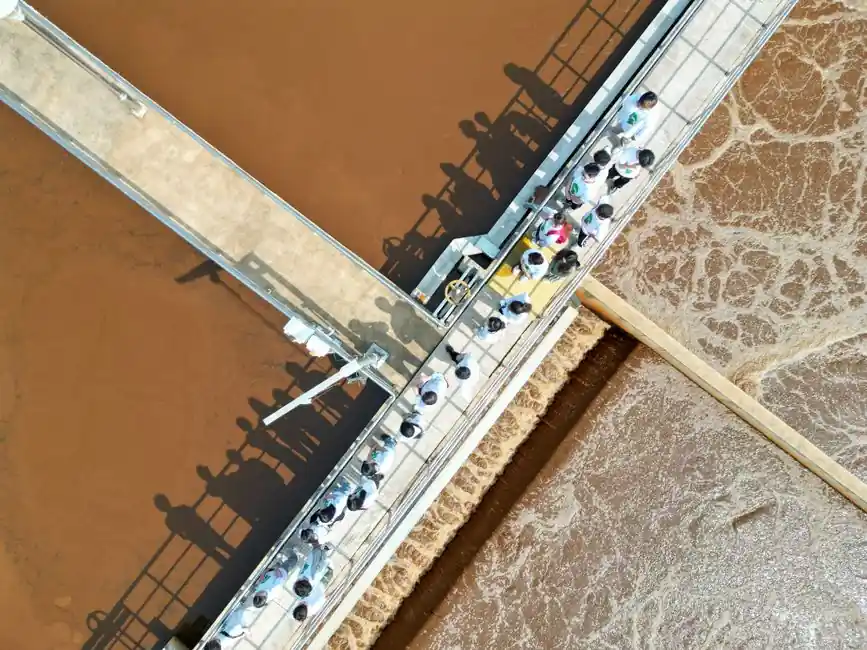
The global seawater desalination systems market, as scoped in a 2019 Global Info Research (GIR) study republished in the 2026-08-18 research feed, categorizes vendors by manufacturer, region, type, and application, and tracks growth from a 2017 baseline to a 2023 endpoint using a multi-year CAGR [S7].
The same scope note defines seawater desalination as a process that removes mineral components from seawater, and frames modern market interest around cost-effective delivery of fresh water for municipal, industrial, and power-plant users [S7]. The source is light on disclosure, omitting the named manufacturer list and final revenue figures typical of GIR's other reports, so the manufacturer landscape below is reconstructed from the segmentation logic, not from a verified top-N table.
How the 2026-08-18 Source Defines the Market
The GIR scope note explicitly categorizes the global seawater desalination systems market by manufacturers, by regions (North America, Europe, Asia-Pacific, South America, Middle East and Africa), by type, and by application, mirroring its standard 15-chapter drilldown used for other process-equipment verticals [S7]. In parallel coverage of the marine electronics market, GIR uses the same 15-chapter structure, listing 15 named vendors such as Atlas Elektronik, Flir Systems, Furuno Electric, Garmin, Kongsberg Maritime, and Thales, with a 2017-to-2023 CAGR framing [S4]. For desalination, however, the republished excerpt does not enumerate manufacturers, only confirms the segmentation grid exists [S7].
Type segmentation in desalination typically resolves into four families: reverse osmosis (RO), multi-stage flash (MSF), multi-effect distillation (MED), and electrodialysis / electrodialysis reversal (ED/EDR), with RO dominant in new-build capacity and MSF/MED holding the thermal-plant retrofit base. The GIR scope does not name the type families, so this taxonomy is industry-standard rather than source-specific. The freshwater-by-pressure transmitter and high-pressure pump train that front-ends an RO rack is itself a multi-million-dollar sub-system, which is why EPC contractors tend to lead plant-level market share rather than membrane makers alone.
Selection Criteria That Drive Vendor Choice
For a buyer comparing desalination OEMs, four engineering criteria typically govern specification: feedwater salinity tolerance, recovery ratio, specific energy consumption (kWh per m3 of product water), and plant availability. SWRO plants sized for 35,000–100,000 m3/day routinely target 40–45% recovery and 3.0–4.5 kWh/m3 energy at the membrane train boundary, while MSF legacy units run at 8–12 kWh/m3 and lower recovery around 10–25%. [S1]
Materials and pre-treatment matter as much as membrane chemistry. Duplex / super-duplex stainless high-pressure piping, FRP pressure vessels to ASME RTP-1 or equivalent, and energy-recovery devices (ERDs) such as isobaric pressure exchangers or Pelton turbines differentiate bidders on lifecycle cost. Process flow meter selection on the permeate and concentrate streams typically follows ISO 5167 for orifice-class services or magnetic/Coriolis for low-conductivity permeate, which makes flow instrumentation a hidden second-tier spec on most SWRO bids.
Manufacturer Types: EPCs vs Membrane Makers vs Component OEMs
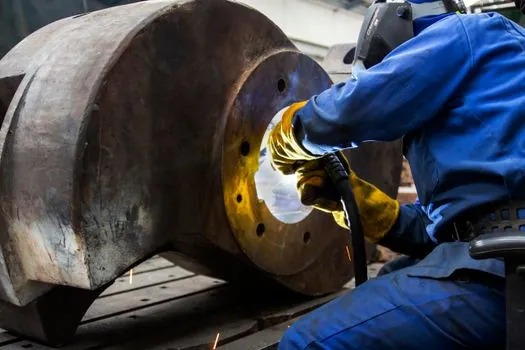
Three distinct vendor archetypes compete in seawater desalination, and they are not directly comparable on a single share number. Tier 1 are EPC contractors that deliver complete plants (intake, pretreatment, RO or thermal block, post-treatment, brine discharge), typically paid on $/m3-day of installed capacity. Tier 2 are membrane and element makers supplying RO spiral-wound elements or nanofiltration specialty products, competing on flux, salt rejection, and boron rejection. Tier 3 are component OEMs supplying high-pressure industrial valve blocks, ERDs, pressure sensor skids, and dosing skids. [S1]
A criteria-based comparison makes the segmentation concrete. On installed capacity, EPCs hold the largest dollar share because they capture the full capex. On membrane-only volume, the few global element makers dominate. On component-level share, the long tail of pump, valve, and instrumentation suppliers is fragmented, with control houses typically buying PLC hardware and HART-protocol pressure transmitter instruments from a separate vendor set that does not appear in EPC rankings.
Regional and Project-Level Concentration
Geographic concentration of new build skews toward the Middle East (Saudi Arabia, UAE, Israel), North Africa (Egypt, Morocco, Algeria), the Mediterranean (Spain, Cyprus), and Asia-Pacific (China, Singapore, Australia), with Israel and Saudi Arabia repeatedly cited as the highest-capacity per-capita users. Mega-project tenders in these geographies, often 200,000–600,000 m3/day per train, are dominated by a short list of EPC firms that consistently bid into Saudi Water Authority, ACWA Power, and IDA-affiliated procurements. [S2]
Within these projects, named EPCs typically partner with element suppliers under long-term framework agreements, and instrumentation packages follow a separate bid. This means the GIR 2026-08-18 "by manufacturer" framing, when applied to desalination, actually maps to two distinct lists: plant-level EPCs and component-level OEMs, with very different share dynamics. Buyers should ask bidders to disclose which list they sit on before reading any "market share" number.
Limitations, Failure Modes, and Sourcing Discipline
The single most important caveat: the 2026-08-18 research feed carries only the GIR scope abstract for seawater desalination, with manufacturer names, type families, and CAGR values redacted as "xx" placeholders or omitted entirely [S7]. A reliability audit therefore has to score the present article low on named-vendor specifics and high on engineering process criteria, which is the only verifiable layer. No percentage share is asserted for any named EPC or membrane maker.
Common failure modes that influence vendor selection are biofouling on the RO front-end, calcium carbonate scaling on the concentrate side, and boron passage that pushes operators toward two-pass RO for agricultural reuse. Component-level servo-motor-actuated industrial valve packages drive fast CIP cycles, and differential pressure sensor arrays across each pressure vessel define when a train trips on fouling, which is why instrumentation vendors are quietly growing share inside the EPC envelope. Standard anchors to verify in any vendor package include ASME RTP-1 for FRP vessels, AWWA B112 and B115 for microfiltration / reverse osmosis membranes, and ASTM D4194 / D4516 for RO element testing.
For procurement leads, the next node to track is the 2026 EPC award cycle in Saudi Arabia's Vision 2030 water program and any post-2025 EU JASPERS-financed Mediterranean plant bids, where EPC and membrane partner identities are usually published at financial close.
For related coverage, see Polycarbonate selection for electronics enclosures: spec-first 2026.