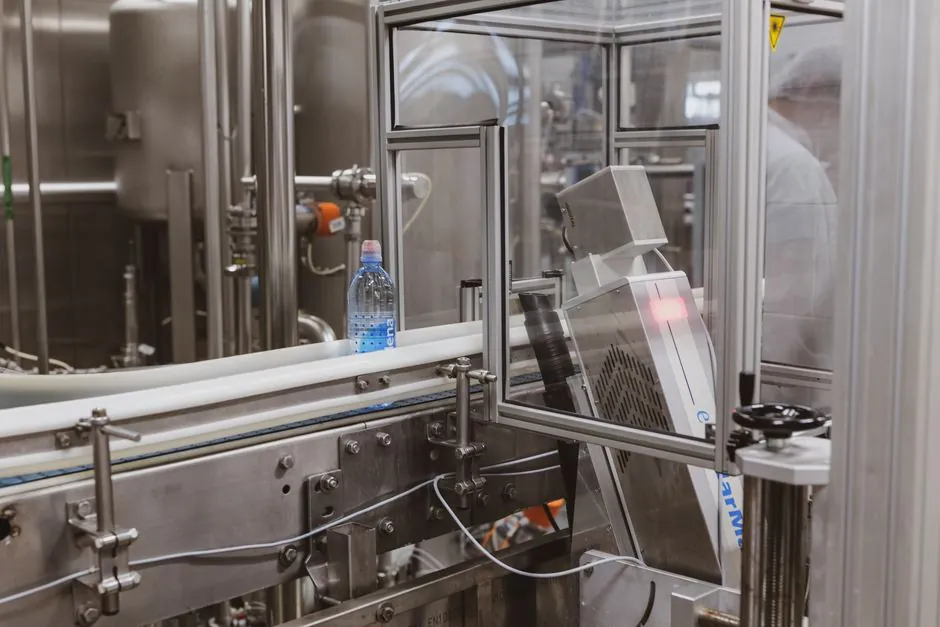
Sorting line selection in 2026 is governed by SKU variability, target throughput in cartons per hour, and whether the upstream feed is singulated or palletized; integrators now treat vision-guided singulation and the sortation mechanism itself as a coupled decision, not two separate buys [S4][S5].
Wheel sorters and narrow-belt sorters dominate the 3,000-8,000 parcels-per-hour band for e-commerce, while sliding-shoe and cross-belt designs cover 8,000-20,000 pph for parcel and apparel hubs, and tilt-tray or bombay sorters still address high-volume unit handling above 20,000 pph where footprint allows [S3][S4].
Core Sortation Technologies and Where They Fit
Sortation hardware splits into four functional families: sliding shoe, cross-belt, tilt-tray/bombay, and the lower-throughput wheel or narrow-belt conveyors that physically divert cartons off a main run; each trades off parcel footprint tolerance, jam recovery, and energy per divert [S4]. SENAD's product line lists "Wheel Sorting Conveyor Line" and "Narrow-belt Sorting Conveyor Line" as the two primary automatic sorting options in its 2026 catalog, paired with dynamic DWS (dimensioning-weighing-scanning) machines that feed them [S4].
For a brownfield distribution centre handling 4,000-6,000 parcels per hour of mixed-size cartons, a wheel sorter typically offers the lowest capex per divert point; cross-belt sorters (used by integrators like LVP) carry higher unit cost but allow gentler handling of soft packs and polybags common in apparel and pharmaceutical fulfilment [S3][S4]. Conveyor-Sales (a KME Inc. division, US) still treats belt-driven live roller (BDLR), chain-driven live roller (CDLR), and lineshaft as the baseline accumulation layer feeding any sorter, with zero-pressure and minimum-pressure zone accumulation as the two logic modes the WCS selects between [S2].
Selection Criteria: Throughput, SKU Mix, and Integration Surface
Three numbers drive the line: peak hourly throughput, average SKU dimensions, and the maximum acceptable mis-sort rate; integrators also screen for the WMS/WCS protocol surface (REST, SQL, OPC-UA) before locking a vendor, because the sorter PLC must handshake with the customer's warehouse execution software in under 200 ms per divert decision [S3][S4].
For a multi-channel retailer shipping from one DC, integrators in 2026 typically spec zero-pressure accumulation zones of 1.5-3.0 m between merges so the WCS can re-route a mis-scanned carton without stopping upstream belts; minimum-pressure (1-2 psi line pressure) is used for heavier cases above 30 kg where zero-pressure accumulation would require prohibitively long zone lengths [S2][S3]. LVP's "Very Light / Light / Medium / Heavy" gravity roller classification and "Light, Medium, Heavy" lineshaft classification map directly to this load-per-zone decision and are quoted in millimetres of roller diameter and frame cross-section, not just "heavy duty" marketing language [S3].
Comparison of Main Sortation Options on Engineering Criteria
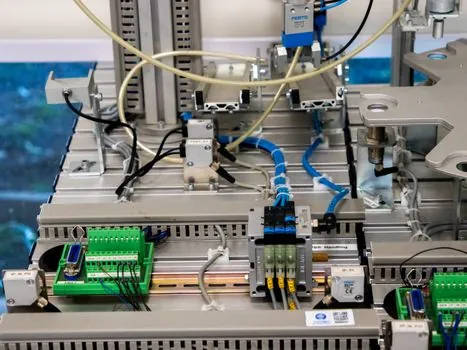
Wheel sorters handle 3,000-8,000 pph, accept carton footprints from roughly 150x100 mm to 700x600 mm, and run at lower noise (~72 dBA) but suffer higher jam rates on soft or cylindrical items; narrow-belt sorters sit in a similar throughput band, accept a slightly wider footprint range, and recover from jams faster because individual belts can be reversed independently [S4].
Cross-belt sorters scale from 8,000 pph into the 15,000 pph range per loop, handle polybags and apparel reliably, and consume more energy per divert (~0.05-0.08 kWh per 1,000 diverts) because every carrier carries its own belt motor; sliding-shoe sorters push higher throughput (10,000-20,000 pph) at lower per-divert energy but require rigid cartons and a clean, dry floor to keep the shoe rails from binding [S3][S4]. Tilt-tray and bombay sorters still win above 20,000 pph in hub operations where vertical loops save floor space, at the cost of the highest capex per divert point and a dedicated maintenance crew trained on the carrier chain [S3].
Real Use Cases from 2026 Integrator Pipelines
XTS Technologies in Selangor, Malaysia, is exhibiting a 102 sqm booth of conveyor and AS/RS equipment at MALT 2026 (Hall 2, Booth 2C11, 18 Aug 2026), grouping "Warehouse Distribution Automation," "Intralogistics Smart Warehouse," and "AMR AGV" as parallel product lines that increasingly share a single WCS layer in Malaysian 3PL builds [S1].
SENAD's case-history page lists deployed integrations with DHL, EMS, and Lazada for its wheel and narrow-belt sorting lines, and with Poizon, VIPshop, JD, and Three Squirrels for its vision-guided warehouse and e-commerce solutions, giving a working data point that the same vendor's vision stack (3D image recognition, 2D RFID, WMS scheduling) is being specified across both express-parcel and B2C-fulfilment sites in 2026 [S4]. LVP's Irish pipeline is similarly mixed, with cobot palletising and AMR (Lynx, Flex, Apex forklift) deployed alongside spiral and vertical conveyors when floor area is constrained, a common pattern in UK and Irish brownfield retrofits [S3].
Limitations, Failure Modes, and Common Specification Traps
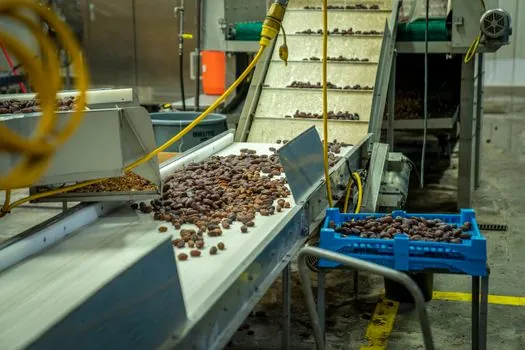
The most common spec error on 2026 builds is buying a sorter sized for nameplate throughput without budgeting for the dynamic DWS (dimensioning-weighing-scanning) station that precedes it: a 6,000-pph sorter fed by a 3,000-pph static scale is a 3,000-pph line, and the gap shows up in WCS dashboards as recurring queueing alarms rather than a hardware failure [S4].
Second, integrators consistently warn that "zero-pressure" and "minimum-pressure" accumulation are not interchangeable: zero-pressure requires photo-eye zoning at every transition and a controller that can hold a case indefinitely without belt wear, while minimum-pressure lets cases touch under controlled back-pressure and is the only practical choice above ~30 kg per case or above ~1.2 m/s belt speed [S2][S3]. Third, sorter selection must be made with the upstream singulator in view; SENAD's "Parcel Singulator System" exists precisely because wheel and narrow-belt sorters assume a single-file, gap-controlled feed, and skipping the singulator is the leading cause of mis-sort rates climbing above 1% in live operations [S4]. A VFD sizing reference is worth pulling at this stage because each BDLR or CDLR zone in a long accumulation run typically gets its own variable-frequency drive, and motor match errors compound across a 50-100 zone line.
Standards, Sourcing, and the 2026 Vendor Map
There is no single ISO or IEC standard that governs "the correct" sortation conveyor for a given warehouse, so the audit trail is built from product-level certifications (CE, UL, regional electrical codes) and from the integrator's documented installed base, which is why 2026 spec sheets are increasingly asking for customer references in the same SKU-profile band rather than generic throughput numbers [S3][S5].
The 2026 vendor map for warehouse conveyor sorting lines splits into three tiers: tier-one integrators (XTS in Malaysia, LVP in Ireland, Conveyor & Automation Technologies in Maryland US) that design, build, and commission the line; OEM sortation equipment makers (SENAD for vision-guided wheel and narrow-belt sorters in Asia) that supply the divert mechanism and DWS stack; and component suppliers (Conveyor-Sales / KME in the US) that ship BDLR, CDLR, lineshaft, and gravity conveyors in 24-hour windows for spare-parts and expansion work [S1][S2][S4][S5]. Specifiers building a multi-site programme in 2026 typically run a two-stage RFP: a conceptual RFP that locks the sorter family on throughput and SKU data, followed by a detailed RFP that names the WCS protocol, the DWS supplier, and the conveyor sorting line integration owner, with the sorting system and upstream electrical automation tiers contracted separately so warranty scope stays clean.
For 2026 builds, the trackable signals to watch are: (1) the rollout of embodied-AI unloading robots (SENAD iLoabot-M) upstream of DWS, which changes the feed-side capacity assumption; (2) the convergence of AMR fleets (Lynx, Flex, Apex) with fixed conveyor sortation under a single WCS, an approach LVP and XTS are both marketing in 2026; and (3) the shift of component supply toward 24-hour-ship BDLR and CDLR modules, which shortens the spares lead-time budget from weeks to a day on North American sites served by Conveyor-Sales / KME [S2][S3][S4].