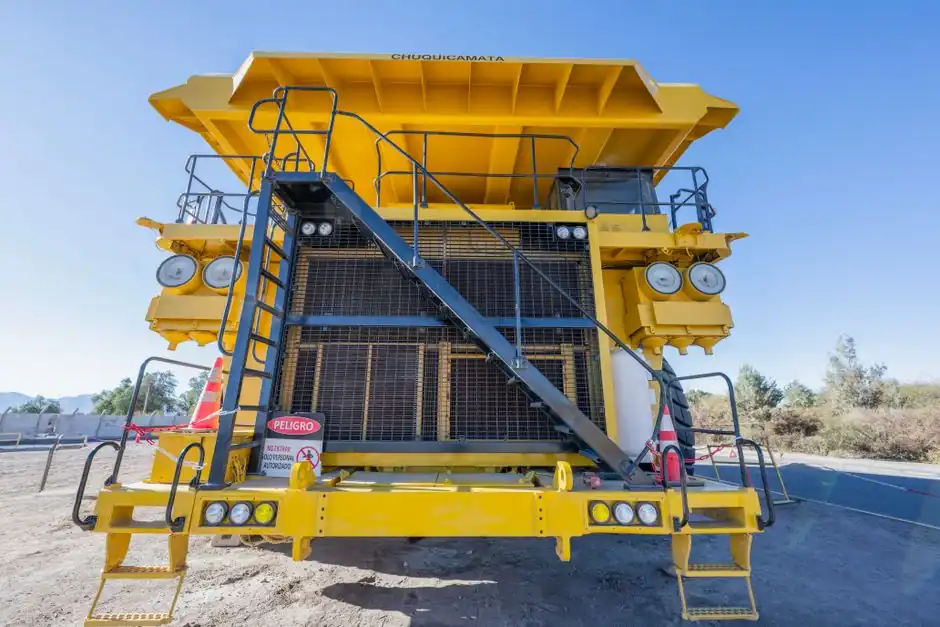
The mining equipment market is dominated by four global majors (Caterpillar, Komatsu, Sandvik, Epiroc), a strong second tier of regional OEMs, and a long tail of specialised manufacturers serving narrow applications from gold recovery to granite cutting, with the underground equipment segment alone valued at USD 24.03 billion in 2023 [S6].
Market growth is propelled by a near-doubling of global mining production from 11.3 billion metric tons in 2000 to 16.9 billion metric tons in 2016, with mineral fuels including coal accounting for 85.2% of total mining extraction in 2016 and Asia producing 58.2% of global mineral output, led by China as the world's top producer of 28 different mineral raw materials [S5].
Tier 1: Global OEMs Controlling Surface and Underground Fleet Supply
Tier-1 mining equipment manufacturers (Caterpillar, Komatsu, Sandvik, Epiroc) control the heavy-equipment segment: large hydraulic excavators, mining dump trucks in the 100–400 t class, autonomous LHDs, and longhole production drills. Mining equipment is defined as machinery used in the process of extracting metal and mineral ores from the earth, including the drill, blast, load, haul, and processing stages [S7]. These four OEMs typically compete on total cost of ownership, fleet telematics integration, and parts logistics rather than headline machine price, because the mine's operating cost over 60,000 engine hours usually exceeds purchase price by 4–6×.
Underground equipment (LHDs, drill jumbos, bolters, ventilation fans, and dewatering pumps) is the fastest-growing sub-segment: the global underground mining equipment market was valued at USD 24.03 billion in 2023 and is projected to grow to USD 35 billion by 2035 at a 3.18% CAGR, per MRFR analysis [S6]. The CAGR is conservative compared with surface because of longer underground fleet replacement cycles, but the addressable spend is expanding as deep orebody mining rises.
Tier 2: Chinese, Indian, and Regional Specialists Holding the Mid-Market
Chinese manufacturers (JXSC Mine Machinery Factory, Hebi Wanfeng Mining Machinery) supply crushing, grinding, magnetic separation, flotation, and dewatering equipment at price points 30–50% below Western OEMs, and typically lead the gold, iron, and rare-earth processing niches [S3][S8]. JXSC's catalogue spans jaw, cone, hammer, and roller crushers, ball/Raymond/rod mills, jig concentrators, spiral chutes, wet and dry magnetic separators (drum, disc, vertical-ring high-gradient), JJF/XJK/SF/XCF/KYF flotation cells, and trommel/rotary scrubber washing lines, a full flowsheet that single-line Western OEMs rarely match [S3].
Indian suppliers such as miningequipment.in (an India-based global distributor of Atlas Copco, Chicago Pneumatic, and Vikay branded rock drills, drifters, DTH hammers, wagon drills, ventilation fans, and slurry pumps) and J.B. Engineers (wire saw machines, LD4 drilling machines, hydraulic jacks, mining air bags, wagon drill machines) serve the stone-processing and dimensional-stone quarry segment for granite, marble, and limestone, and the underground small-section drilling segment [S1][S2]. J.B. Engineers lists over 35 years of manufacturing experience and runs CNC turning, milling, sheet-metal fabrication, and OEM/aftermarket services, an indicator of the contract-manufacturing depth available in this tier [S2].
Selection Criteria: Matching Manufacturer to Mining Application
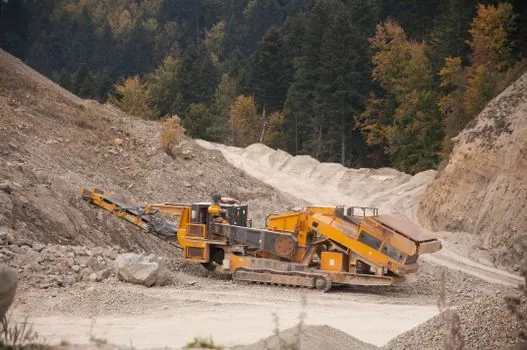
Selection is driven by four decision criteria: (1) production class, (2) duty cycle, (3) after-sales coverage, and (4) integration with existing fleet telematics. For a 30–50 t class dump truck or a 100–200 t hydraulic excavator in a high-tonnage open-pit operation, Tier-1 OEMs are essentially the only credible source; for a 50 t/h mobile crushing plant, a 2–5 t/h ball mill, or a 10–250 kg gold-melting furnace, a Chinese Tier-2 supplier delivers the lowest CAPEX at acceptable MTBF [S3]. Stone quarrying (granite, marble, limestone) is dominated by Indian and Italian specialists, not the heavy-machinery majors; selecting a Tier-1 excavator for a stone wire-saw operation is the classic mistake this market tier structure prevents.
Duty cycle drives spec: a production LHD operating 6,000–7,000 hr/year on a ramp needs Tier-1 telematics and OEM service contracts, while an artisanal gold recovery plant running 8 hr/day tolerates Chinese-supplied shaking tables and centrifugal concentrators with field-serviceable bearings [S3]. After-sales coverage is the single most common reason a mine switches OEM, so suppliers with parts depots inside the host country typically retain the contract over the equipment's full economic life, even when the original machine was a low-bid import.
Mineral-Processing Equipment: A Separate Manufacturer Map
Mineral-processing equipment (crushing, grinding, magnetic separation, flotation, dewatering) follows a different competitive map than mobile mining equipment, and the 2018 GIR / AskCI mining-separators report still frames the segment around three product types: magnetic separators, hydrocyclone separators, and non-ferrous metal separators, capable of simultaneously separating up to 6 magnetic products of different grade or type in one single pass [S4]. The 15-vendor set profiled in that report (Flottweg, Tega Industries, Multotec, Dings Magnetic Group, DOVE Equipment & Machinery, MAGNETIX, STEINERT, Magnetics Europe, Salter Cyclones, Excel Magnetics, Bunting Magnetics Europe, Eriez Manufacturing, MTB Group, and others) overlaps only partially with the mobile-equipment majors, because separation is a process-engineering discipline, not a mechanical-haulage discipline.
For the buy side, the practical implication is that a mine's procurement organisation typically maintains two separate approved-vendor lists: one for mobile fleet (driven by Caterpillar, Komatsu, Sandvik, Epiroc, and major Indian/Chinese regionals) and one for process plant (where the supplier base widens to include Western process specialists, Indian process OEMs, and Chinese full-flowsheet suppliers such as JXSC) [S3][S4]. The two lists should be re-evaluated every 3–5 years, because Chinese process-equipment vendors have closed most of the historical quality gap in crushing, grinding, and flotation over the past decade.
Limitations, Lead Times, and Failure Modes to Track
Three failure modes consistently trip buyers of mining equipment. First, Tier-2 Chinese and Indian suppliers typically quote 8–16 week ex-works lead times plus 4–8 week sea freight, so total delivery stretches 12–24 weeks versus 4–10 weeks for major Western OEMs; this is the single largest cause of mine-startup delays on greenfield projects. Second, pressure transmitter and flow meter instrumentation supplied as part of a Tier-2 processing plant often ships without the IECEx or ATEX certification that the host mine's hazardous-area classification requires, forcing a retrofit before commissioning. Third, lighting equipment and electric lamps on underground mobile equipment is a common warranty-dispute category, because LED retrofit kits from third parties frequently outlast the OEM-supplied halogen or HID lamps by 2–3× but are not always covered under the original equipment warranty. [S3]
Buyers should also expect that NDT equipment requirements (ultrasonic thickness gauging on haul-truck frames, MPI on drilling-tool shanks, eddy-current on hoist ropes) typically follow ASTM E114, ASTM E709, and ASTM E165, not OEM-specific procedures, so non-OEM NDT providers can be used without invalidating warranty in most jurisdictions, a useful lever for tier-2 fleet owners who cannot afford OEM hourly service rates [S1].
Standards and Sourcing References for the Buyer
Mining equipment sourcing is anchored to a layered standards stack: ISO 12100 (machinery safety, the baseline), ISO 3457 (earth-moving machinery safety), ISO 50001 (energy management for mine operators, increasingly required by ESG auditors), and the IEC 60079 series for explosion-protected equipment in gassy underground mines (coal, oil shale, potash). Buyers specifying new underground mobile equipment in coal should confirm IECEx or ATEX 2014/34/EU certification for the engine enclosure, hydraulic system, and electrical compartments; for surface equipment, the relevant standards are typically ISO 6014 and ISO 7131 for hydraulic excavators and ISO 3450 for braking systems on mining dump trucks. [S3]
For a 2026 procurement cycle, the practical signals worth tracking are: (a) the MRFR underground equipment forecast (USD 35 billion by 2035 at 3.18% CAGR, which implies a sustained 1.5–2× growth over the next 9 years and continued capacity tightness on long-lead items such as drill jumbos and production LHDs) [S6]; and (b) the ongoing process-equipment share shift toward Chinese full-flowsheet suppliers like JXSC, where a single vendor can supply the crusher, mill, separator, flotation cell, and dewatering screen as a matched flowsheet, a procurement model that reduces interface risk on greenfield process plants [S3]. Buyers running tender evaluations for a 2026–2027 capex spend should size the supplier map by both mining method (surface, underground, quarry) and process stage (comminution, separation, dewatering), because the two axes select different vendor sets. A seawater-desalination comparison of manufacturer landscapes illustrates the same principle: vendor shortlists must be structured by application, not by global revenue rank, and mining equipment follows that exact pattern.