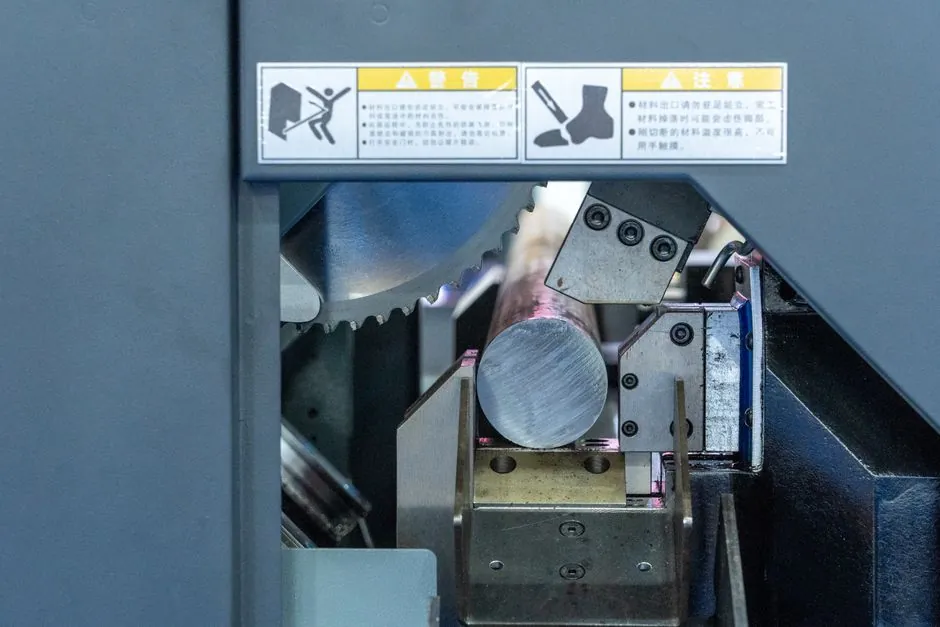
China CNC machining hourly rates run USD 20–60 for 3-axis and USD 60–140 for 5-axis work as of mid-2026, undercutting U.S. and European shops by roughly 40–60% on like-for-like parts [S5][S3].
Pricing is the headline, but the variables that decide whether a project ships on tolerance, on schedule, and within budget are tolerance capability, lead time, landed cost, and verifiable quality systems; China wins on cost, but only a structured evaluation prevents the 26% landed-cost premium that poor factory selection can trigger [S5].
Tolerance Capability and Process Selection
Standard 3-axis milling in Chinese shops holds about ±0.01–0.02 mm, while grinding and EDM can tighten further when the process is stable, so buyers must match the tolerance class to the process, not to the country of origin [S1].
Equipment breadth now typically includes 3-axis, 4-axis, and 5-axis milling centers, CNC turning centers, Swiss lathes, grinding, EDM, and wire EDM, with CMM inspection for first-article and in-process checks; a supplier quoting ±0.005 mm 5-axis work without digital DFM and traceability is a risk once volumes exceed roughly 5,000 pieces [S1][S2][S4]. The four most common yield-killers on imported parts are undeclared tolerance stack-up, inaccessible features that force EDM, process-material mismatches (e.g. high-feed tooling on titanium), and missing first-article data; suppliers that review drawings before quoting catch these before the CNC program is cut [S1][S2].
For an internal sourcing checklist, treat ±0.05 mm as the default prototype envelope, ±0.01–0.02 mm as standard production, and anything tighter as a grinding or EDM conversation with CMM evidence attached. Buyers pairing precision parts with downstream equipment builds can cross-reference the tolerance discussion against linear guide and crossed-roller guide selection, where similar ±0.005–0.01 mm class positioning accuracy is expected from premium suppliers.
Cost Structure: Hourly Rate vs Per-Part vs Landed
A typical 6061 aluminum bracket runs USD 20–55 in China versus USD 60–150 in the U.S., a 40–60% reduction, but the quote is only one of eight cost components: material, setup and programming, machine time, tooling, finishing, inspection, overhead, and shipping [S3][S5].
Volume discounts are steep once you ask for them. Tier 2 orders deliver an average 37.4% unit-price reduction and Tier 3 orders 53.8% versus Tier 1 prototype pricing, yet only about 25% of buyers request multi-tier quotes from the same supplier; the leverage is on the buyer's side, and not using it is leaving roughly a third of the savings on the table [S5]. A useful benchmark table for negotiation:
Process | China USD/hr | U.S./EU USD/hr 3-axis milling | 20–60 | 55–150 4-axis / 5-axis milling | 50–140 | 110–300 CNC turning | 20–40 | 50–130 Swiss machining | 50–90 | 120–250 Wire EDM | 30–60 | 80–180
Sources: Haizol, StyleCNC, Machining-Custom industry benchmarks, mid-2026 [S5][S3][S2]. On the ownership side, a CNC vertical machining center sourced from China costs USD 25,000–40,000 and breaks even against outsourced service at roughly 1,500–2,500 parts per year, so buyers running repeatable high-volume brackets should model ownership in parallel with outsourcing [S3].
Lead Time and Freight Routing

Machining time is only one slice of the schedule; material availability, finishing, inspection, and freight all add days, and the choice between air and ocean can swing the timeline by two weeks or more [S1].
Working-day ranges from established Chinese suppliers in 2026: prototypes (1–50 pieces) 3–7 days, low-volume runs (50–200 pieces) 7–10 days, and production runs (200+ pieces or multi-process) 2–3 weeks or longer when surface treatment or specialty alloys are involved [S1]. Freight adds: air express (DHL, FedEx, UPS) 3–5 days door-to-door; ocean fast service 18–25 days to North America and 15–20 days to Europe; standard ocean 30–40 days to North America and 25–35 days to Europe [S1]. Two practical rules: confirm in writing whether an ocean quote is fast or standard service, and on prototype runs under five units, expect an average of 18.7 competing quotes with a 98% commitment rate on platforms like Haizol, which is enough leverage to compress lead time as well as price [S5].
Quality Systems and Industry-Specific Certification
ISO 9001 is the baseline; ISO 13485 signals medical-device process discipline, and IATF 16949 is the practical gate for anyone shipping machined parts into automotive PPAP, with the additional submission paperwork and traceability that entails [S1][S7].
For automotive programs, the question is not whether the shop has IATF 16949 but whether it can actually run a PPAP package with a Chinese supplier, including design records, control plans, FMEAs, and initial sample dimensional reports, because the standard requires evidence that offshore volume production can hold the same capability as the sample approval [S7]. Aerospace and medical buyers should look for AS9100 or ISO 13485 plus material traceability back to mill cert, while consumer and industrial buyers can usually accept ISO 9001 with documented first-article and in-process inspection. Across all sectors, the verifiable artifacts (CMM reports, material certs, calibration records) matter more than the marketing claim of high precision [S1][S2][S4].
Supplier Vetting: What to Verify Before the First PO
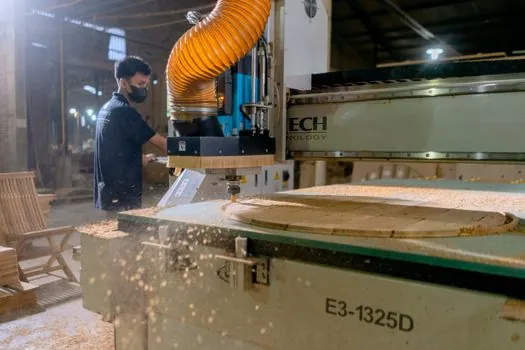
Eight factors consistently separate reliable Chinese CNC suppliers from the rest: company experience, machining capabilities, quality control, engineering support, production capacity, sample consistency, communication efficiency, and industry-specific expertise [S2].
A practical pre-PO workflow: (1) request the business license, ISO/IATF certificates, and a list of CNC equipment by brand and axis count; (2) confirm maximum machining envelope, achievable tolerances, and whether the shop owns a CMM; (3) order a paid sample batch (5–10 pieces) before any production PO and inspect it on a calibrated gauge, not just visually; (4) ask for three reference customers in your industry and a sample PPAP or FAI report from a comparable part; (5) clarify whether pricing is FOB, EXW, or DDP and whether tariffs are included [S1][S2][S6]. Tools like the cutting machine and filling machine reference pages follow the same evidence-first principle: machine capability, verified tolerances, and process documentation outrank glossy capability lists. For broader sourcing context, the connector manufacturing cost breakdown article walks through a similar landed-cost model that applies to machined parts as well.
Decision Triggers: Outsource vs Buy Your Own CNC
Outsourcing wins on low-volume prototype and variable-part work; ownership wins on high-volume repeatable parts, and the break-even sits at roughly 1,500–2,500 parts per year depending on complexity [S3].
Choose outsourced service when annual volume is below the break-even, when part mix changes every run, when capital is tied up in product rather than tooling, or when in-house metrology cannot match the supplier's CMM. Choose ownership when volumes are stable and high, when intellectual-property risk on the part design is acute, or when lead-time compression is worth the USD 25,000–40,000 machine investment plus operator, fixturing, and maintenance overhead. Hybrid models are common: outsource prototyping and low-volume work, and bring stable production parts in-house once the design freezes. Trackable signals worth monitoring: China's 63.3% share of small-batch (≤50-unit) CNC demand, 43.3% of RFQs sitting at 1–5 unit prototypes, and the global CNC machine market's projected rise from USD 79.2 billion in 2025 to USD 194.3 billion by 2034 with Asia-Pacific near a third of revenue [S5][S3].