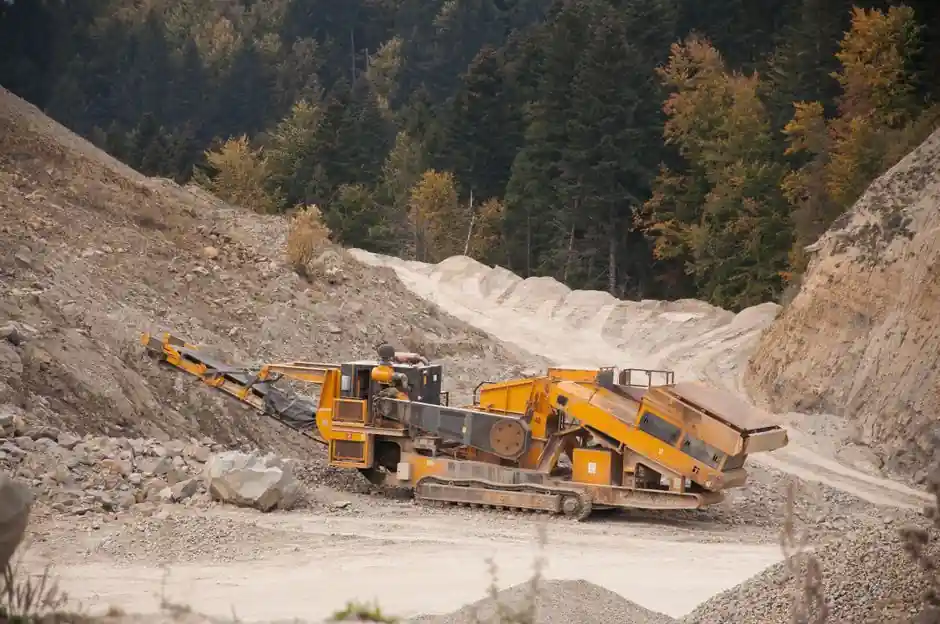
Mining equipment procurement is the discipline of selecting drills, excavators, haul trucks, and processing machinery against ore properties, then binding them through vendor contracts that survive a $73.11B 2025 global market growing to $83.53B by 2035 [S4].
The 1.34% CAGR (2025-2035) understates the technology shift: electrification, semi-automated drilling rigs, and integrated crushing/grinding lines are reshaping what a "right-sized" fleet looks like, especially for open-pit operators running rotary rigs with 152.4-558.8 mm bore diameters and 9.14-18.29 m standard depths [S1][S4].
Define the Scope: What "Mining Equipment" Actually Covers in 2026
Mining equipment procurement spans five functional clusters, and mis-bucketing any cluster corrupts the entire spec chain. The clusters are: drilling and blasting (rotary rigs, percussion rock drills, down-the-hole hammers); excavating and loading (hydraulic excavators, electric rope shovels, wheel loaders); hauling (mining dump trucks, articulated trucks, conveyors); auxiliary/processing (crushers, grinding mills, screens, magnetic separators, thickeners); and instrumentation/automation (drill navigation, payload monitors, fleet management) [S1][S4][S5].
For chromite specifically, the flow decomposes into crushing and screening, grinding and classification, separation and purification (gravity plus magnetic), dewatering and dry stacking, and tailings disposal, with each step demanding its own equipment class and ore-matched wear-resistant alloy liners [S5]. Buyers who treat "mining equipment" as one bucket end up with a jaw crusher sized for limestone running on chromite, an abrasion failure pattern that shows up in the first quarter.
Selection Criteria: Five Dimensions a Spec Writer Cannot Skip
Chromite ore features high hardness and strong abrasiveness, often coexisting with serpentine, olivine, and magnetite gangue, so suppliers must run sampling assays and washability tests on raw ore before quoting, confirming daily processing capacity, target concentrate grade, and Cr2O3 recovery rate [S5]. That single clause is the highest-leverage line in any mining RFQ; without it, every downstream comparison is meaningless.
A second non-negotiable dimension is total cost of ownership, not sticker price. Energy consumption of grinding mills, liner-replacement intervals on cone crushers, and tire life on mining dump truck fleets routinely swing 5-10 year TCO by 30-40% inside the same machine class. The third dimension, automation level, now splits the catalog into manual, semi-automated, and fully automated tiers, and surface mining electrification is the largest sub-segment pulling capital toward battery and trolley-assist drivelines [S4].
Fourth, channel legitimacy: a 2026 procurement guide explicitly sorts formal channels (OEM direct, authorized regional dealer, EPC general contractor) from grey-market resellers, because chromite-specific wear liners and OEM-grade spare parts are not interchangeable with aftermarket substitutes [S5]. Fifth, after-sales support: warranty terms, field service response time, and guaranteed spare-parts availability for at least the first 7-10 years of asset life. Skipping any one of these five creates a vulnerability the vendor contract will not cover.
Open-Pit Versus Underground: Different Equipment, Different Spec Logic
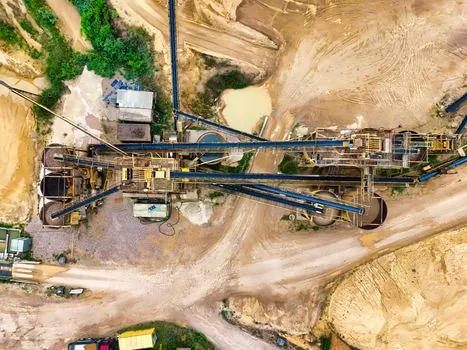
Open-pit operations dominate surface mining equipment by revenue, and the rotary drilling rig plus electric rope shovel combination remains the canonical pairing for blasthole-pattern work at 152.4-558.8 mm hole diameters [S1][S4]. Buyers specifying a 120 m maximum-depth rotary rig, like the SANY unit cited in OEM literature, need to confirm pull-back force, bit weight, and air-compressor capacity against the actual rock UCS, not just the headline depth figure.
Underground operations run a different catalog: percussion rock drills handle holes 127 mm or smaller in external-piston configurations, load-haul-dump (LHD) machines replace hydraulic excavators, and linear guide-equipped jumbos need different ventilation-class approvals than their open-pit cousins. Percussion drills use reciprocating impact rather than rotary cutting, so their compressed-air consumption profile is roughly 2-3x higher per metre drilled than a comparable rotary rig on soft rock [S1].
Processing Plant Equipment: Matching Crusher and Mill to Ore Hardness
For chromite specifically, jaw crushers and spring cone crushers handle primary and secondary lump-ore crushing, while energy-saving ball mills, rod mills, spiral classifiers, and hydrocyclones drive monomer dissociation of chromite grains, with customized wear-resistant alloy liners specified to handle severe abrasion [S5]. Buyers who accept a "standard" liner spec on a high-chrome feed are scheduling a reline outage inside 6-9 months instead of 18-24.
Gravity separation via spiral chutes, jigs, shaking tables, and centrifugal separators is the dominant chromite-beneficiation technology thanks to low operating cost and zero chemical reagent consumption, while high-intensity magnetic separators polish rough concentrates to elevate Cr2O3 grade and optimize the chromium-iron ratio for metallurgical-grade output [S5]. Thickener underflow density, filter-press cycle time, and tailings pumping head are the three dewatering parameters that decide whether a 3,000 tpd plant actually runs at 3,000 tpd.
Procurement Process: From Needs Definition to Contract Award
The procurement sequence has six non-skippable steps: identify equipment needs and specifications, research qualified vendors, evaluate each on reputation/pricing/delivery, negotiate terms, issue a purchase order, then monitor shipment and installation, a discipline the construction-procurement literature flags as the difference between on-time delivery and cost-overrun [S2]. For megaproject-scale mining builds, the 2026 ASCE systematic review of 91 papers and 4,228 abstracts formalizes this as the PRIME framework: outcomes, market engagement, packaging, delivery model, contracting model, and tender process [S3].
Packaging the works is where most failures originate. Lump-sum EPC packages hide equipment-selection risk inside the contractor's margin; owner-furnished equipment packages expose the buyer to integration risk. For crossed-roller guide-equipped precision jumbos or instrumentation-heavy processing skids, owner-furnished often wins on lifecycle cost, while for commodity haul trucks, contractor-furnished usually wins on warranty coordination. The PRIME literature explicitly links packaging choice to make-or-buy decisions and to risk allocation between owner and contractor [S3].
Vendor Evaluation: OEM, Dealer, or EPC Channel
The 2026 chromite procurement guide sorts channels into three tiers: OEM direct (highest authenticity, longest lead time, premium price), authorized regional dealer (faster delivery, OEM warranty preserved, mid-tier price), and EPC general contractor (turnkey but opaque on equipment origin) [S5]. For used equipment, additional due-diligence on operating hours, rebuild records, and remaining wear-life is mandatory, since the Quotor equipment-procurement reference frames vendor reputation and on-time delivery as core evaluation criteria [S2].
Major global OEMs competing for the 2026 mining-equipment spend include Caterpillar, Komatsu, Sandvik, Hitachi Construction Machinery, Atlas Copco, Epiroc, Metso Outotec, Joy Global, Terex, and Doosan Infracore, with the surface-mining electrification sub-segment pulling the most new capital [S4]. For Chinese and Asian-Pacific buyers, SANY's rotary-rig and excavator lines appear frequently in the open-pit drilling and loading category, and the reference depth figure of 120 m under special conditions gives a realistic upper bound for buyer-side sanity checks [S1].
Common Pitfalls and How 2026 Buyers Avoid Them
The four repeat-failure patterns we see in mining RFQs: (1) accepting a vendor's "standard configuration" without an ore-sample washability test, which guarantees wrong wear-package selection on chromite, copper, or taconite feeds [S5]; (2) splitting procurement across too many small packages, which the PRIME megaproject review identifies as a primary driver of interface-management cost overruns [S3]; (3) under-specifying NDT equipment for in-service inspection of haul-truck frames and drill-mast welds, which surfaces as unplanned downtime in year two; (4) ignoring anti-static equipment requirements on conveyor belts and dust-collection lines in coal and sulfide-ore operations, a gap that triggers both safety incidents and regulatory exposure.
A second-tier pitfall is failing to lock spare-parts pricing and availability in the original contract, since aftermarket parts for legacy haul-truck models can run 2-4x OEM list once the equipment is past the support window. The cure is a 7-10 year spare-parts commitment clause tied to delivery-date-relative intervals, plus an option for one mid-life major-component rebuild at a fixed price [S2][S5].
Decision Comparison: Equipment Class Versus Decision Criteria
For open-pit procurement teams, the four main equipment classes line up against five decision criteria as follows. Rotary drilling rigs win on large-diameter blasthole productivity (152.4-558.8 mm range) but lose on energy per metre and capital cost [S1]. Percussion rock drills win on capex and small-hole flexibility (sub-127 mm) but lose on hole-depth and automation maturity [S1]. Electric rope shovels win on bulk-material handling in heavy overburden and pair well with trolley-assist electrification but lose on mobility versus hydraulic excavators [S1][S4]. Mining dump truck fleets (rigid and articulated) win on haul-cycle economics at 100-400 tonne payload classes but lose on tire cost and on the integration complexity of semi-automated dispatch systems [S4].
For processing-plant procurement, the trade-off matrix is shorter. Jaw-plus-cone crusher lines win on chromite lump-ore reduction and on spare-parts commonality; HPGR (high-pressure grinding rolls) win on energy efficiency per tonne but lose on capex and on wear-part standardization [S5]. Gravity-separation flowsheets (spiral chutes, shaking tables) win on operating cost and zero-reagent operation; magnetic-separation polishers win on final Cr2O3 grade uplift but require a stable feed grade from upstream gravity stages [S5]. The decision rule is straightforward: match the ore-mechanics data from the washability test, then pick the class whose weakest criterion still beats the next class's strongest criterion on the dimension that matters most for that specific deposit.
Trackable Signals for the Next 90 Days
[S1]
This topic is covered further in LNG procurement strategy: five-pillar spec map for industrial buyers.