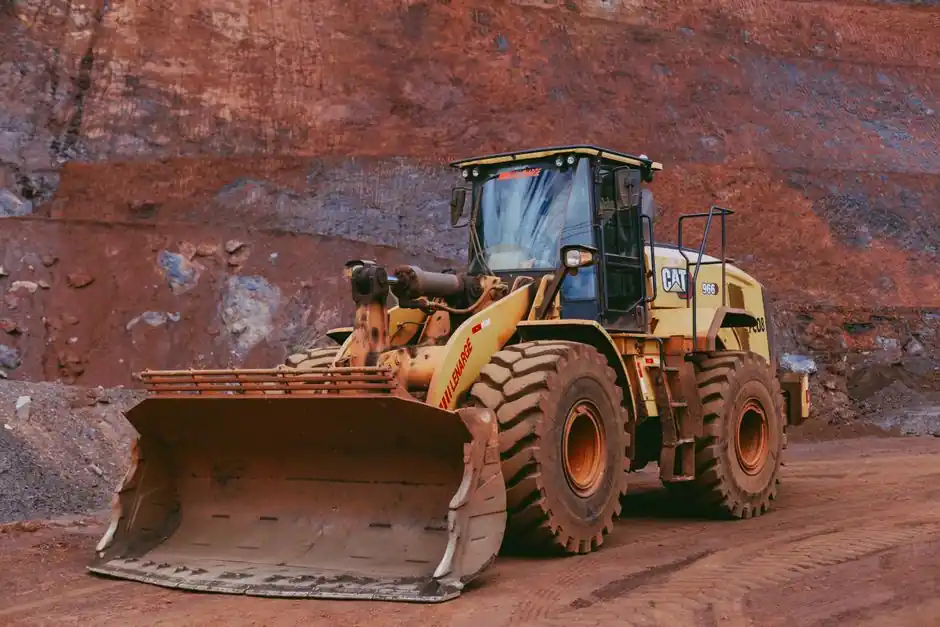
Chinese mining OEMs typically price 30–50% below European or Australian equivalents at comparable specification, and deliver in 3–6 weeks versus 12–20 weeks from Western sources, per a 2026-08 buyer guide on Mongolia-bound procurement [S1].
The category covers heavy machinery (excavators, haul trucks, drill rigs), processing equipment (jaw and cone crushers, ball and SAG mills, flotation cells, thickeners), bulk-handling systems (belt conveyors, idlers), and mine-site consumables, with mainline brands XCMG, SANY, Zoomlion, CITIC Heavy Industries, NMS, and Sinodrills competing directly against Caterpillar, Komatsu, Sandvik, and Metso on underground and open-pit work [S5][S8].
Equipment Categories and OEM Map
Buyers should split the Chinese supplier base into three tiers: tier-1 national brands (XCMG, SANY, Zoomlion, LiuGong, SDLG) with global service networks, tier-2 specialised OEMs (CITIC HIC for grinding mills, NMS/Nanchang Mineral Systems for crushers, Sinodrills for drill rigs), and tier-3 regional fab shops for idlers, structures, and lighting equipment and electric lamps [S8][S9].
CITIC HIC supplies the grinding-mill backbone: large ball mills, SAG mills, and the gearless drive systems used on copper and gold concentrators, while Xinhai's plant is documented to produce φ7 m ball mills, 320 m³ flotation cells, φ20 m × 20 m leaching tanks, and φ100 m thickeners, giving Chinese EPCs in-house scale for full processing trains [S7]. On the heavy-machinery side, XCMG XE900D and SANY SY500H excavators target open-pit fleets, XCMG XDE400 and SANY SKT90S haul trucks compete in the 200–400 t class against Caterpillar 797 and Komatsu 930E, and Sinodrills plus XCMG XR-series rigs position as alternatives to Atlas Copco and Sandvik [S5].
Specification and Standards Pitfalls
Chinese factory output defaults to GB/T standards, so verification against project-level specifications (often ISO, IEC, or AS 2010/AS 4326 for Australia) is the first gate, with mining-chemical reagents needing REACH or local equivalent SDS before customs will clear them [S1][S2].
For mining dump truck procurement, the mechanical-drive versus AC-drive (trolley-assist) choice controls both the trolley-pantograph retrofit cost and the in-pit ramp grade the truck can sustain, and Chinese XDE-series offerings span the 240–400 t payload range that covers most mid-tier operations [S5]. Buyers should also note that conveyor idlers, the highest-volume consumable, are produced by hundreds of regional fab shops with widely varying CEMA B/C/D versus ISO 5048 load ratings, so a sample-test protocol on shell thickness, bearing brand (SKF/FAG vs domestic), and dynamic balance is non-negotiable before blanket orders are released [S1].
Selection Criteria: Price, Lead Time, Spec, After-Sales
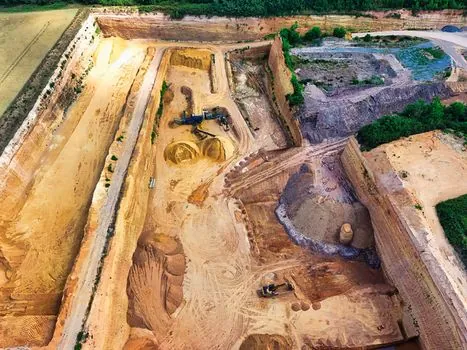
The four decision criteria that actually move the needle on a China-sourced mining order are unit price (typically 30–50% below European equivalent), lead time (3–6 weeks via Erlian/Zamyn-Uud for Mongolia-bound cargo, longer for African and Australian destinations), spec conformity to project standards, and the OEM's overseas service footprint [S1][S4][S5].
On the four criteria, Western OEMs (Cat, Komatsu, Sandvik, Metso) score highest on spec conformity and after-sales but lose on price and lead time; Chinese tier-1 brands (XCMG, SANY, Zoomlion) score near-parity on spec, lead time, and after-sales, with a 30–50% price edge; Chinese tier-2 specialists (CITIC HIC, NMS, Sinodrills) often beat tier-1 on technical fit for grinding, crushing, and drilling but lag on global service; and tier-3 regional fab shops are price-aggressive but require third-party inspection on every shipment [S1][S5][S8].
Logistics Corridors and Customs Realities
For Mongolia-bound cargo, the standard route runs factory (Inner Mongolia, Shanxi, or Tianjin/Qingdao industrial zones) to rail or truck to Erlian (Erenhot), cross into Zamyn-Uud on the Trans-Mongolian Railway, then onward to Ulaanbaatar or direct to South Gobi mine sites 200–400 km from the border [S1].
Mongolian import duties for most mining equipment HS codes sit in the 5–15% band, and the 4,709 km China-Mongolia border keeps inland trucking competitive even against sea-air combinations for heavy and bulky items [S1]. For Africa-bound and Australia-bound cargo, ocean freight through Tianjin, Qingdao, or Shanghai dominates, and buyers should plan for 6–10 week Africa lead times and 4–6 week Australia lead times on top of factory production, with African routes also requiring pre-shipment inspection under the destination country's standards regime [S4][S5].
Who China Sourcing Fits, and Where It Breaks
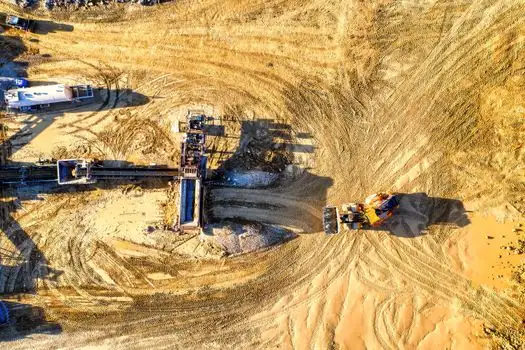
China-sourced mining equipment fits state-owned and mid-tier operators running Oyu Tolgoi / Tavan Tolgoi-style South Gobi operations, ASX-listed gold miners on cost-down procurement drives, and African copper and cobalt projects with thin working capital; it is a poor fit for ultra-deep mechanised mines needing Sandvik or Epiroc proprietary automation, or for projects whose offtake contracts mandate Caterpillar or Komatsu equipment for resale-value reasons [S1][S5].
For linear guide and crossed roller guide sub-assemblies used on drill rigs and crusher hydraulic positioning stages, the same OEM-tier logic applies but the tolerances tighten: a typical crossed-roller slide for a production drill head needs H7 bore, L-grade raceway, and preloaded rolling element sets that Chinese tier-1 brands meet but tier-3 shops often do not. Where the buyer's spec sheet calls for NDT validation on structural welds, NDT equipment sourcing itself can also be bundled into the same supplier audit, and the same logic carries over to anti-static equipment for bulk-handling transfer points where combustible dust atmospheres rule out standard enclosure ratings.
Verification and Quality Control Workflow
A working 30-day verification workflow for a new Chinese mining-equipment supplier covers: platform due diligence on Made-in-China, Global Sources, or Camachem, sample-level SDS and certificate review for chemicals, factory audit either in person or via a third-party (SGS, Bureau Veritas, TÜV), pre-shipment inspection on critical dimensions and on the first production batch, and a one-year spare-parts commitment with named SKU availability before PO release [S2][S4].
For mining chemicals specifically, the documented 2025 guidance frames the problem bluntly: 67% of mines face supply chain disruptions annually from unreliable partners, so the verification work is not optional overhead but a 30-day gate that prevents downstream $10,000/hour downtime losses [S2]. On the equipment side, Camaltd's 2025-05 sourcing note for Australian gold miners lists XCMG, SANY, and Zoomlion alongside NMS, CITIC HIC, Chengdu Dahongli, and Sinodrills as the shortlist that consistently clears Australian mining standards audits, which is also a useful proxy for ASX, ICMM, and JORC-aligned operations elsewhere [S5].
Market Structure and 2026 Outlook
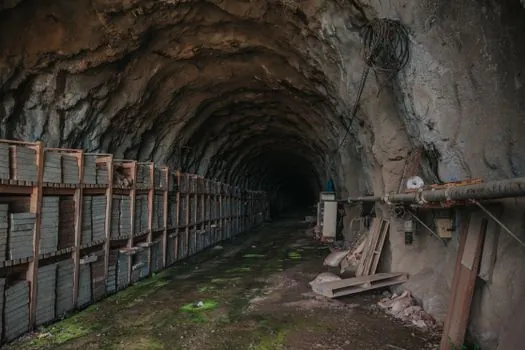
IBISWorld's 2026 Mining Equipment Manufacturing in China industry report continues to list the sector as a top-tier global producer with sustained export momentum, while a peer-reviewed assessment in Green and Smart Mining Engineering notes that China's mining industry is still constrained by a lower level of independent development of mining equipment and primarily relies on imported machinery at the high end of the spec range [S3][S6].
For buyers, the practical signal is to keep Chinese tier-1 and tier-2 OEMs on the shortlist for excavators, haul trucks, mills, and flotation cells while keeping Western OEMs reserved for ultra-deep mechanised, autonomous, or high-precision grinding duty, and to track two trackable signals over the next two quarters: CITIC HIC and NMS order-book disclosures in their listed-parent filings, and any revision to Mongolia's 5–15% import-duty band for mining HS codes as the Erlian/Zamyn-Uud corridor throughput continues to scale [S1][S3][S6].
See also our earlier report, Floor Grinder Selection for HVAC Installation: Width, Power, and Dust Spec Map.