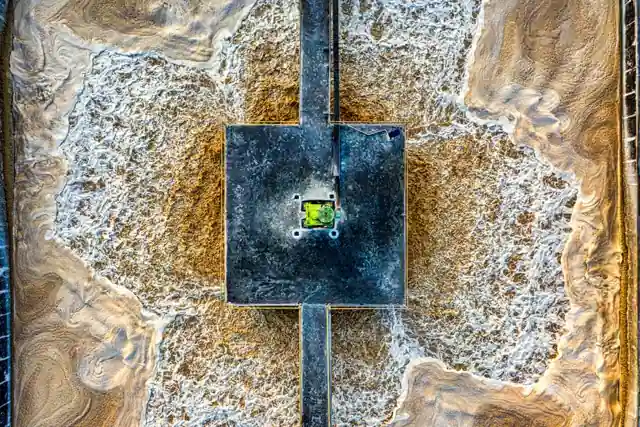
Global desalination capacity crossed 20,000 operating plants by April 2026, with industrial and municipal users in water-scarce regions adding new builds at a steady clip [S3].
Chinese vendors now ship the bulk of reverse osmosis (RO) membrane elements, high-pressure pumps, and solar-thermal evaporator modules that go into those plants, so a buyer's spec sheet has to lock down feedwater total dissolved solids (TDS), recovery rate, and energy consumption per cubic meter before talking price [S1][S2].
Feedwater TDS and Pretreatment Drive Equipment Selection
Seawater intakes in Chinese coastal builds typically run 35,000 to 45,000 mg/L TDS, while brackish industrial wells land between 1,000 and 10,000 mg/L TDS, and that single number decides whether the spec calls for a seawater RO (SWRO) train, a brackish RO (BWRO) train, or a multi-effect distillation (MED) unit [S1]. Pretreatment is non-negotiable: dissolved organics, suspended solids, and biological fouling agents have to be knocked down upstream, or the RO membranes lose flux within months [S1]. A precision filter train paired with a chemical dosing skid (antiscalant, sodium bisulphite) is the standard gate before the high-pressure pump, and the dosing rate is set by the Langelier Saturation Index of the concentrate stream, not by the feedwater alone.
Core Process Options: RO, Thermal, Membrane Distillation, Hybrid
Reverse osmosis remains the workhorse for new Chinese-built plants, using semi-permeable membranes that reject salts under 60 to 80 bar of feed pressure for seawater and 10 to 30 bar for brackish feed, with single-pass recovery commonly targeted at 35 to 50 percent [S1]. Thermal desalination (MED, multi-stage flash) burns fuel or concentrates solar heat to evaporate and recondense water, which suits high-TDS or zero-liquid-discharge sites where RO brine would be hard to handle [S1]. Membrane distillation (MD) uses a hydrophobic membrane and a temperature gradient (typically 60 to 80 deg C on the hot side) to push vapor through, which pairs naturally with solar-thermal loops because the heat source can be low-grade [S1][S2]. Hybrid stacks, where an RO unit handles the bulk and an MD or thermal polisher recovers the concentrate, push overall water recovery above 70 percent in pilot builds, but they double the instrumentation count and the pressure transmitter density on the high-pressure side [S1].
Energy Source: Why Solar-Desal Builds Are Scaling in China
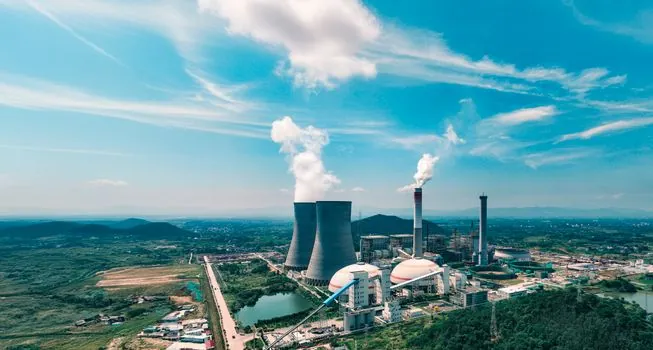
Chinese research groups reported a solar-driven efficiency improvement in mid-2026 that pushed evaporation rates well above baseline passive solar stills, and the same write-up flagged near-term potential to lower the levelized cost of desalinated water in off-grid coastal sites [S1][S2]. Solar-thermal collectors and photovoltaic arrays power either the pump motors in an RO train or the heat input in a thermal train, and floating PV-plus-desal platforms co-locate generation with intake, which removes the long cable run from a shore substation [S1]. The trade-off is land or sea-surface area: a 1,000 m3/day SWRO train paired with solar still needs roughly 8,000 to 12,000 m2 of collector field, depending on insolation and recovery target, so a buyer's site survey has to confirm that footprint before signing a contract [S1].
Component Map: Pumps, Membranes, Valves, Instrumentation
High-pressure RO pumps (multi-stage centrifugal or positive-displacement) set both capex and the lifetime kilowatt-hour bill, and the energy recovery device (ERD) on the brine side cuts specific energy consumption from around 6 to 8 kWh/m3 down to 2 to 4 kWh/m3 on seawater trains [S1]. Membrane elements come as 8-inch or 16-inch-diameter spiral-wound units with nominal rejection of 99.5 to 99.8 percent at standard test conditions (2,000 mg/L NaCl, 225 psi, 25 deg C, 15 percent recovery); the operating envelope drifts with feed pressure, temperature, and fouling, so acceptance testing has to mirror site conditions, not the brochure.
Spec-Gate Comparison: RO vs Thermal vs MD vs Hybrid
A buyer weighing the four main process options can line them up against four decision criteria: feedwater TDS tolerance, specific energy consumption (kWh/m3), recovery rate (percent of feed converted to permeate), and maturity of Chinese supply chain. SWRO handles up to 45,000 mg/L TDS at 2.5 to 4 kWh/m3 with 35 to 50 percent recovery and a mature Chinese supply base for membranes, pumps, and pressure sensors. MED/MSF thermal trains tolerate 45,000+ mg/L TDS but run 10 to 16 kWh/m3 thermal equivalent at 25 to 40 percent recovery, with Chinese fabricators active in the evaporator and heat-recovery sections. MD sits at 1.5 to 3 kWh/m3 thermal equivalent, handles high TDS, and targets 30 to 60 percent recovery, but Chinese supply chain is thinner and lead times on hydrophobic membranes run longer. Hybrid RO-plus-MD or RO-plus-thermal can push recovery above 70 percent and cut brine volume, at the cost of double the skid count and instrumentation; this is the configuration picking up traction in inland Chinese zero-liquid-discharge projects where brine disposal is the binding constraint [S1].
Industrial Use Cases and Sourcing Watch-Points
Power plants and petrochemical complexes in inland China use BWRO plus a thermal polisher to produce boiler-feed makeup, while coastal oil refineries and steel mills use SWRO for cooling-tower makeup and process water, both paths requiring redundant flow meters on the permeate and concentrate legs for mass-balance accounting [S1]. A buyer sourcing from Chinese vendors should lock down three documents before purchase order: a membrane element datasheet stamped with the test conditions and rejection curve, a pump performance curve at the design point and at turndown, and a material certificate for any wetted part in contact with concentrate above 60,000 mg/L TDS. For broader supply-chain context, the Sourcing Petrochemicals from China: 2026 Buyer Spec Map walks through adjacent chemical-feed chemicals (antiscalants, cleaning chemistries) that ride along with most RO procurements. Buyers pairing a new desalination skid with solids-handling equipment should cross-check the How to Choose a Cyclone Separator: Spec Map for 2026 for pretreatment sand and grit removal upstream of the cartridge filters.
Limits, Failure Modes and Standards Discipline
RO membranes fail early when pretreatment is undersized, which is why Chinese engineering, procurement and construction (EPC) firms almost always bundle a dual-media filter and a 5-micron cartridge guard ahead of the high-pressure pump rather than trusting raw feed [S1]. Scaling on the concentrate side (calcium carbonate, barium sulphate) caps safe recovery at around 50 percent for seawater without antiscalant, and bio-fouling from organic loading can cut flux 20 to 30 percent inside 90 days if the clean-in-place skid is undersized. Standards governing these plants include ISO 3696 for water quality grades used in testing, ASTM D4189 for silt density index testing on feedwater, and ASME BPVC Section X for fiber-reinforced plastic pressure vessels in RO trains, while electrical areas near brine handling and chlorine rooms follow the relevant hazardous-area classification codes. None of those standards pin a specific efficiency number, so any quoted kWh/m3 figure on a vendor datasheet has to be cross-checked against the operating conditions listed in the same table.
Track two signals through the rest of 2026: published capacity additions from Chinese SWRO EPCs bidding into Middle East and North Africa tenders, and any revision to solar-thermal collector efficiency claims from the research groups that published the July 2026 breakthrough paper [S1][S2]. Buyers should also watch for updated Chinese vendor datasheets on 16-inch RO elements, since larger-diameter membranes cut vessel count and footprint on the next wave of mega-train builds [S1].