
Connectors represent 20-30% of a typical mid-complexity industrial wire-harness BOM, second only to assembly labor at 25-35%, with stamping, plating, injection molding, and final assembly each controlling a distinct slice of the per-piece cost [S1][S2].
Process engineers reading procurement quotes in mid-2026 see connector-line items ranging from $0.10 for basic crimp terminals to $20-plus for sealed or high-density industrial types, a 100x spread that dominates material spend regardless of copper volatility [S1].
Four-Stage Manufacturing Process and Where Cost Accrues
Connector manufacturing resolves into four technical stages: stamping, plating, injection molding, and assembly, each running at distinct yield, scrap, and capital profiles that propagate into the unit price [S4].
Stamping consumes thin copper-alloy strip on high-speed progressive dies running above 1,000 strokes per minute, with the dominant failure modes being pin twisting, edge chipping, feed-tension deformation, and tool-wear drift; modern lines catch these with 100% AOI plus statistical process control before the part leaves the press [S4].
Plating adds a 1-3 μm nickel barrier plus a 0.05-2.5 μm functional layer of gold, tin, or palladium on the contact zone, then post-treatment anti-tarnish coatings, and inspection is the hard step because sub-millimeter pinholes and nodules are the typical yield killers [S4].
Injection molding produces the plastic housing, and final assembly mates stamped-and-plated pins into the housing, an operation that, like harness assembly, resists full automation and runs hot on labor content for low-volume or high-mix SKUs [S4].
Cost Driver Ranking: Connectors, Copper, and Labor
For a mid-complexity industrial harness the cost structure decomposes as assembly labor 25-35%, connectors and terminals 20-30%, wire and cable 15-25%, testing and QC 5-10%, tooling and setup 5-10%, and overhead and scrap 5-10% [S2].
Copper still moves the headline number, with a +10% copper price index translating to a roughly 3-4% harness cost increase, and a +48.5% copper index (the 2026 level versus early 2024) translating to a 15-19% direct cost impact, because copper itself is 25-40% of the material line [S1].
Connector choice can match that volatility: a $0.10 entry-level crimp terminal versus a $20-plus sealed ruggedized connector is a 200x unit gap, and the connector decision also drives crimp-tool inventory, operator training, inspection steps, and downstream reliability warranty exposure [S1].
Connector Tier Comparison by Application
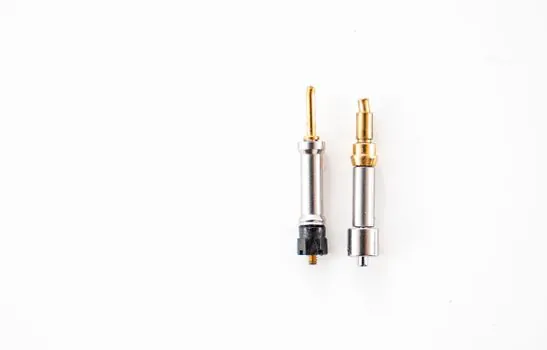
Entry-level crimp terminals at roughly $0.10 fit high-volume consumer and appliance harnesses where pitch, current, and sealing are non-critical; mid-range industrial connectors at $5-$15 cover most PLC and motor-control cabinets; sealed, ruggedized, or high-density connectors at $20-plus target mobile equipment, outdoor, and process-control installations [S1].
The selection criteria that should drive this choice are current rating, IP rating, mating cycles, vibration profile, temperature range, and agency approvals, with one rule of thumb being that any harness expected to see more than a handful of mate-demate cycles per year, or any field-serviceable node, should not be specified with the cheapest terminal family [S1].
For harsher environments, pairing a sealed connector with the right pressure transmitter or flow meter I/O on the same cabinet side is a common pattern, because the same IP and corrosion logic that protects instrumentation also protects the connector [S1].
DFM Levers That Cut Connector Cost 15-40%
Standardizing connector families is the single highest-impact DFM lever, because every unique connector family forces its own crimp applicator, operator training, and inventory SKU, and a 48-circuit panel harness that collapses from 11 connector families to 4 was reported at 32% lower unit cost with zero first-run rework [S2].
Relaxing non-critical wire-length tolerances from ±1 mm to ±5 mm, splitting 6 breakouts out of a single 25 mm grommet into two locations, and consolidating wire gauge sizes produced a 40% faster assembly time and AU$85,000 in savings across a 500-unit mining-OEM run [S2].
The cost ratio of 1:10:100 between design-stage, tooling-stage, and production-stage changes is the underlying math that makes a 3-hour DFM review pay for itself: the same fix attempted after tooling is 10x more expensive, and after production ramp 100x [S2].
Process and Reliability Constraints

Defect rates below 50 PPM are achievable across the four stages when machine vision, laser micrometers, and inline AOI are integrated, but each stage has its own failure signature: stamping yields are dominated by tool wear and feed tension, plating yields by surface micro-defects, and final assembly yields by mating-force variation and housing flash [S4].
Unplanned downtime from a cheap connector can dwarf its purchase price: a connector costing a small amount can generate thousands of dollars in lost production if replacement requires an unplanned shutdown, which is why ruggedized connectors frequently win on total cost of ownership even when the BOM line is 100x higher [S3].
Procurement should therefore track total-cost-of-ownership metrics, including installation labor, mean time between failures, mean time to repair, and unplanned-downtime exposure, rather than unit price alone, especially for any connector serving a hard-to-access node on a PLC or industrial valve manifold [S3].
Standards, Sourcing, and Lead-Time Risk
Standards discipline matters: specifying a connector that meets IP67, UL 1977, or IEC 61984 for the application, rather than asking the supplier to match a generic data-sheet spec, removes ambiguity and reduces the chance of a counterfeit or down-spec part slipping into the BOM. [S1]
Sourcing risk has been a persistent cost driver in 2026: long lead times, broker-channel premiums, MOQ-driven overbuy, and tariff exposure can each add double-digit percent to connector spend, and a single difficult-to-source terminal has been documented to drive a meaningful increase in total harness cost [S1][S5].
The turnkey-versus-consignment decision is the matching lever: turnkey assembly shifts sourcing risk to the contract manufacturer at a higher unit cost, while consignment lowers upfront spend but adds coordination, shortage, and quality risk, so the right pick depends on the OEM's own sourcing maturity [S5].
The FRED Producer Price Index for Electronic Connector Manufacturing (series PCU3344173344170) tracks the macro side of this story and is the cleanest public benchmark for whether a given quote is in line with the market or running hot [S6].
For OEMs mapping connector spend against their broader bill of materials, pressure sensor and field-instrumentation lines typically share the same supplier audit and stocking logic, so consolidating connector and instrumentation approvals under one vendor-management workflow is a high-leverage procurement move [S1].
Engineers can reference our related guide on connector specs for process control and instrumentation for a deeper spec map by contact count and IP rating when sizing sealed industrial types.
Watch the FRED PCU3344173344170 series, the LME copper price, and the contract-manufacturer DFM-review turnaround time over the next two quarters; a divergence between the PPI series and quoted unit prices is the cleanest signal that a connector line item is mis-specified or that a redesign is overdue [S1][S6].